White-tailed Deer
Scientific Name: Odocoileus virginianus
Category: mammal
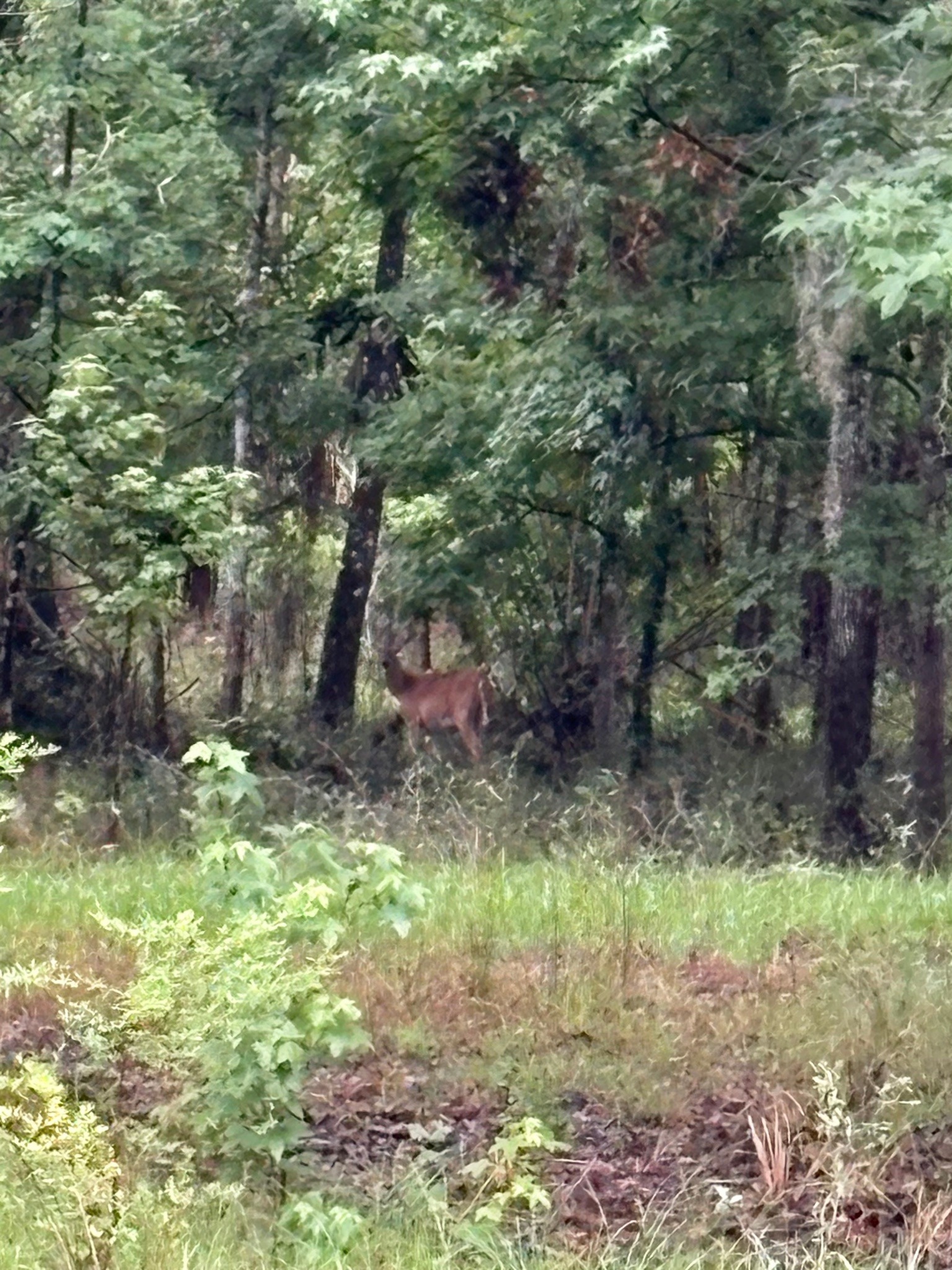
Brief Description
A medium-sized deer native to North America, recognized by its reddish-brown summer coat and distinctive white underside of its tail.
Characteristics
Reddish-brown coat in summer, transitioning to grey-brown in winter. Features include a white throat patch, white rings around the eyes, and a broad tail with a white underside visible when raised in alarm.
Habitat
Thrives in mixed deciduous forests, forest edges, meadows, and brushy areas; also common in suburban areas and parkland.
When to Find It
Most active at dawn and dusk (crepuscular); activity peaks during the 'rut' or mating season in autumn.
Conservation Status
Least Concern
Ecological Role
A major herbivore that shapes plant communities through browsing and serves as a vital prey species for large predators.
Easily Confused With
Mule Deer (which have larger ears and black-tipped tails) and Elk (which are significantly larger and have a pale rump patch).
Observation Tips
Move slowly and quietly along forest edges at dusk. Avoid direct eye contact and watch for the 'flagging' of the tail, which indicates they are about to flee.
Interesting Facts
When alarmed, they raise their tail to expose the white underside, a signal called 'flagging' to warn other deer of potential danger.