Northern Elephant Seal
Scientific Name: Mirounga angustirostris
Category: mammal
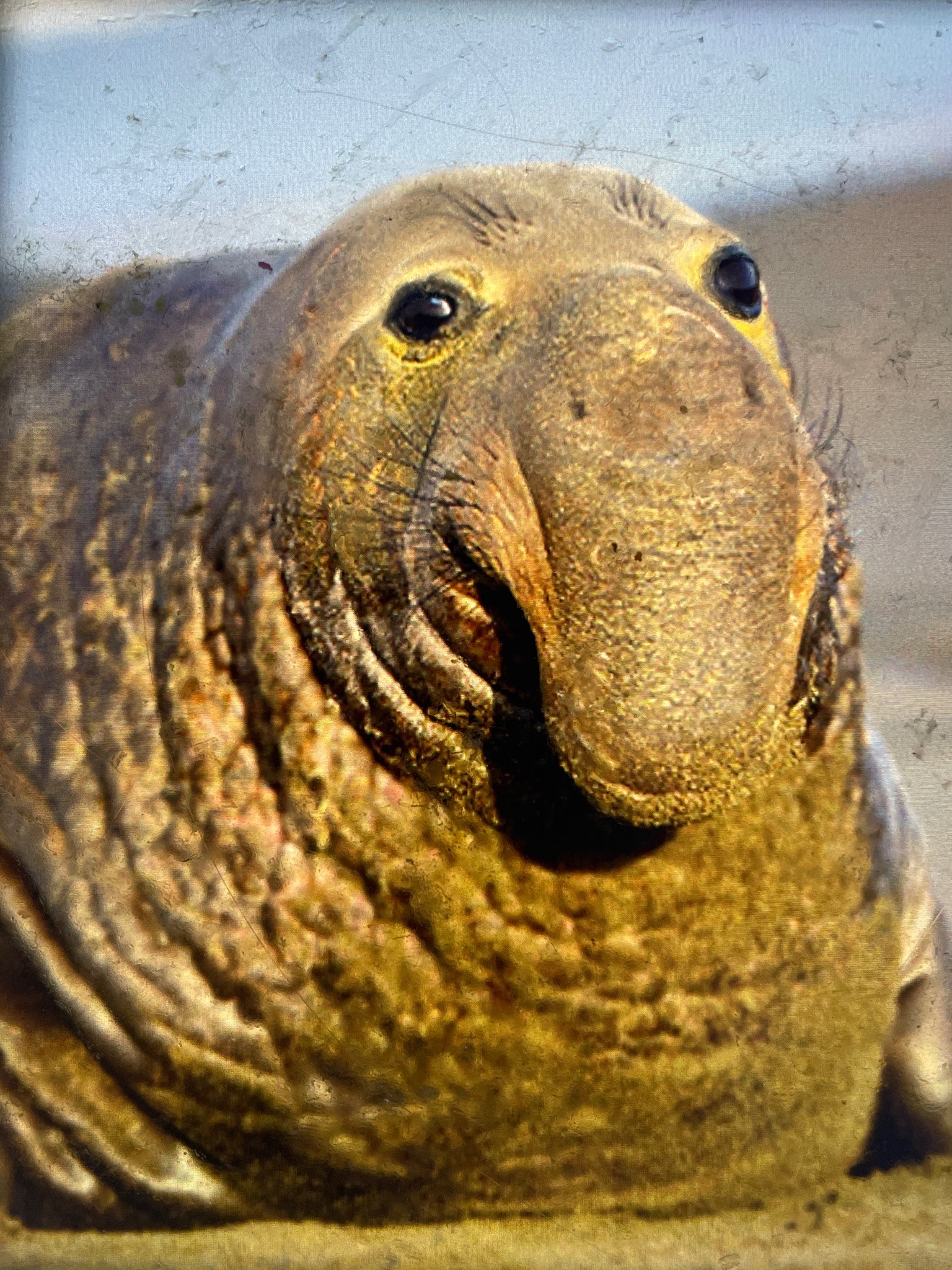
Brief Description
A large marine mammal known for the proboscis (trunk) found on adult males, used to produce loud roaring sounds during mating season.
Characteristics
Massive body size with thick, wrinkled skin that appears brownish or grayish. Adult males possess a large, inflatable snout called a proboscis. They have large black eyes adapted for low-light deep-sea hunting and lack external ear flaps.
Habitat
Found in the North Pacific Ocean; they spend most of their lives at sea but migrate to sandy, rocky, or muddy beaches on offshore islands and the mainland for breeding and molting.
When to Find It
Can be observed on land during the winter breeding season (December to March) and during the spring and summer molting periods.
Conservation Status
Least Concern (rebounded from near extinction in the late 19th century)
Ecological Role
They are apex predators that control fish and squid populations in deep ocean waters. They also serve as a significant food source for Great White Sharks and Orcas.
Easily Confused With
Southern Elephant Seal (Mirounga leonina), which is larger and found in the Southern Hemisphere. Also confused with Harbor Seals or Sea Lions, but Elephant Seals are significantly larger and lack the visible ear flaps found in Sea Lions.
Observation Tips
Keep a safe distance of at least 25 to 50 feet. They appear slow on land but can move surprisingly fast and are defensive of their territory, especially during breeding season.
Interesting Facts
Northern Elephant Seals are incredible divers, capable of reaching depths of over 5,000 feet and staying underwater for up to two hours. Their 'trunk' acts as a rebreather, helping them conserve moisture from their breath during long stays on land.