Fruit Bat
Scientific Name: Pteropodidae
Category: mammal
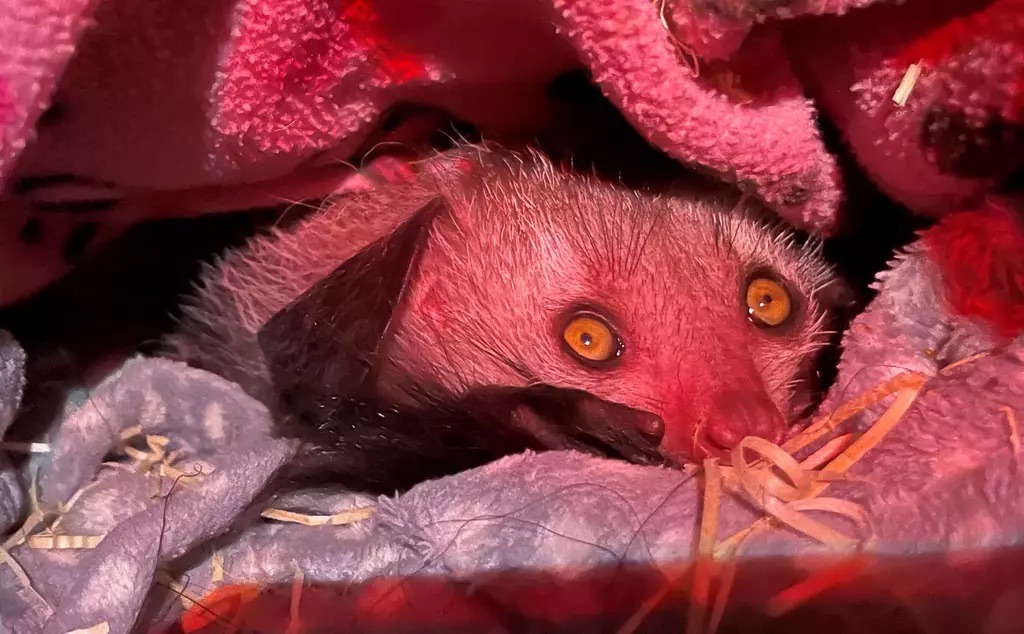
Brief Description
A nocturnal flying mammal known for its large eyes and diet consisting primarily of fruit and nectar.
Characteristics
Large golden-orange eyes, a fox-like snout, dark leathery wings, and brown or greyish fur. Unlike microbats, they lack echolocation but have keen sight and smell.
Habitat
Tropical and subtropical forests, swamps, and mangroves where fruit-bearing trees are abundant.
When to Find It
Active at night (nocturnal); specifically observed at dusk when emerging from roosts to forage.
Conservation Status
Varies by species; some are common, while several island-dwelling species are endangered.
Ecological Role
Crucial for forest health as primary pollinators and seed dispersers for many tropical plant species.
Easily Confused With
Microbats, which are generally smaller, have smaller eyes, and use echolocation; Flying Foxes are the largest members of the fruit bat family.
Observation Tips
Best observed at a distance using a red-filtered flashlight to avoid disturbing their sensitive eyes; look for them in fruiting trees.
Interesting Facts
Fruit bats are often called 'flying foxes' due to their facial resemblance to small canids. They are among the few mammals that can truly fly rather than glide.