Alfalfa
Scientific Name: Medicago sativa
Category: plant
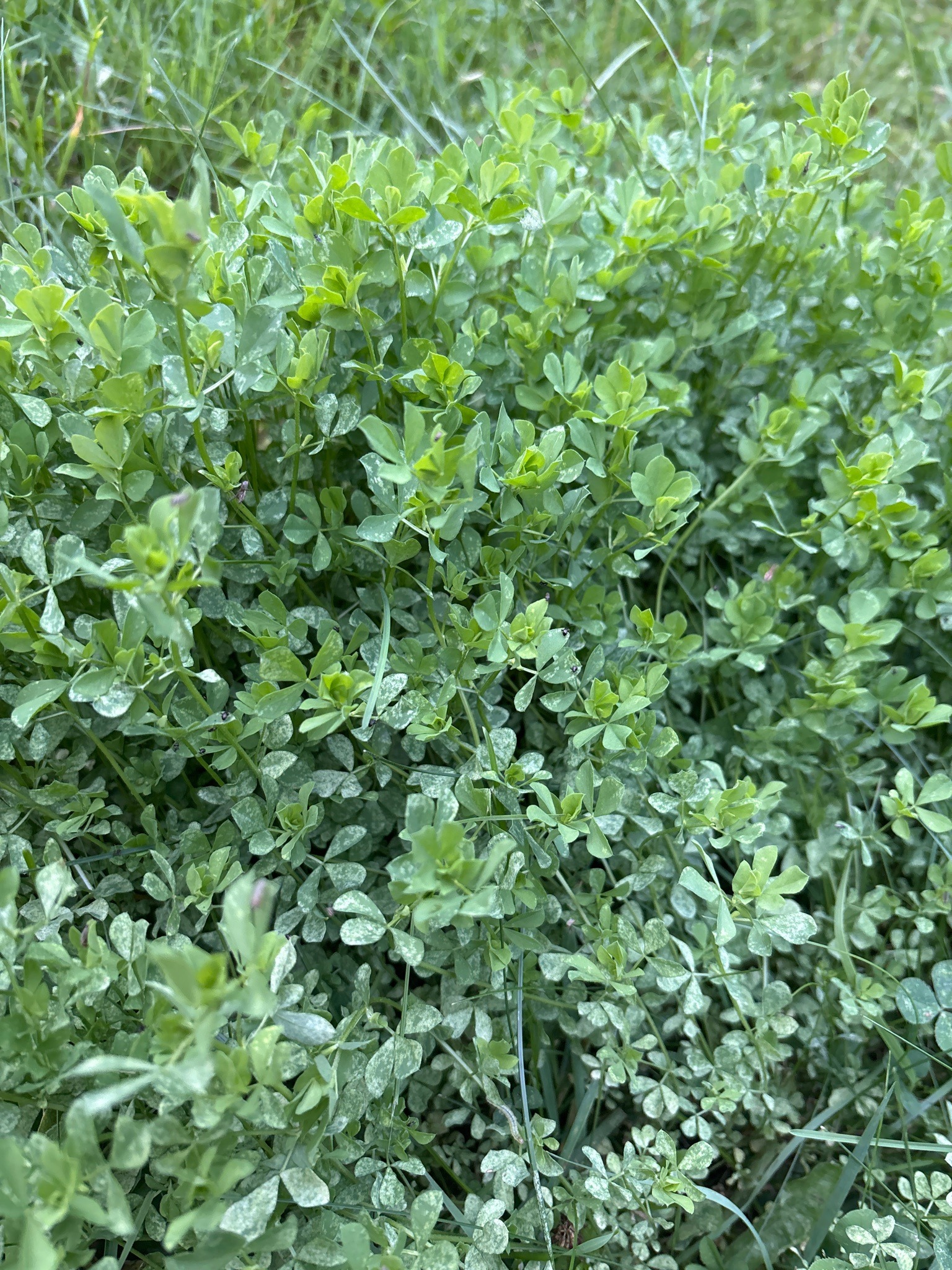
Brief Description
Alfalfa is a perennial flowering plant in the legume family Fabaceae, widely cultivated as an important forage crop for cattle.
Characteristics
Features trifoliate leaves that are oblong to obovate, finely toothed toward the apex, and small purple or bluish flowers clustered in racemes. The leaves often show stippling or damage typical of insect feeding.
Habitat
Found in cultivated fields, pastures, meadows, and along roadsides where soils are well-drained and neutral to slightly alkaline.
When to Find It
Actively grows from spring through autumn, with multiple harvests possible during the warmer months.
Conservation Status
N/A
Ecological Role
Acts as a nitrogen fixer, enriching the soil through a symbiotic relationship with Rhizobium bacteria, and serves as a vital food source for pollinators and livestock.
Easily Confused With
Can be confused with sweet clovers (Melilotus) or true clovers (Trifolium), but alfalfa is distinguished by its elongated clusters of purple/blue flowers and coiled seed pods.
Observation Tips
Look in agricultural regions, rural roadsides, and meadows during daylight hours, especially when the plants are flowering.
Interesting Facts
Alfalfa roots can grow exceptionally deep—sometimes plunging up to 15 meters into the soil—making the plant remarkably drought-resistant.