Willow Oak Leaf
Scientific Name: Quercus phellos
Category: tree
Brief Description
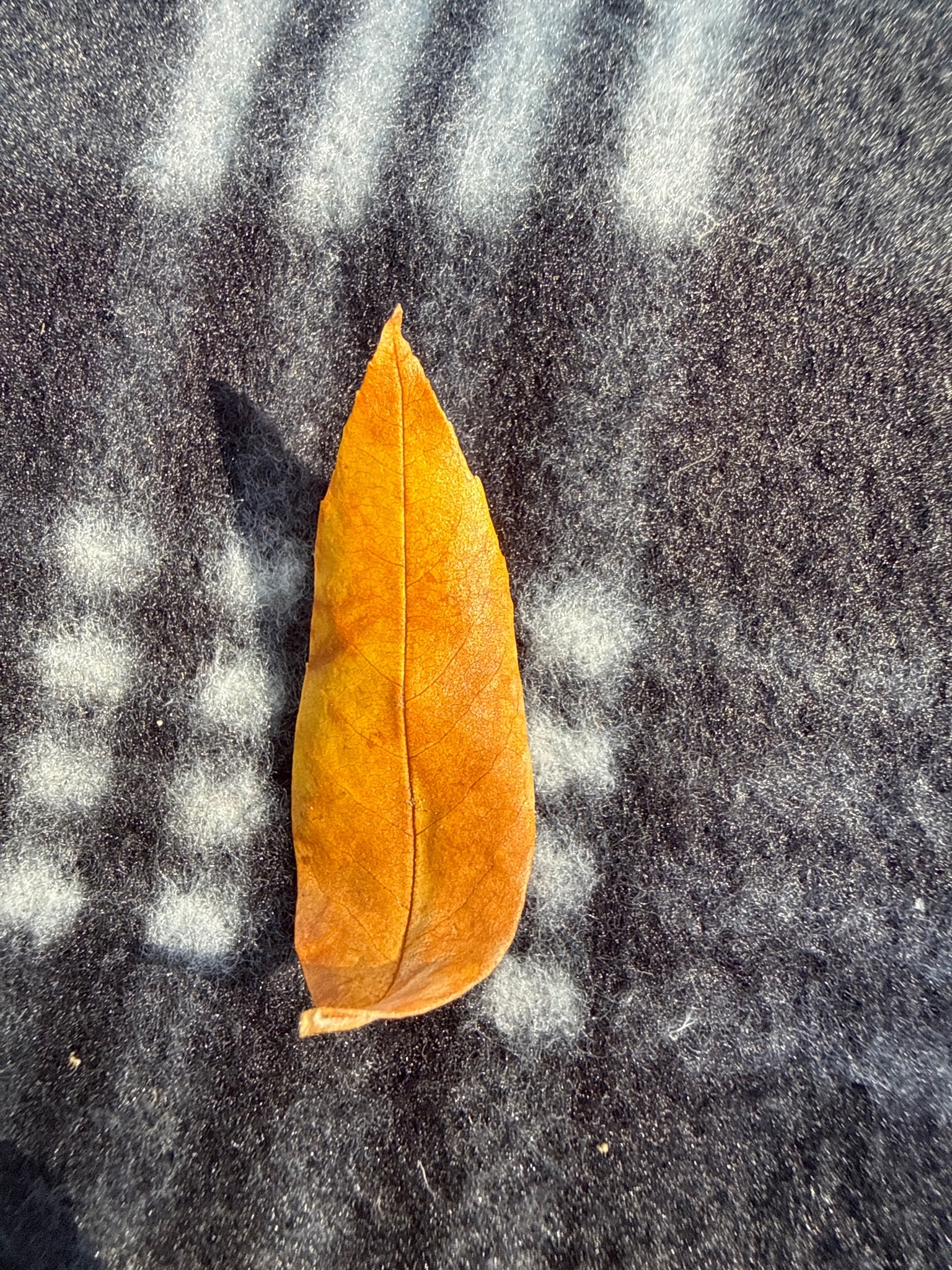
A single, lance-shaped deciduous leaf that has turned a golden-brown autumn color.
Characteristics
Linear to lanceolate shape, approximately 2 to 5 inches long, with an entire (smooth) margin and a bristle tip at the apex. Unlike many other oaks, it lacks lobes.
Habitat
Found in moist soils of bottomlands, floodplains, and along streams, but also widely planted as an urban shade tree.
When to Find It
Autumn (for the yellow/brown color shown). Leaves typically emerge in spring and drop in late fall.
Conservation Status
Least Concern
Ecological Role
Produces small acorns that are a vital food source for squirrels, wild turkeys, ducks, and deer. Serves as a host plant for various butterfly and moth larvae.
Easily Confused With
Shingle Oak (Quercus imbricaria) leaves are broader and have a fuzzy underside; Willow (Salix spp.) leaves usually Have finely serrated edges, whereas Willow Oak has smooth edges.
Observation Tips
Look for these trees in city parks or southeastern US forests. The leaves are easily identified on the ground in fall by their unique 'willow-like' narrow shape despite being from an oak tree.
Interesting Facts
Despite its narrow leaves that look like a willow, it is a member of the red oak group. It is one of the most popular ornamental shade trees in the southern United States due to its fast growth and hardy nature.