Capybara
Scientific Name: Hydrochoerus hydrochaeris
Category: mammal
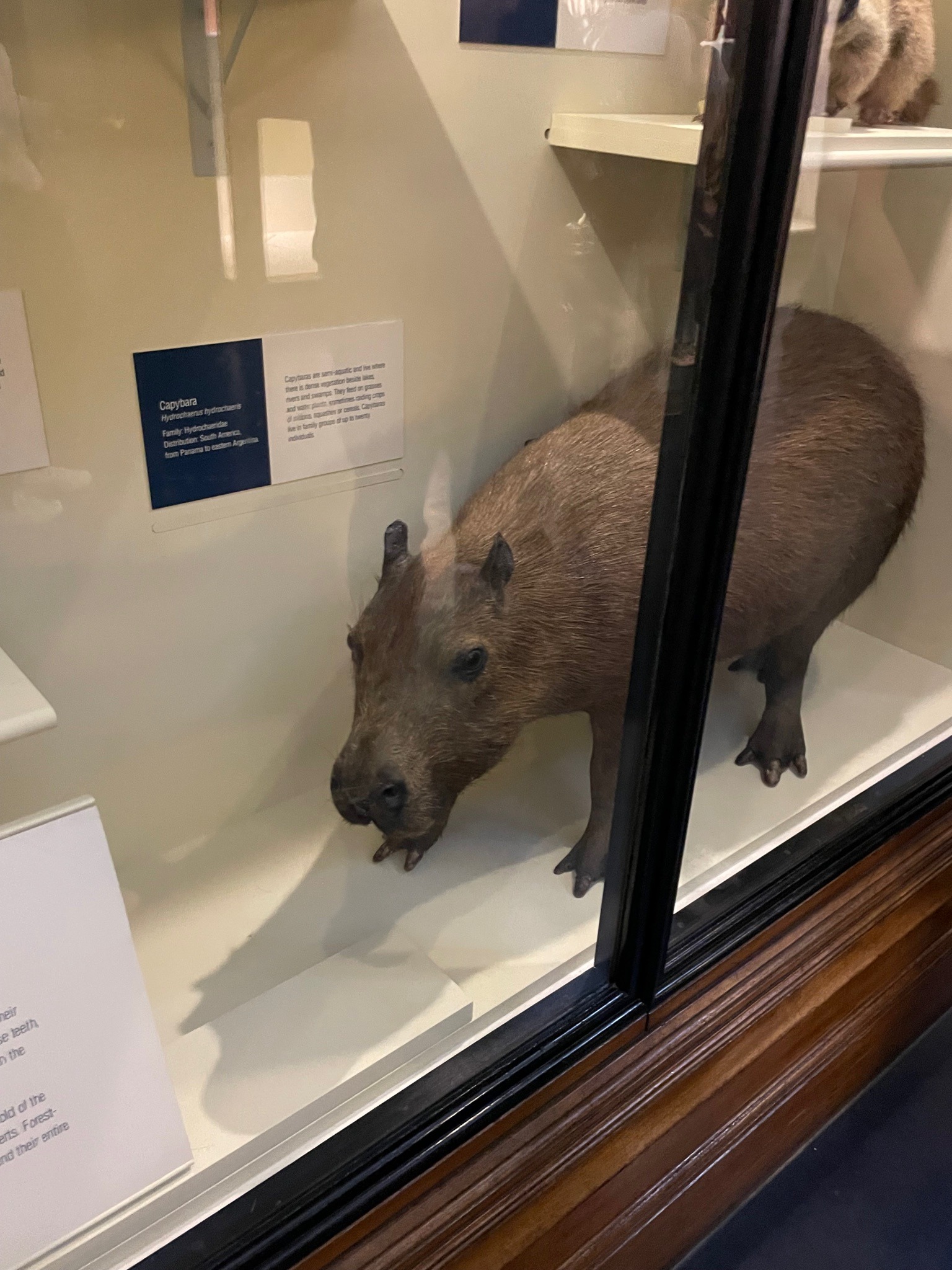
Brief Description
The capybara is the largest living rodent in the world, recognizable by its heavy, barrel-shaped body, blunt snout, and reddish-brown to grayish fur.
Characteristics
Large, robust body with partially webbed feet, small ears, and eyes and nostrils located high on the head. They have rough, sparse brown fur and no visible tail.
Habitat
Found in densely forested areas near bodies of water such as lakes, rivers, swamps, ponds, and flooded savannas across South America.
When to Find It
Active year-round, though they are often more active during early morning and late afternoon to avoid midday heat.
Conservation Status
Least Concern
Ecological Role
Capybaras play a role in aquatic and terrestrial ecosystems as grazers and as an important prey species for large predators like jaguars, pumas, and anacondas.
Easily Confused With
Nutria or beaver, but capybaras are significantly larger, lack a scaly or flat tail, and have a more blunt, heavy snout.
Observation Tips
Look near water edges, marshes, and riverbanks in South America, especially early in the morning. They are generally calm and can often be observed at a safe distance.
Interesting Facts
Capybaras are semi-aquatic mammals and can remain submerged under water for up to five minutes to evade predators.