White Grub (Scarab Beetle Larva)
Scientific Name: Family Scarabaeidae
Category: insect
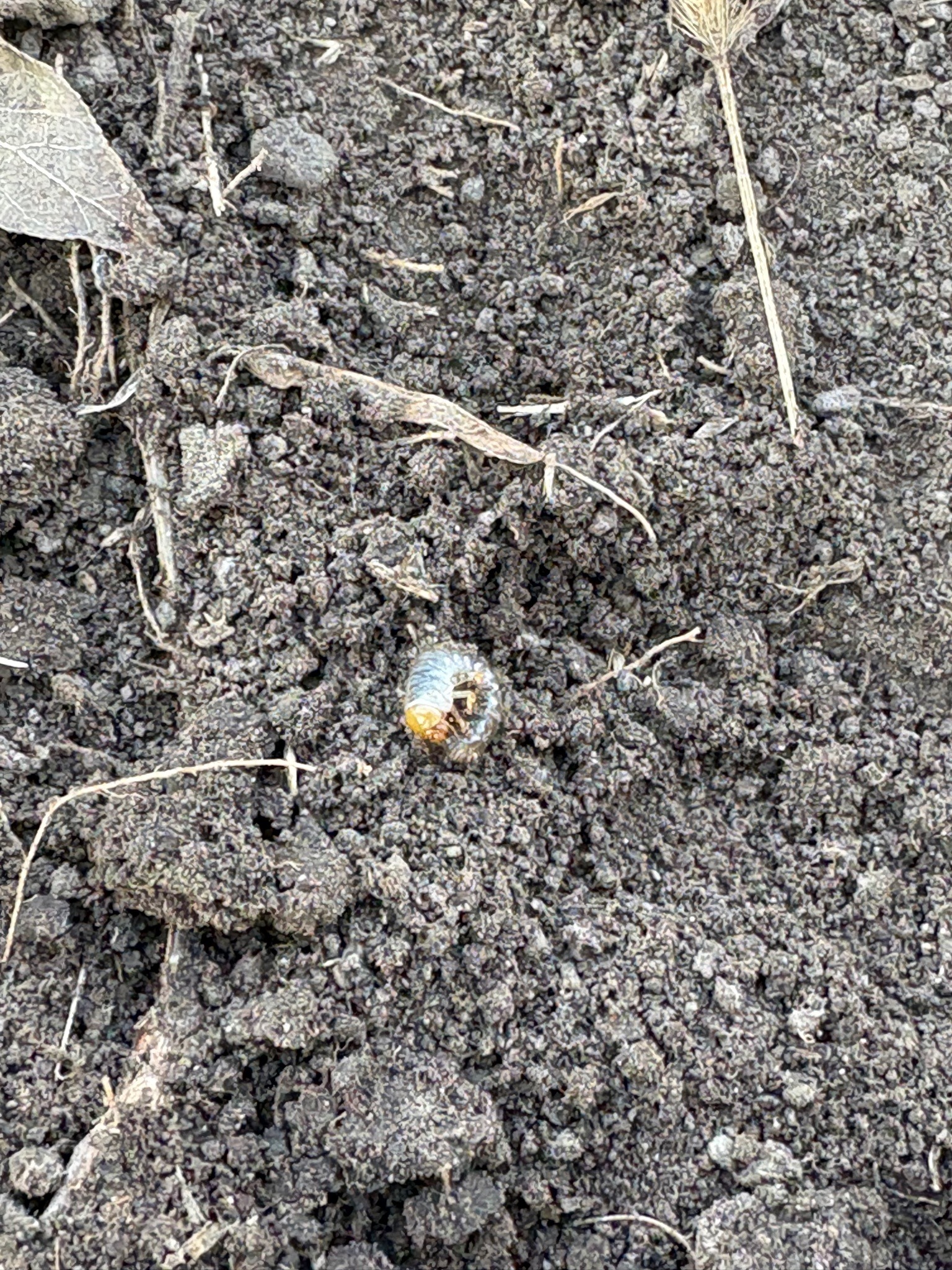
Brief Description
C-shaped, plump, whitish larvae of scarab beetles typically found curled up in soil or under organic matter.
Characteristics
Soft, whitish or greyish bodies with distinct dark C-shaped curves, brownish-orange head capsules, and three pairs of short legs near the head.
Habitat
Found underground in soil, lawns, gardens, compost heaps, and under rotting logs or leaf litter.
When to Find It
Most commonly encountered in spring and autumn when soil is tilled or disturbed.
Conservation Status
N/A
Ecological Role
Many species feed on decaying organic matter aiding in decomposition and nutrient cycling, though some feed on plant roots.
Easily Confused With
Other beetle larvae (wireworms are slender and hard-bodied; caterpillars have prolegs along the abdomen).
Observation Tips
Look under logs, stones, or gently turn over garden soil where they often reside just beneath the surface.
Interesting Facts
Many white grubs spend a year or more developing underground before pupating and transforming into adult beetles like June beetles or chafers.