Sycamore Tussock Moth Caterpillar
Scientific Name: Halysidota harrisii
Category: insect
Brief Description
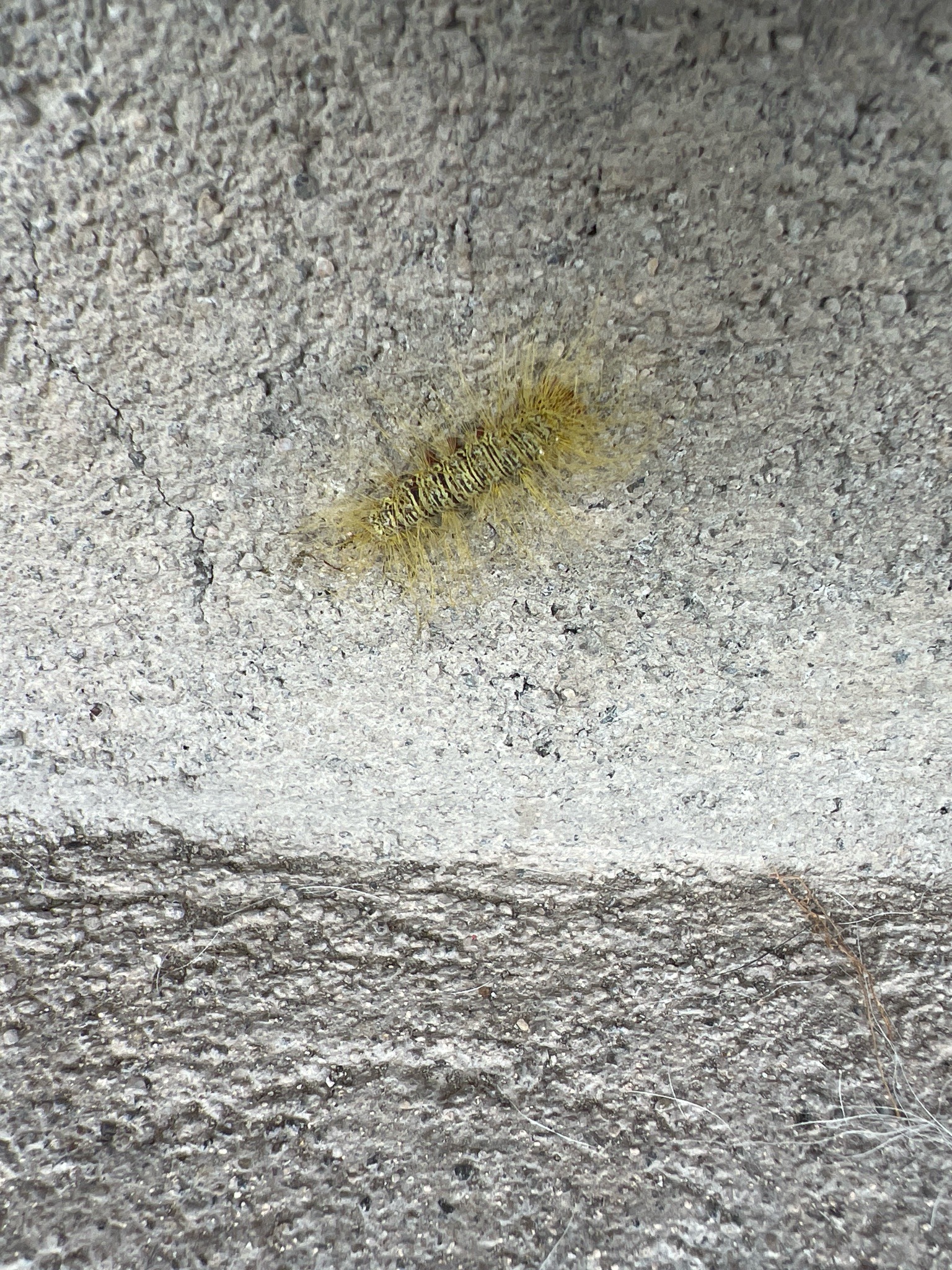
A fuzzy, pale yellow-green caterpillar with distinct dark markings and tufts of long hairs, commonly found wandering on various surfaces in autumn.
Characteristics
Covered in dense, pale yellow to whitish-green setae (hairs) arranged in tufts, often with darker or blackish tufts along the back and sides.
Habitat
Deciduous woodlands, urban areas, and gardens, often found on or near sycamore and plane trees.
When to Find It
Most commonly observed in late summer and autumn as they wander in search of pupation sites.
Conservation Status
N/A
Ecological Role
Serves as a food source for various insectivorous birds and small mammals; contributes to natural nutrient cycling.
Easily Confused With
Other tussock moth caterpillars such as the Banded Tussock Moth (Halysidota tessellaris), which can be distinguished by subtle differences in hair color banding and host plants.
Observation Tips
Look for them on the ground or climbing walls near host trees in the fall. Observe with your eyes only and avoid touching.
Interesting Facts
The long hairs on tussock moth caterpillars help deter predators, but handling them can cause skin irritation or allergic reactions in sensitive individuals.