False Parasol
Scientific Name: Chlorophyllum molybdites
Category: fungi
Brief Description
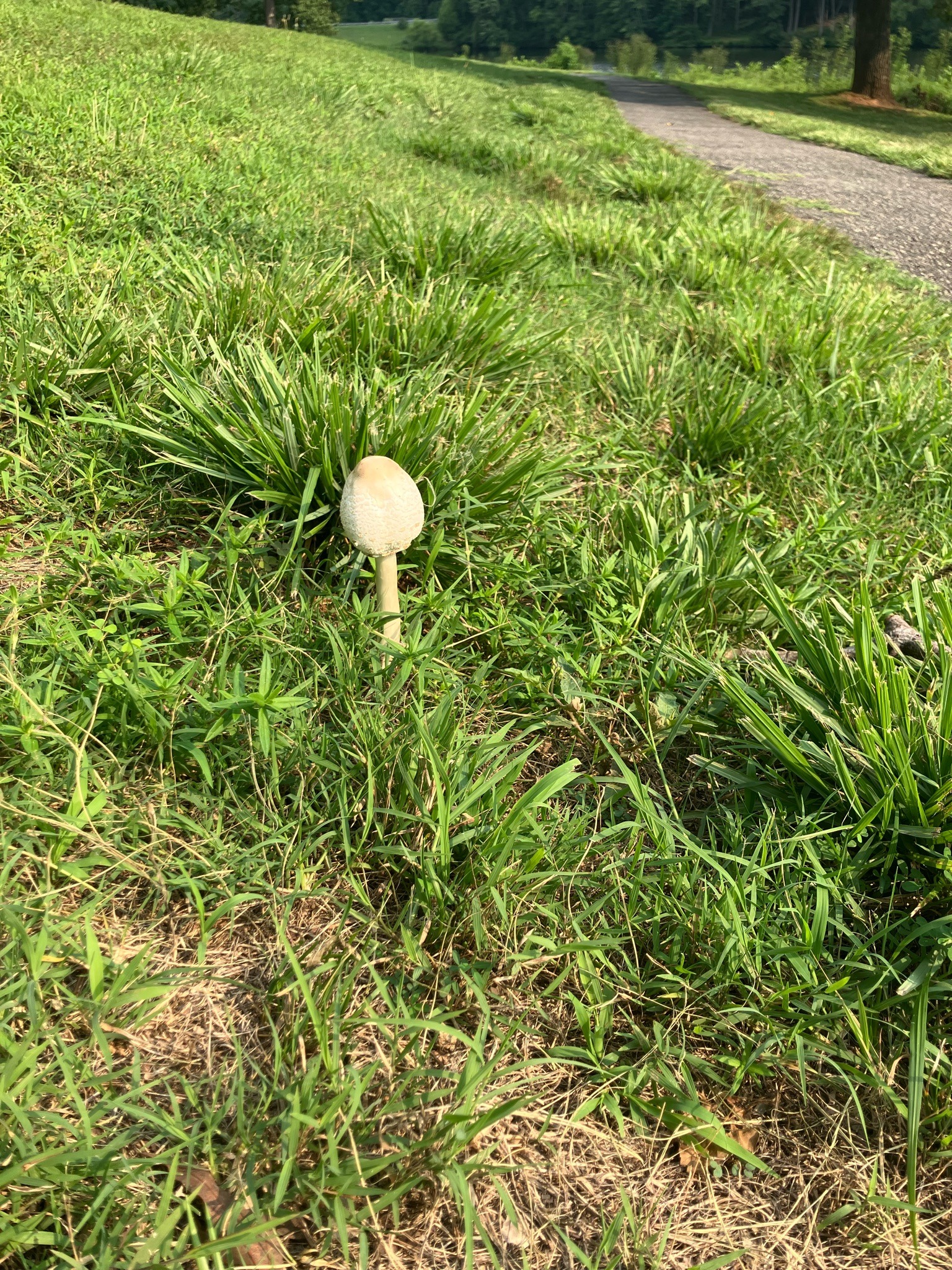
A large, conspicuous white mushroom frequently found growing in lawns and grassy areas, often referred to as the vomiter due to its toxic effects.
Characteristics
Features a large, whitish cap up to 15-25 cm across with brownish scales that break apart as it expands. Gills are initially white but turn distinctively green to greenish-grey as the spores mature. The stem is whitish with a movable ring.
Habitat
Typically found in lawns, grassy parks, meadows, and pastures, often forming fairy rings.
When to Find It
Appears during summer and autumn, particularly after heavy rain or warm, humid weather.
Conservation Status
N/A
Ecological Role
Acts as a saprotrophic organism, breaking down dead organic matter in soil and recycling nutrients back into the ecosystem.
Easily Confused With
True parasol (Macrolepiota procera) which has a snake-skin patterned stem and white spores, and shaggy mane mushrooms.
Observation Tips
Look for them in well-watered suburban lawns after summer rains. Do not touch or ingest.
Interesting Facts
Chlorophyllum molybdites is responsible for the majority of mushroom poisonings in North America due to its frequent appearance in residential yards where children and pets play.