Wormseed Goosefoot
Scientific Name: Dysphania ambrosioides
Category: plant
Brief Description
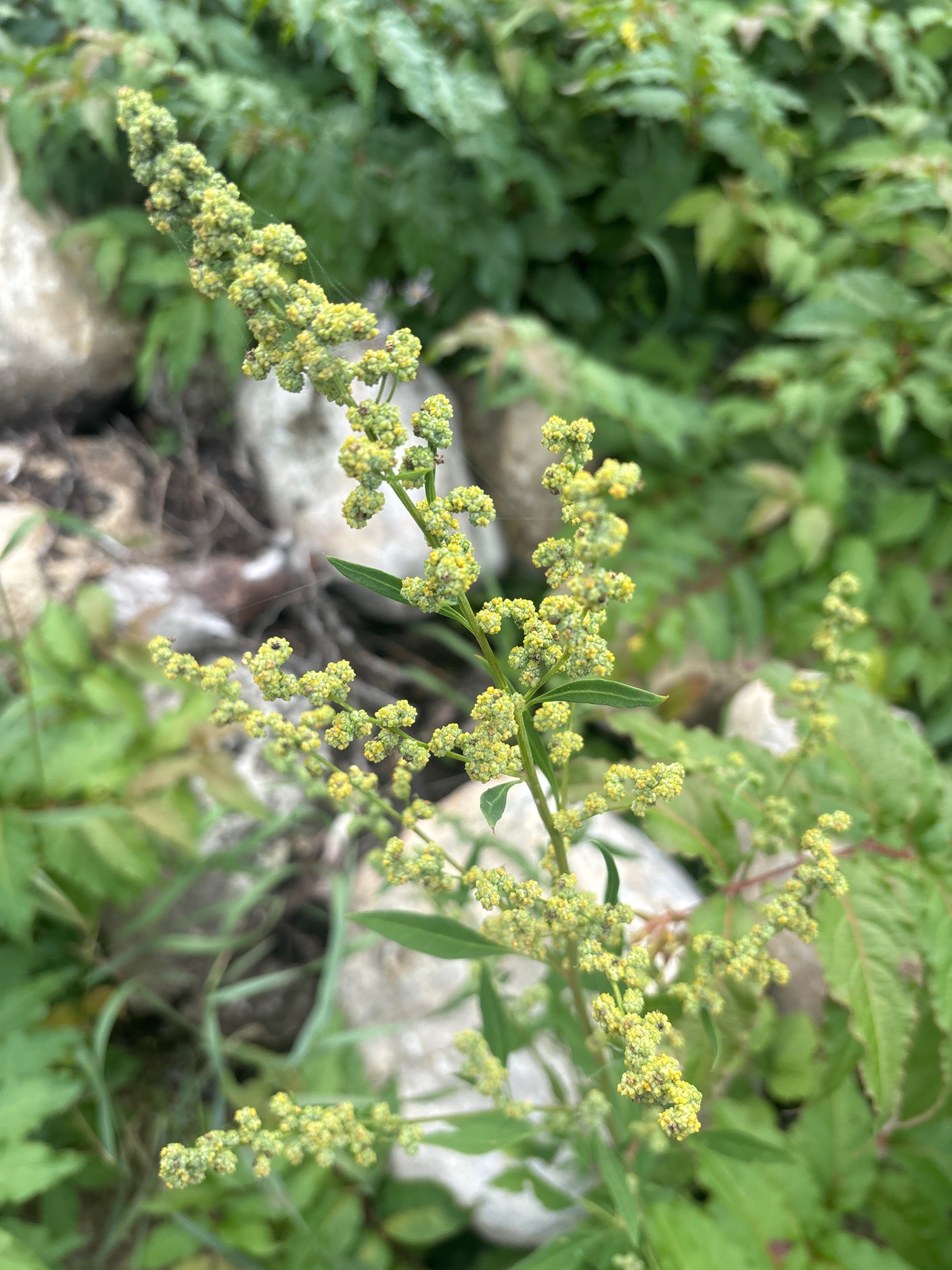
An annual herbaceous plant in the amaranth family, recognizable by its upright stems, alternate leaves, and dense spikes of small, greenish-yellow flowers and seeds.
Characteristics
Stems are erect, often branching, and can be smooth or glandular. Leaves are lanceolate to oblong with wavy or toothed margins. The tiny flowers cluster in dense, leafy terminal or axillary spikes and emit a strong, pungent aroma when crushed.
Habitat
Disturbed areas, roadsides, agricultural fields, waste places, and gardens, preferring nutrient-rich soils.
When to Find It
Blooms and sets seed from mid-summer through autumn.
Conservation Status
N/A
Ecological Role
Provides seeds for various birds and insects, though it can become an aggressive weed in agricultural settings due to its high seed production.
Easily Confused With
Other goosefoot species (Chenopodium genus) such as Lamb's quarters, but Wormseed is distinguished by its strong, distinctive herbal aroma and glandular pubescence.
Observation Tips
Look for them in sunny, disturbed soils. Gently rubbing a leaf can help confirm identification through its characteristic sharp scent.
Interesting Facts
Also known as Epazote, this plant has been used traditionally in Mesoamerican cuisine to flavor bean dishes for its carminative properties, and historically as an herbal remedy to expel intestinal parasites.