Silver-edged Primrose (Polyanthus Type)
Scientific Name: Primula × polyantha
Category: plant
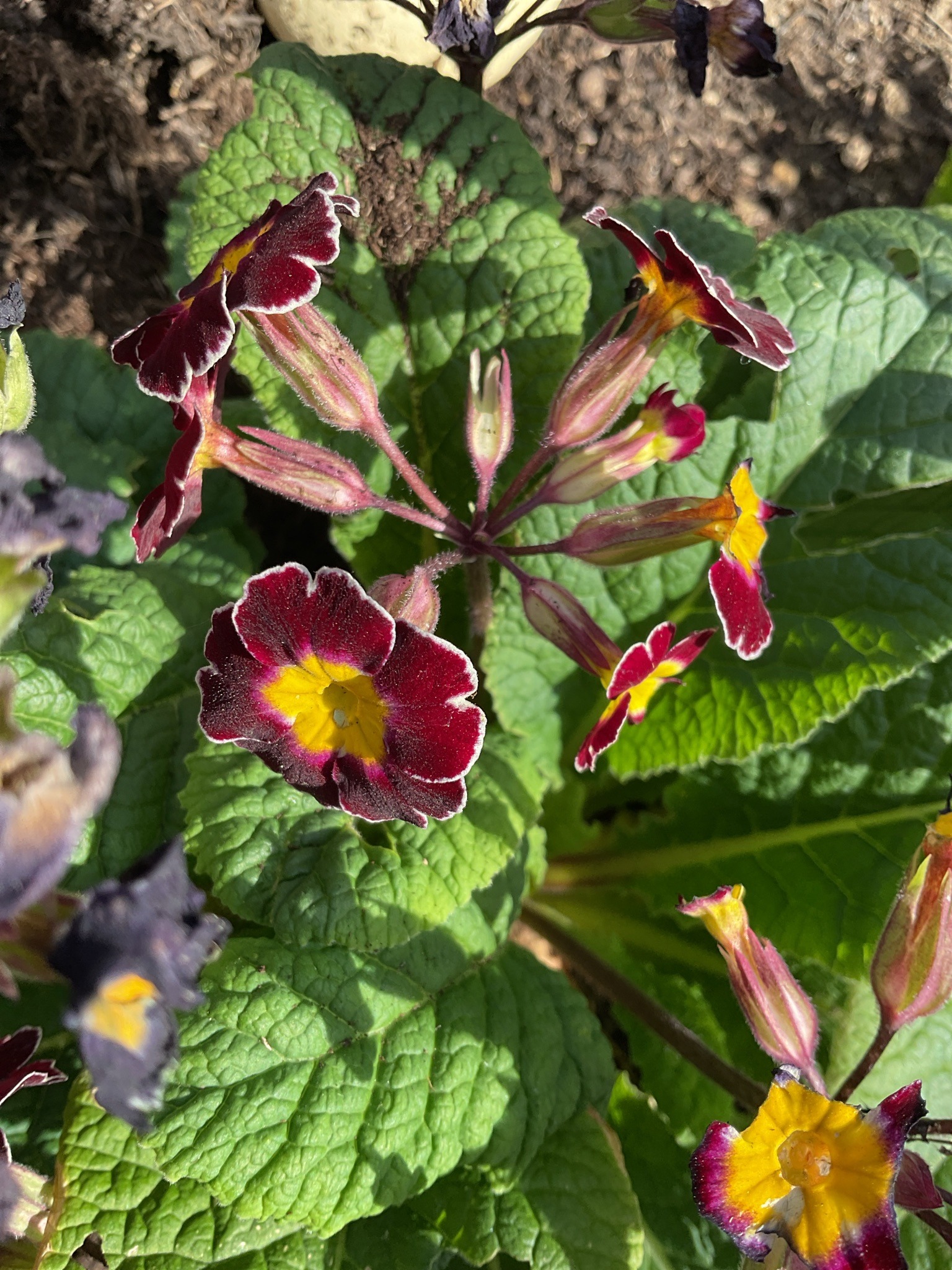
Brief Description
A clump-forming herbaceous perennial flowering plant known for its vibrant, multi-colored blooms that appear in early spring.
Characteristics
Features textured, wrinkled (rugose), spatulate green leaves in a basal rosette. Flowers are held in umbels on sturdy stalks, featuring deep burgundy-red petals with a distinct bright yellow center and a thin silvery-white margin on the petal edges.
Habitat
Typically found in moist, well-drained soils in partially shaded garden beds, woodland edges, and cool temperate gardens.
When to Find It
Blooms primarily in late winter to early spring. It is best observed during the daylight hours when the flowers are fully open.
Conservation Status
N/A (Commonly cultivated hybrid)
Ecological Role
Provides an early nectar source for emerging pollinators such as bees and butterflies when few other flowers are in bloom.
Easily Confused With
Common Primrose (Primula vulgaris) which usually has single flowers per stem and lacks the 'polyanthus' stalked clusters; Cowslip (Primula veris) which has smaller, bell-shaped yellow flowers.
Observation Tips
Look for these in damp, shady spots. To photograph, get a top-down view to capture the 'eye' of the flower and the delicate silver edging.
Interesting Facts
The name Primula is derived from the Latin 'primus', meaning first, referring to it being among the first flowers to bloom in spring. Polyanthus primroses are actually a complex series of hybrids between Primula vulgaris and Primula veris.