Common Mullein
Scientific Name: Verbascum thapsus
Category: plant
Brief Description
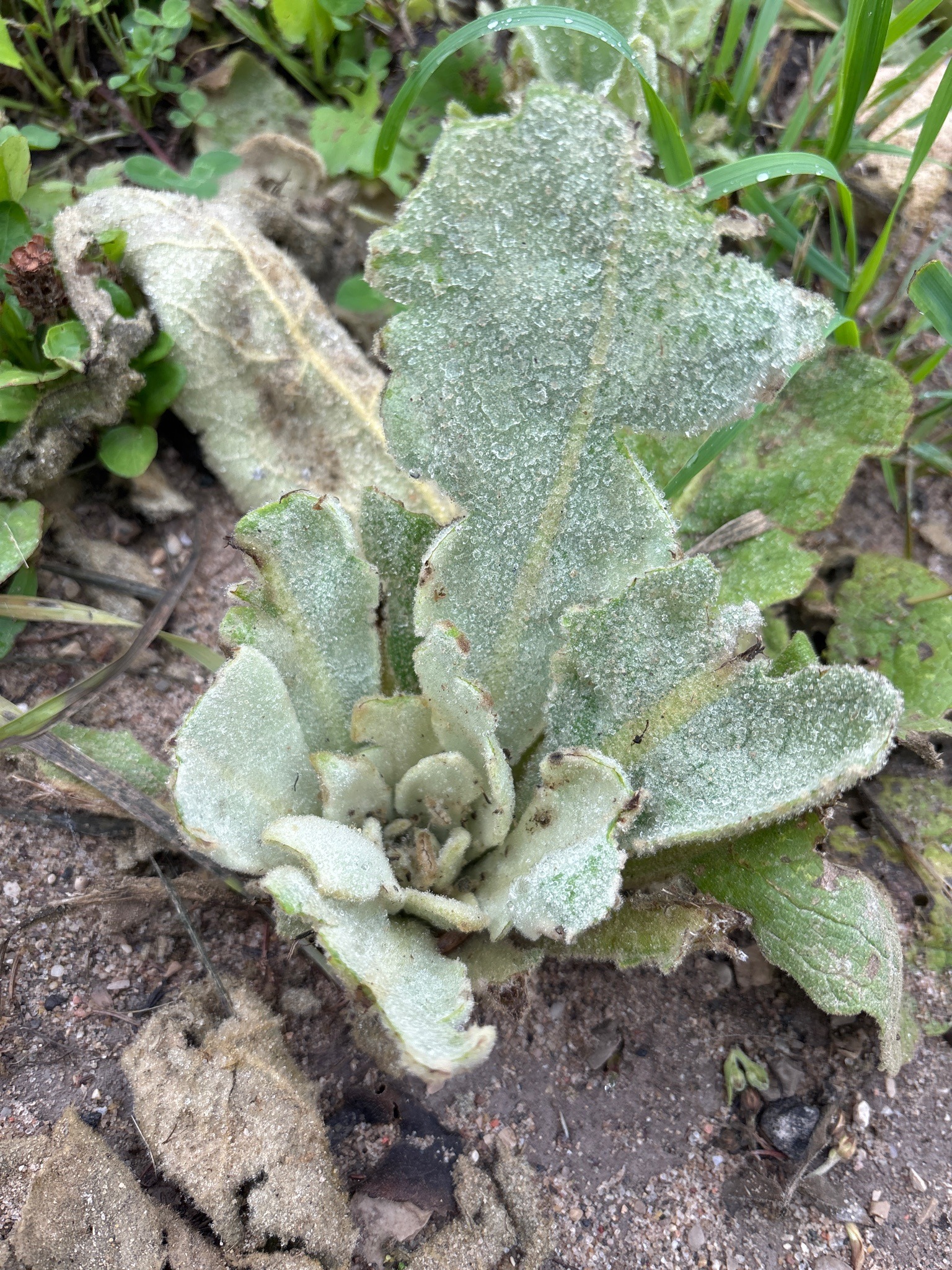
Common Mullein is a biennial herbaceous plant easily recognized by its tall flowering stalks and large, soft, fuzzy, pale green rosette leaves.
Characteristics
Forms a dense rosette of large, velvety, grayish-green leaves covered in dense hairs in its first year. In the second year, it produces a single tall, stout flowering stem with yellow flowers.
Habitat
Disturbed soils, waste areas, roadsides, pastures, and rocky or sandy clearings.
When to Find It
Rosettes remain green throughout winter and spring; flowering occurs in summer (June to August).
Conservation Status
Not Threatened (widespread invasive weed in many regions outside its native range).
Ecological Role
Provides shelter for overwintering insects and seeds are a food source for birds, particularly finches.
Easily Confused With
Foxglove (Digitalis purpurea), though foxglove leaves are less densely woolly and more regularly toothed.
Observation Tips
Look along sunny, dry roadsides and disturbed ground. The velvety texture of the leaves is unmistakable to the touch.
Interesting Facts
Historically referred to as 'cowboy toilet paper' due to the soft, thick texture of its leaves. It was also used traditionally to make torches by dipping the dried flower stalks in suet or wax.