Cabbage Palmetto
Scientific Name: Sabal palmetto
Category: tree
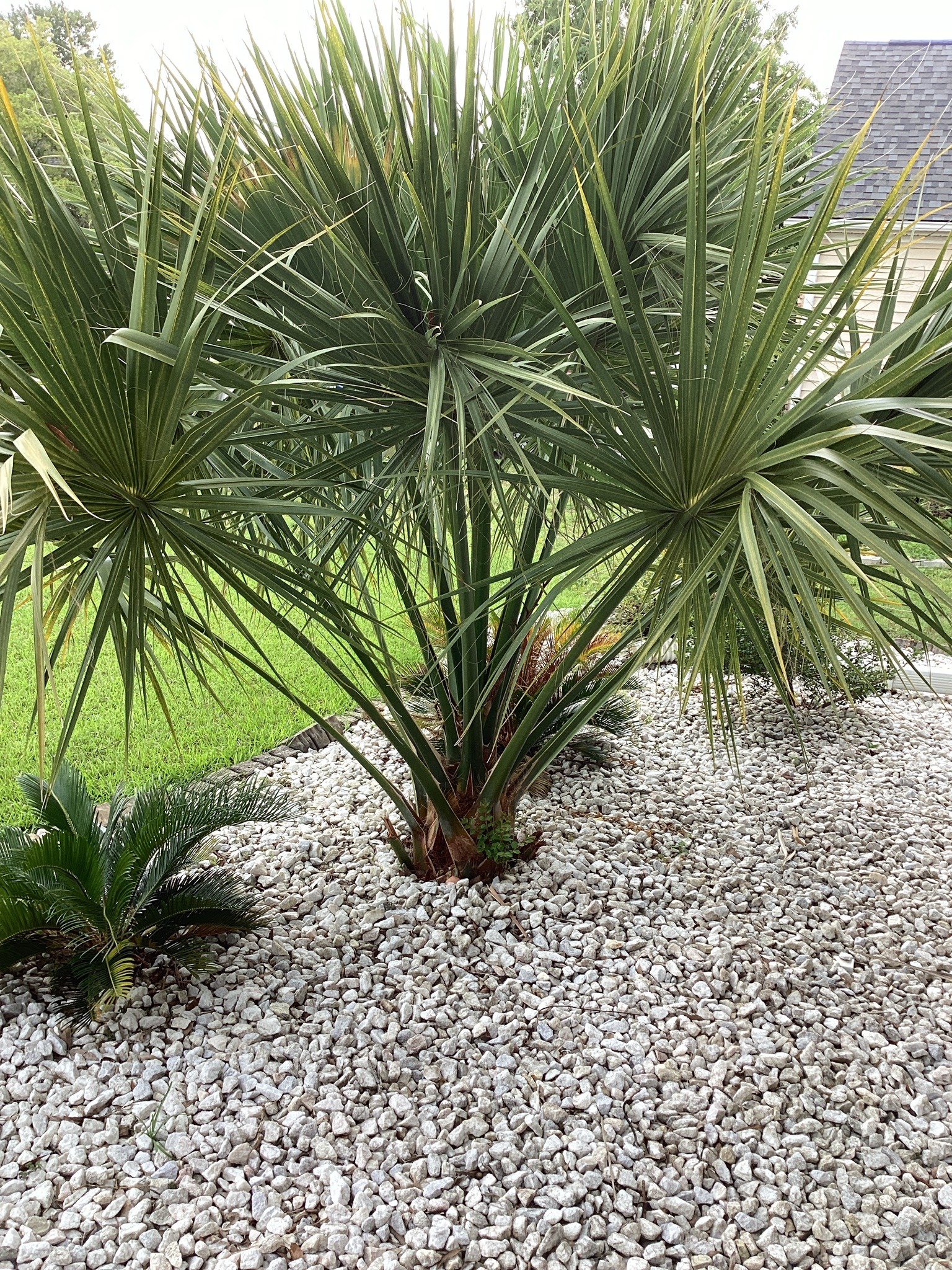
Brief Description
A hardy, fan-leaved palm tree native to the Southeastern United States, often used in landscaping for its tropical appearance and resilience.
Characteristics
It features large, fan-shaped fronds (costapalmate) with a distinct midrib extending into the leaf. The leaves are typically blue-green to green and have thread-like filaments hanging from the margins. Unlike most true trees, it has a fibrous trunk.
Habitat
Thrives in coastal forests, salt marshes, and sandy areas, but is widely planted in residential front yards and urban landscapes.
When to Find It
Evergreen; white fragrant flowers typically bloom in summer followed by black berries in autumn.
Conservation Status
Least Concern; abundant in its native range.
Ecological Role
Provides vital nesting habitat for birds and bats. Its fruits are a food source for many mammals and birds, and its nectar attracts various pollinators.
Easily Confused With
Saw Palmetto (Serenoa repens) which is Shorter and has saw-like teeth on the stems, whereas Sabal palmetto stems are smooth.
Observation Tips
In a landscape setting, check the base of the leaves for the smooth petioles to distinguish it from prickly cousins. Avoid over-pruning green fronds as they provide the plant's energy.
Interesting Facts
The Cabbage Palmetto is the state tree of both South Carolina and Florida. Its name comes from the edible terminal bud, which tastes like cabbage, though harvesting it kills the tree.
User Notes
Front yard