Norway Spruce
Scientific Name: Picea abies
Category: tree
Brief Description
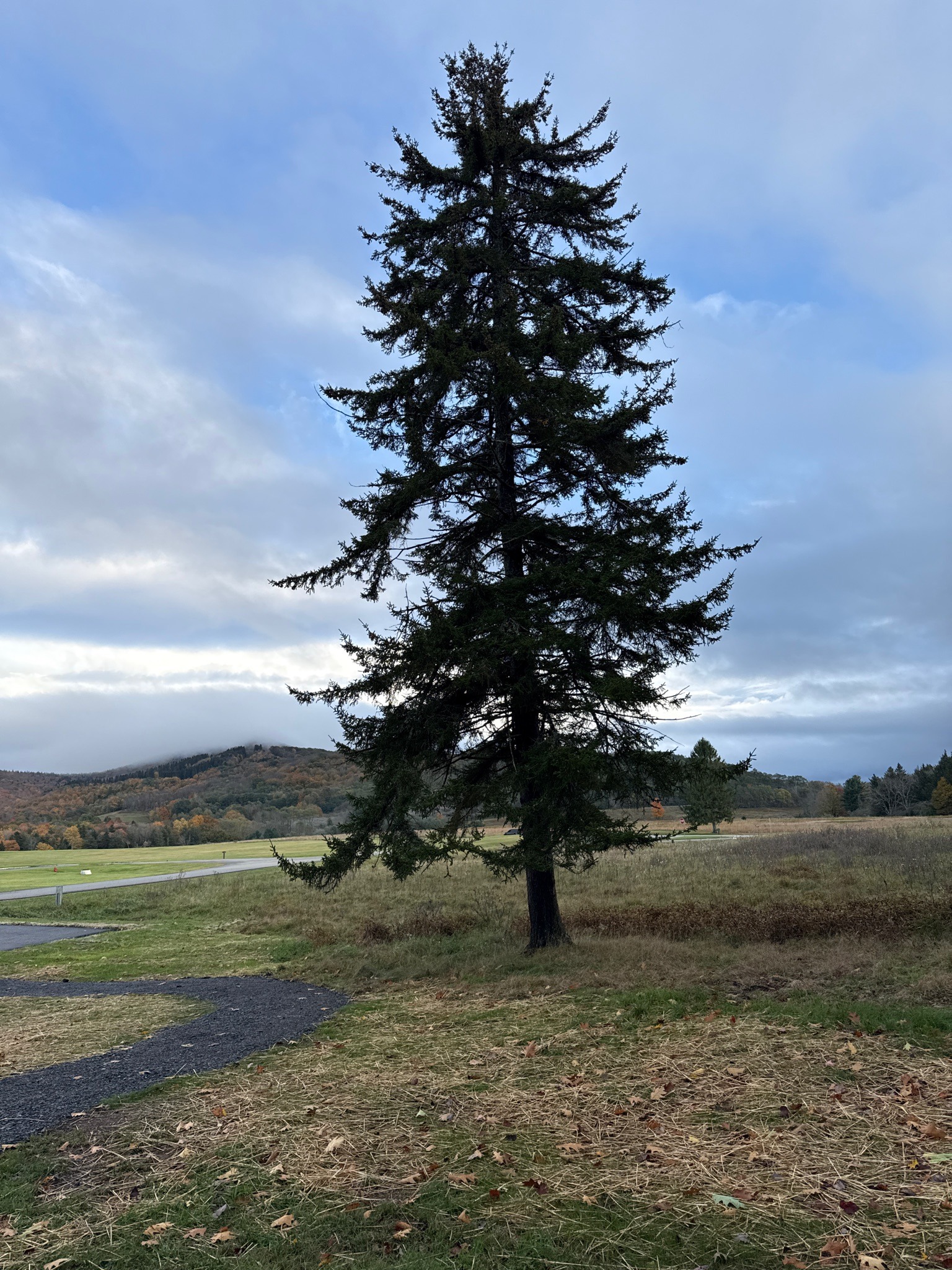
A large, fast-growing evergreen conifer recognized by its drooping branchlets and cylindrical cones.
Characteristics
Reaches heights of 35-55 meters. Dark green, needle-like leaves are four-sided in cross-section. Bark is grayish-brown and scaly. The defining feature is the pendulous branchlets (secondary branches) that hang down from the main branches.
Habitat
Native to mountainous and boreal forests of Europe and Scandinavia, widely planted globally in temperate zones, parks, and plantations.
When to Find It
Evergreen, providing year-round foliage and visibility.
Conservation Status
Least Concern
Ecological Role
Provides essential shelter and nesting sites for birds and small mammals, while its seeds are a food source for crossbills and squirrels.
Easily Confused With
Sitka Spruce (Picea sitchensis) and White Spruce (Picea glauca). Norway Spruce is distinguished by its distinctly weeping branchlets and larger cones (up to 15 cm long).
Observation Tips
Observe the tree from a distance to clearly see the drooping secondary branches characteristic of mature specimens.
Interesting Facts
The Norway Spruce is the traditional species used as the Christmas tree erected in Trafalgar Square in London each year.