Dogbane (spreading dogbane)
Scientific Name: Apocynum androsaemifolium
Category: plant
Brief Description
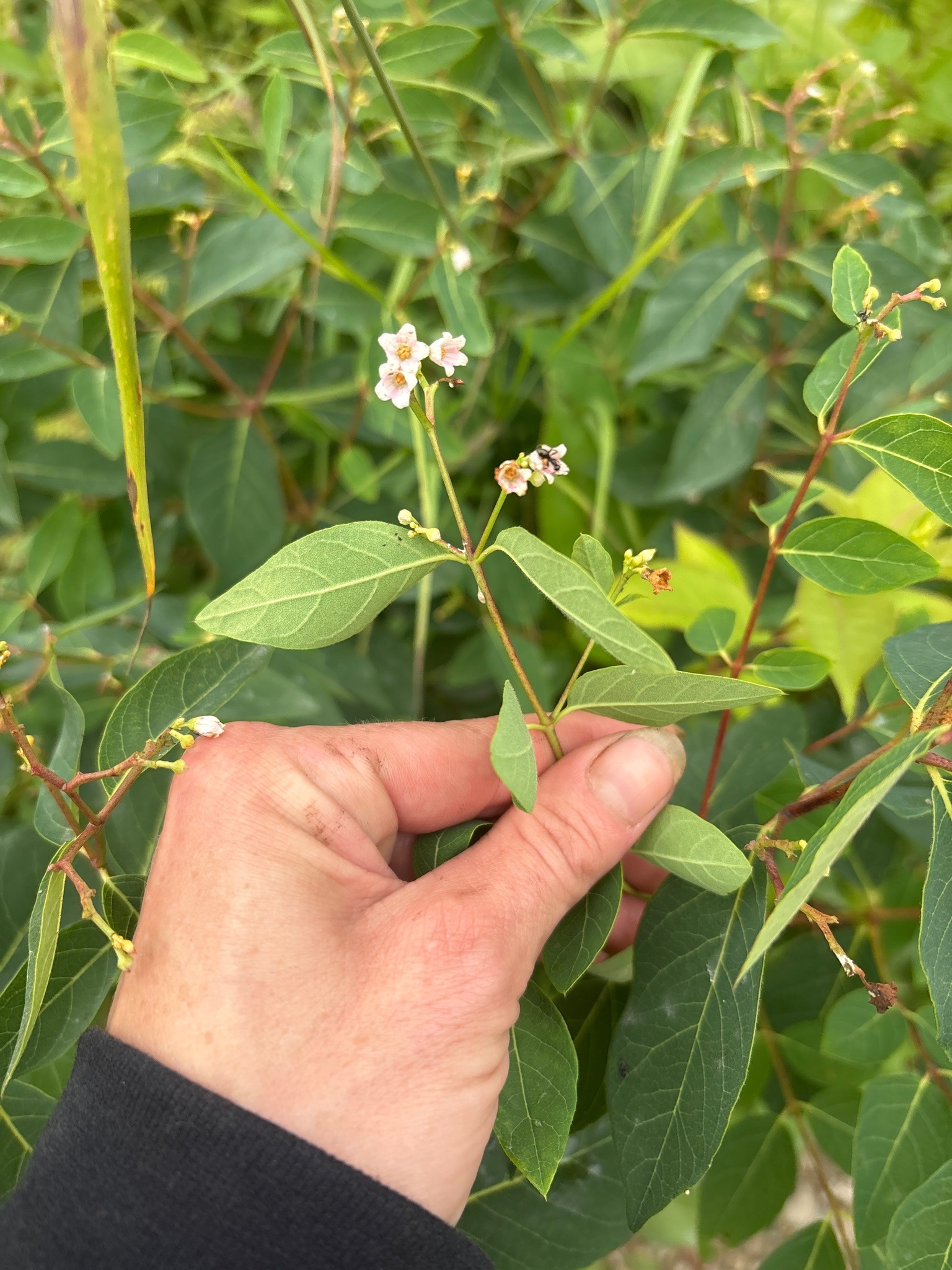
Spreading dogbane is a perennial herbaceous plant known for its milky sap, opposite leaves, and small, bell-shaped pink-striped flowers.
Characteristics
Features branching reddish stems, opposite, oval to elliptic leaves with smooth margins, and clusters of small white-to-pink bell-shaped flowers marked with darker pink veins. The plant exudes a milky, toxic latex when broken or bruised.
Habitat
Found in open woods, clearings, thickets, fields, and along roadsides, typically in dry, well-drained soils.
When to Find It
Flowers bloom primarily in the summer (June to August), with seed pods developing in late summer and autumn.
Conservation Status
N/A
Ecological Role
Serves as a nectar source for various pollinators, including bees, butterflies, and beneficial insects. The milky sap acts as a chemical defense against herbivores.
Easily Confused With
Common Milkweed (Asclepias syriaca), which also has milky sap and opposite leaves, but milkweeds feature larger, broader leaves and large, spherical flower clusters rather than small, bell-shaped flowers.
Observation Tips
Look along woodland edges and brushy fields during summer when it is in bloom. Avoid skin contact with the milky sap if sensitive, as it is toxic.
Interesting Facts
The common name 'dogbane' comes from the historical belief that the plant was poisonous to dogs. Despite its toxicity to mammals, certain specialist caterpillars and insects feed on it by bypassing its chemical defenses.