Garden Strawberry
Scientific Name: Fragaria × ananassa
Category: plant
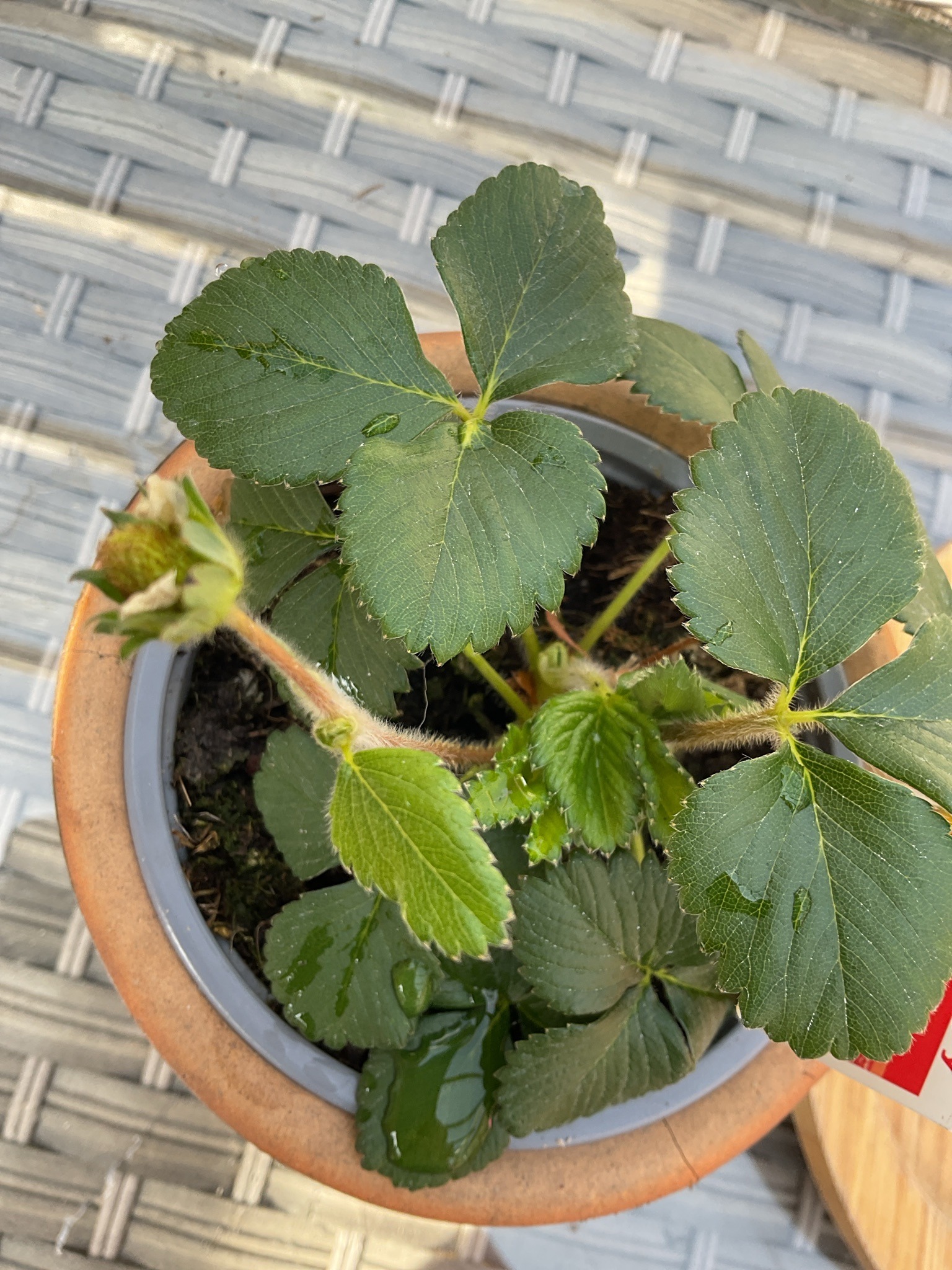
Brief Description
A low-growing herbaceous perennial plant belonging to the rose family, widely cultivated for its edible fruit.
Characteristics
The plant features trifoliate leaves with serrated edges and hairy stems. It produces white five-petaled flowers with yellow centers. The fruit is an aggregate accessory fruit that turns bright red when ripe, with 'seeds' (achenes) on its outer surface.
Habitat
Typically found in well-drained, fertile gardens, meadows, or commercial farms. It requires significant sunlight and moist soil.
When to Find It
Grown as a perennial; flowers in spring and early summer, with fruit ripening in late spring through summer depending on the cultivar.
Conservation Status
N/A - Widely cultivated globally.
Ecological Role
Provides a food source for numerous pollinators, including bees and butterflies, as well as various birds and small mammals that consume the fruit.
Easily Confused With
Mock Strawberry (Potentilla indica) has yellow flowers and tasteless, dry fruit. Wild Strawberry (Fragaria vesca) is smaller, has white flowers, and much smaller, intensely flavored fruit.
Observation Tips
Look for trifoliate leaves and hairy stems. When the fruit appears, check the seed placement; culinary strawberries have seeds on the outside. Ensure the plant is free of pests like slugs or aphids.
Interesting Facts
The strawberry is not a botanical berry; it is an 'aggregate fruit.' Every 'seed' on the outside of the strawbery is actually one of the plant's ovaries and contains a seed inside it.