Pine Cone
Scientific Name: Pinus
Category: tree
Brief Description
The reproductive organ of a pine tree, consisting of woody scales arranged around a central axis.
Characteristics
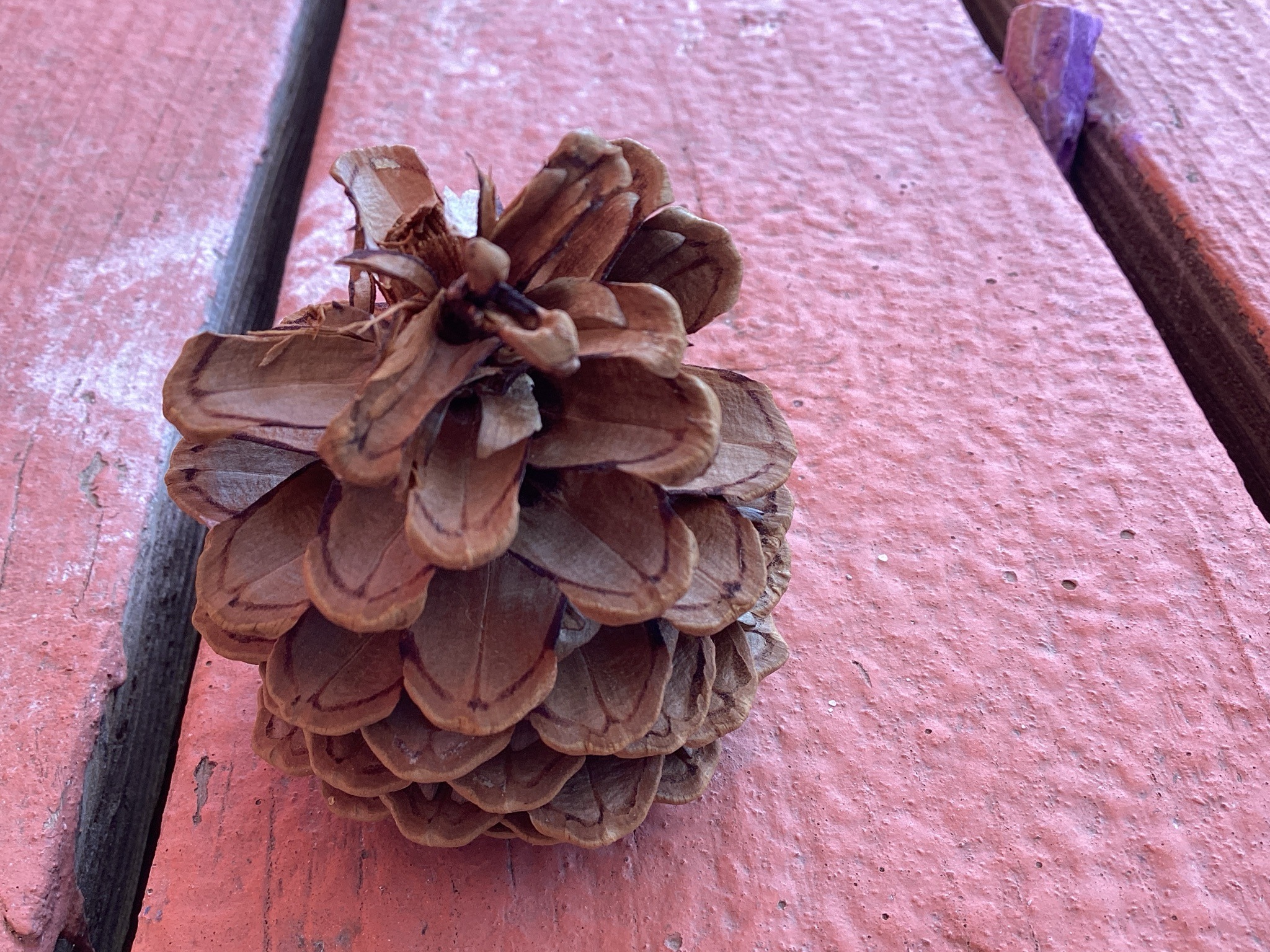
Woody, cone-shaped structure with overlapping scales. Each scale protects two seeds (if the cone is female). The specimen in the image is an open, mature female cone with thick, wedge-shaped scales.
Habitat
Temperate, boreal, and subtropical forests. Often found on the forest floor beneath pine trees or attached to branches.
When to Find It
Cones often drop in autumn and winter or after high winds. They open and close based on humidity levels.
Conservation Status
N/A
Ecological Role
Provides a food source for many birds and mammals, including squirrels and crossbills. Serves as the primary method of seed dispersal for pine trees.
Easily Confused With
Spruce cones (thinner, papery scales), Fir cones (stand upright on branches and disintegrate), and Larch cones (much smaller and more delicate).
Observation Tips
Look for them beneath conifer trees after a storm. You can observe them closing their scales if placed in water and reopening them when dried.
Interesting Facts
Pine cones are ancient, existing before flowering plants. Some species, like the Jack Pine, require the heat of a forest fire to open and release their seeds, a process called serotiny.