Black Raspberry
Scientific Name: Rubus occidentalis
Category: plant
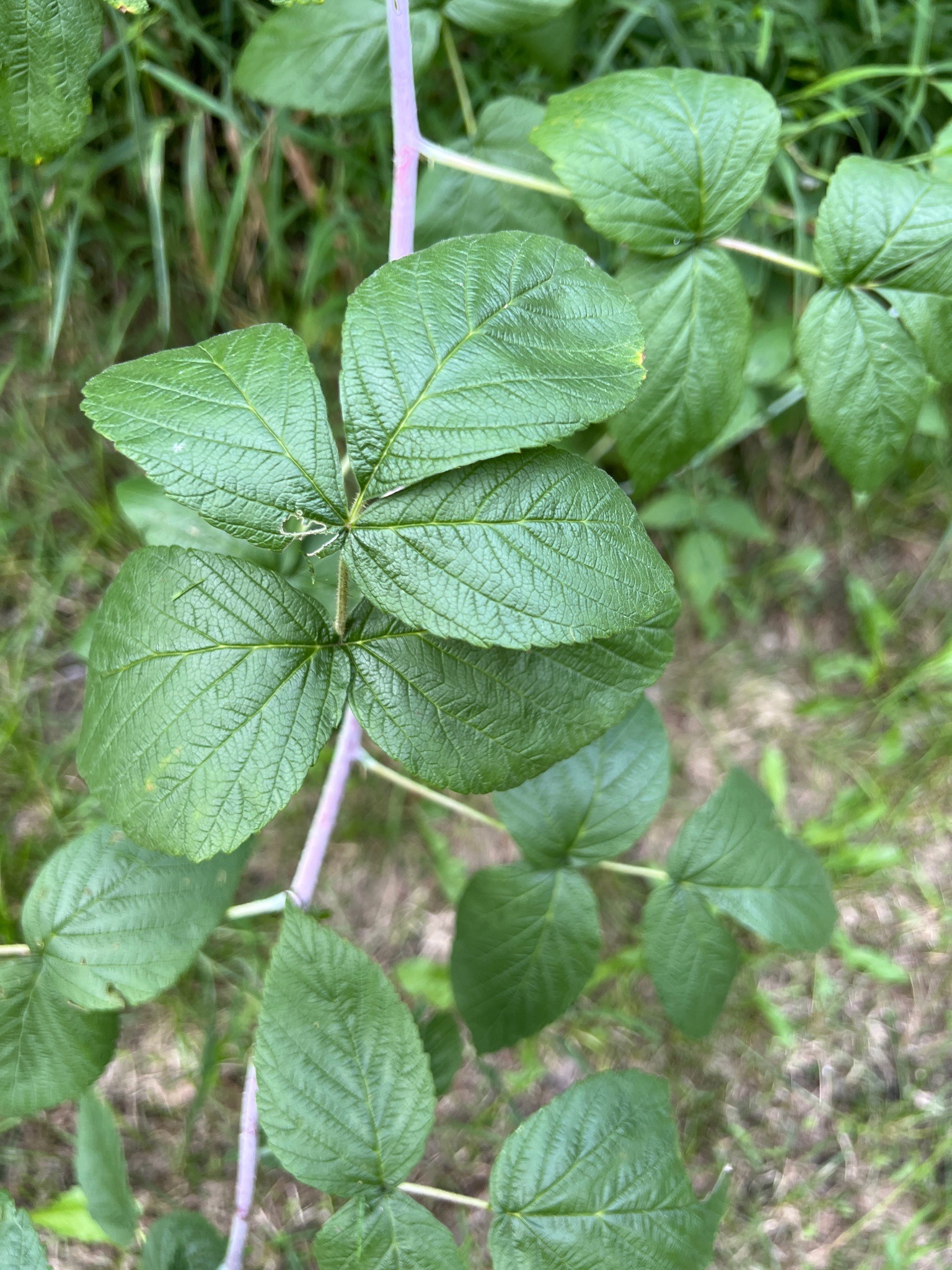
Brief Description
A perennial shrub in the rose family, characterized by prickly arching stems, compound leaves with usually five leaflets on flowering stems, and edible aggregate fruits.
Characteristics
Stems (canes) are covered in prickles and often feature a whitish, powdery coating known as a glaucous bloom on the purplish-green bark. Leaves are alternately arranged and pinnately compound, typically with three to five leaflets that have serrated margins and downy, whitish undersides.
Habitat
Found in thickets, forest edges, clearings, fence rows, and disturbed areas with well-drained soil and adequate sunlight.
When to Find It
Best observed during spring and summer when actively growing and fruiting; stems and distinctive whitish canes remain identifiable year-round.
Conservation Status
N/A
Ecological Role
Provides an important food source for numerous birds and mammals, while its dense thickets offer crucial nesting sites and cover for wildlife.
Easily Confused With
Red raspberry (Rubus idaeus), which typically features redder or brownish canes without the prominent whitish glaucous bloom and usually has paler undersides on leaves.
Observation Tips
Look along forest edges and trails during early summer for blossoms, and mid-summer for ripe berries. Wear thick clothing or gloves to protect against the prickly stems.
Interesting Facts
Unlike blackberries, black raspberries separate hollow from their receptacle when picked, similar to a thimble. The stems (floricanes) fruit only once in their second year before dying back to make way for new primocanes.