Mouflon
Scientific Name: Ovis gmelini
Category: mammal
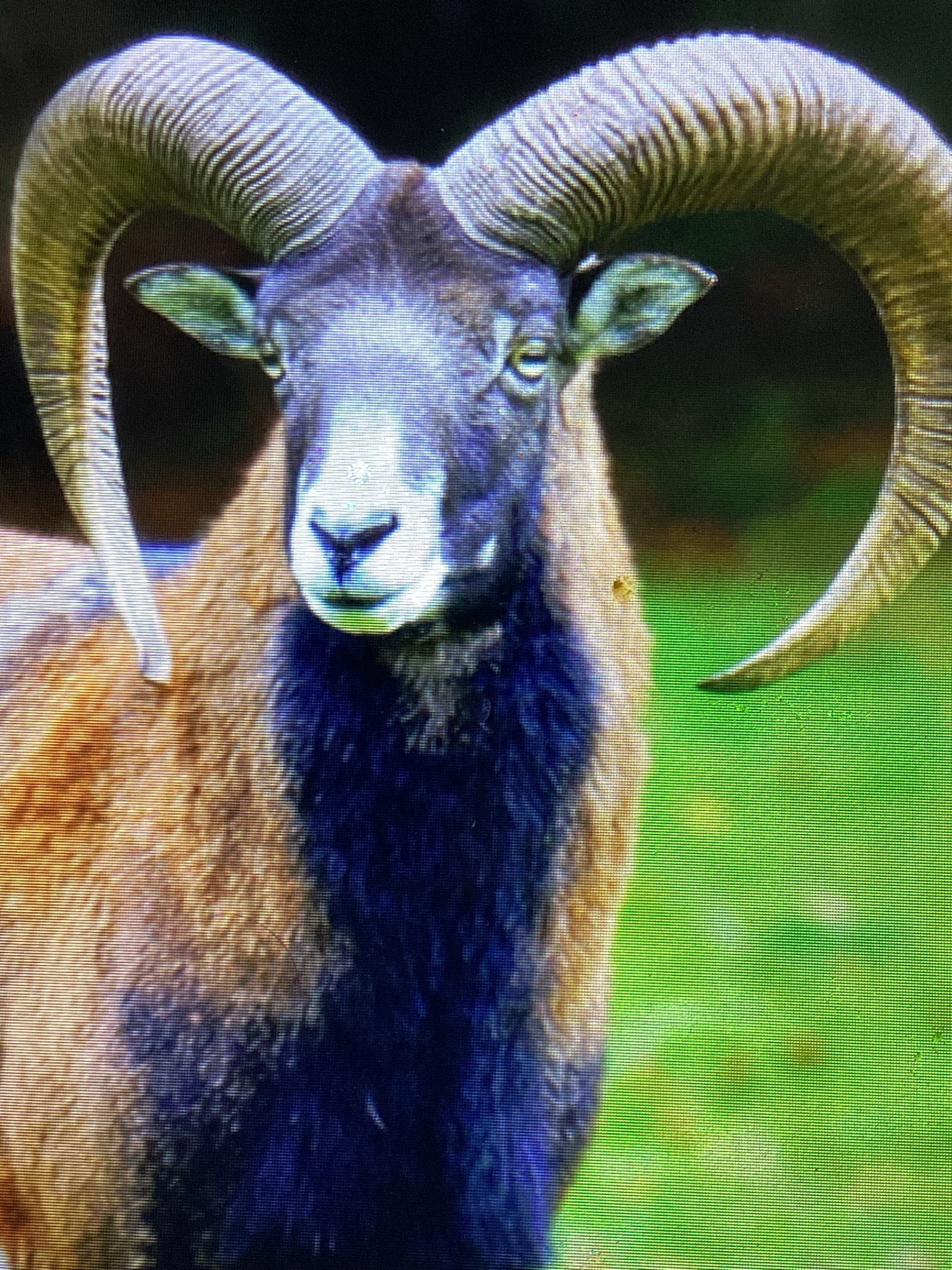
Brief Description
The mouflon is a wild sheep species characterized by large, curved horns in males and a reddish-brown coat with a dark chest patch and white saddle marking.
Characteristics
Males possess large, heavily ridged horns that curve downward and back up in a spiral towards the face. Coat is short, reddish-brown to dark chestnut, with a dark throat ruff, white muzzle, white underbelly, and a distinct pale saddle patch.
Habitat
Steep mountainous areas, open woodlands, scrublands, and rocky terrain across parts of Europe and Asia Minor.
When to Find It
Active year-round; rutting season occurs in late autumn to early winter when rams fight for dominance using their horns.
Conservation Status
Vulnerable (IUCN Red List for wild ancestral populations in western Asia; European populations are introduced and common).
Ecological Role
As large herbivores, they graze on grasses, shrubs, and herbs, helping to maintain open mountain pastures and serving as prey for apex predators like wolves and lynx.
Easily Confused With
Bighorn Sheep (Ovis canadensis) - native to North America with thicker horns that curl forward; Barbary Sheep (Ammotragus lervia) - lighter sandy-tan color with long hair on the chest and legs.
Observation Tips
Look for them in mountainous regions during early morning or late afternoon when they descend from rocky cliffs to feed.
Interesting Facts
The European mouflon is believed to be the feral descendant of the earliest domesticated sheep introduced to Corsica and Sardinia thousands of years ago.