Elephant Ear
Scientific Name: Colocasia esculenta
Category: plant
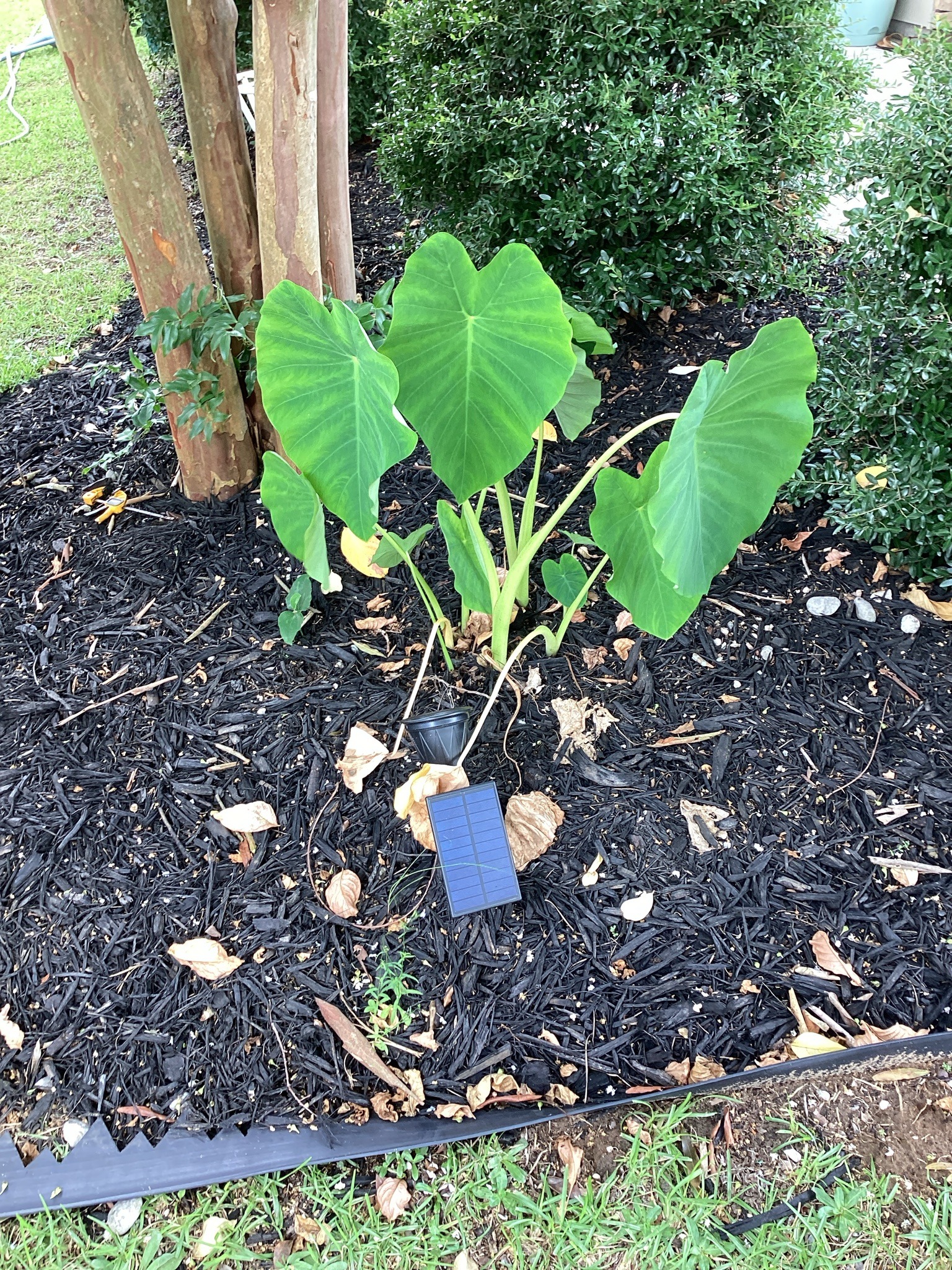
Brief Description
A large-leafed tropical perennial plant often grown for its dramatic foliage.
Characteristics
Large, heart-shaped (arrowhead) green leaves with prominent veins, growing from a central fleshy tuber or corm. The leaves can reach several feet in length and are held on thick, succulent stems.
Habitat
Thrives in moist, humid environments and rich, wet soils, often found near ponds or in marshy areas.
When to Find It
Grown as a perennial in tropical climates and an annual or indoor plant in temperate zones; foliage is most lush in summer.
Conservation Status
N/A
Ecological Role
Provides ground cover and shelter for small amphibians and insects. Some varieties, known as Taro, are a staple food crop providing carbohydrates for millions of people.
Easily Confused With
Alocasia and Xanthosoma species; Alocasia leaves typically point upward, while Colocasia (Elephant Ear) leaves usually point downward.
Observation Tips
Be cautious as the plant contains calcium oxalate crystals which are toxic if ingested and can cause skin irritation; wear gloves when handling.
Interesting Facts
The leaves have a 'lotus effect' where water beads up and rolls off, carrying away dust and keeping the leaf clean. Despite being toxic raw, the roots are edible when properly cooked and are known as Taro.
User Notes
Neighbors yard