Amur Honeysuckle
Scientific Name: Lonicera maackii
Category: plant
Brief Description
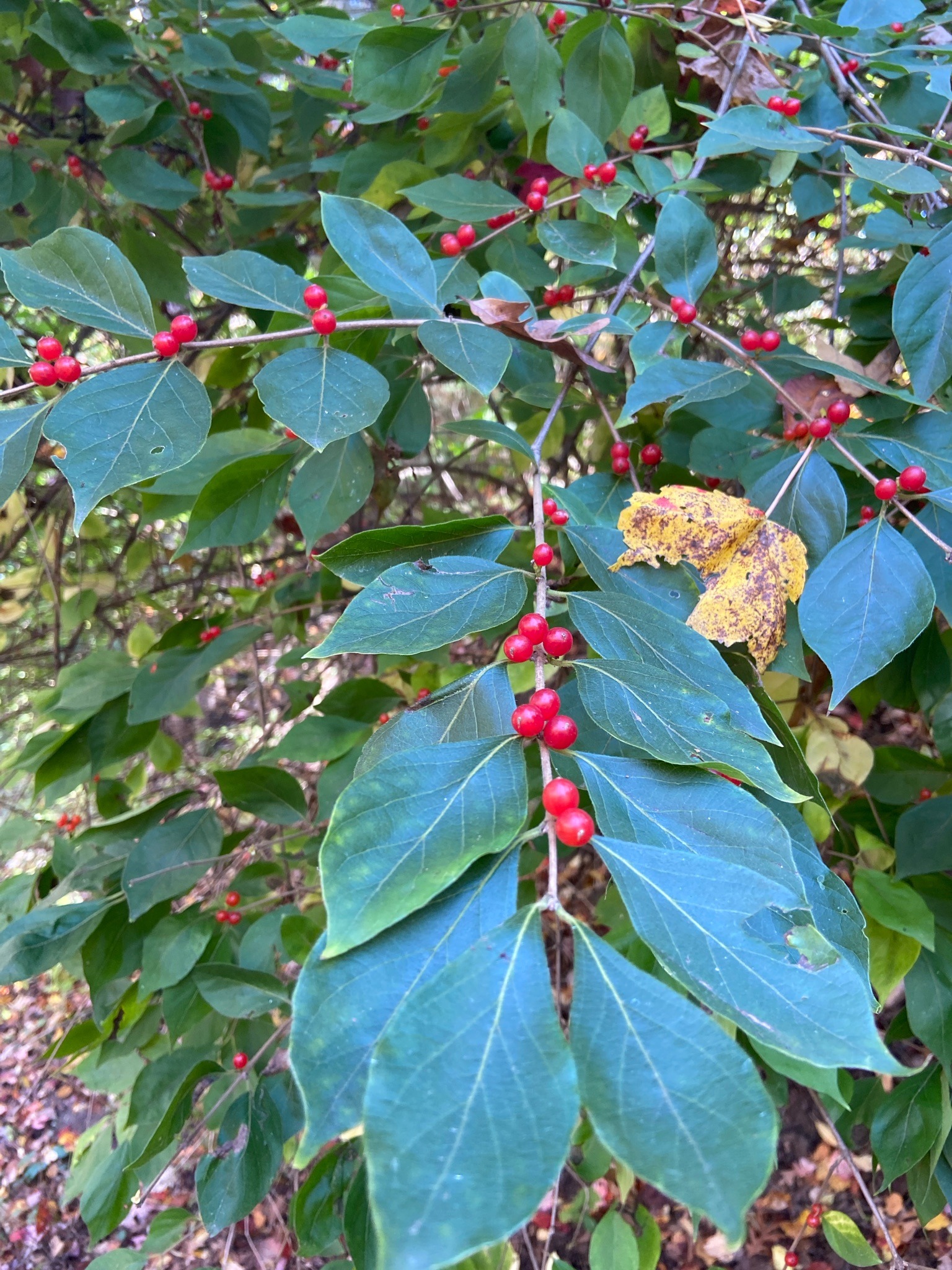
An invasive deciduous shrub featuring opposite, dark green oval leaves and abundant bright red berries arranged along the stems.
Characteristics
Large multi-stemmed shrub growing up to 6 meters tall. Leaves are simple, opposite, dark green, ovate to elliptic with acuminate tips and finely hairy undersides. Flowers are white to pinkish, tubular, and fragrant. Fruits are bright red, rounded berries (each containing several seeds) clustered densely along the stems in the axils of the leaves, persisting into late autumn and winter.
Habitat
Forest edges, old fields, roadsides, riparian areas, and disturbed woodlands.
When to Find It
Berries ripen in late summer and persist through autumn into winter, making them very prominent when leaves begin to yellow and drop.
Conservation Status
N/A
Ecological Role
An aggressive invasive species in North America that outcompetes native understory vegetation, alters forest regeneration, and provides low-nutritional-value food for birds.
Easily Confused With
Other non-native bush honeysuckles (such as Morrow's or Tatarian honeysuckle) and native shrubs with red berries like Spicebush or Winterberry. Bush honeysuckles are distinguished by their hollow stems (at least in older branches) and opposite simple leaves with berries directly in the leaf axils.
Observation Tips
Look for dense thickets along forest trails during autumn when the bright red berries and remaining green or yellowing leaves stand out.
Interesting Facts
Amur honeysuckle leafs out earlier in the spring and holds its leaves longer in the autumn than many native plants, giving it a competitive advantage in capturing sunlight.
User Notes
Near Mac Nature Trail (Oct 29)