Pindo Palm
Scientific Name: Butia capitata
Category: tree
Brief Description
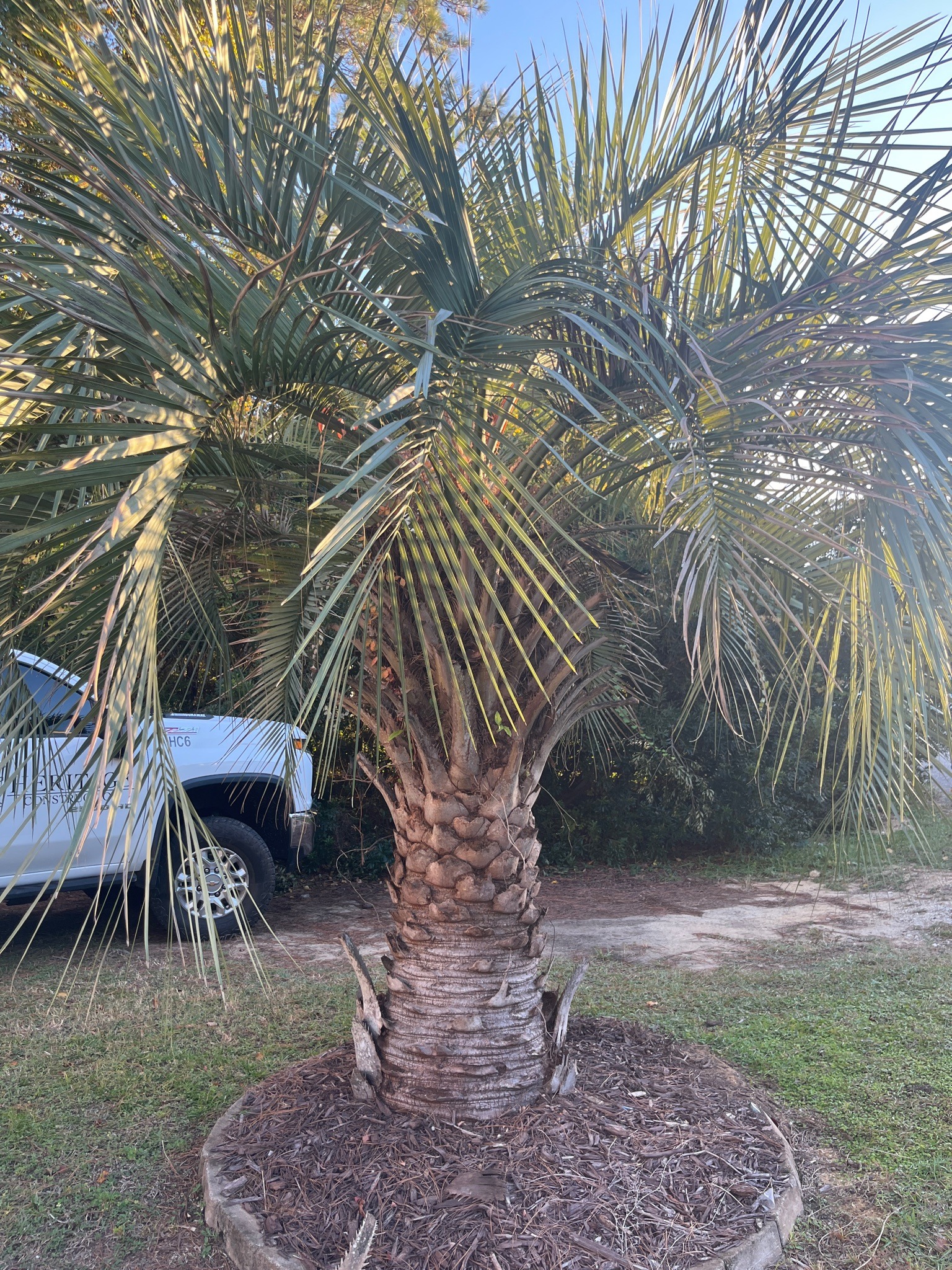
A slow-growing palm tree with a stout trunk covered in persistent leaf bases and graceful, arching blue-green to gray-green pinnate fronds.
Characteristics
Stout trunk marked by the woody bases of old leaf stems; feather-like (pinnate) leaves that arch sharply downward; leaflets curve inward along the margins; produces edible yellow-to-orange fleshy fruits often called jelly palms.
Habitat
Coastal plains, sandy soils, and open woodlands in its native range, commonly planted globally as an ornamental landscape tree.
When to Find It
Perennial evergreen tree; fruits typically ripen in summer to autumn.
Conservation Status
N/A
Ecological Role
Provides food, nesting sites, and shelter for local wildlife, particularly birds and small mammals that consume the fruits.
Easily Confused With
Canary Island Date Palm (Phoenix canariensis), which has sharp spines on the leaf petioles and stiffer fronds, and the Queen Palm (Syagrus romanzoffiana), which has smoother trunks and brighter green, more ruffled fronds.
Observation Tips
Observe the unique bluish-green coloration of the fronds and the distinctive rough, diamond-patterned trunk where old fronds were pruned.
Interesting Facts
The fruit of the pindo palm is sweet and tangy, commonly harvested to make a delicious jelly, earning it the alternative common name 'Jelly Palm'.