Maple Tree
Scientific Name: Acer
Category: tree
Brief Description
A deciduous tree characterized by its distinctively lobed leaves and winged seeds (samaras).
Characteristics
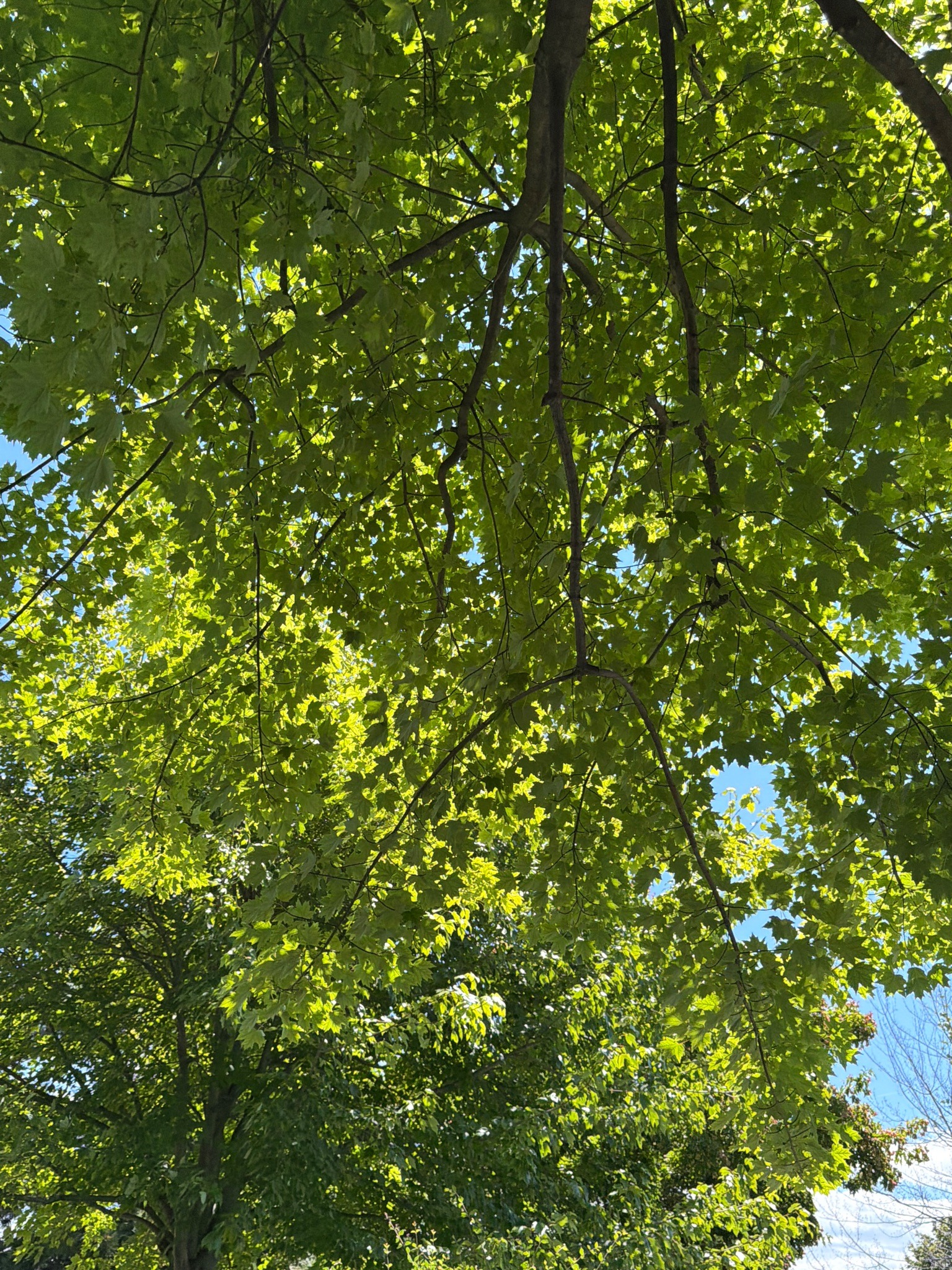
Palmate leaves with 3 to 5 lobes, opposite branching, and a broad, rounded canopy. The leaves in the image appear light green and serrated.
Habitat
Temperate deciduous forests, often found in well-drained soils; also common in suburban and urban landscaping.
When to Find It
Leaves emerge in spring, provide dense shade in summer, and typically turn vibrant colors (red, orange, yellow) in autumn before falling.
Conservation Status
Most species are Least Concern, though some regional varieties may be threatened by pests or climate change.
Ecological Role
Provides habitat and food for numerous birds and mammals. The energy-rich sap is a food source for insects and sapsuckers, while the flowers support pollinators in early spring.
Easily Confused With
Platanus (Sycamore) trees have similar lobed leaves but different bark patterns and alternate branching, whereas maples have opposite branching.
Observation Tips
Look for the 'opposite' arrangement of leaves and twigs. Use a low-angle shot to capture the sunlight filtering through the translucent green leaves.
Interesting Facts
Maple sap is boiled down to create maple syrup; it takes approximately 40 gallons of sap to produce a single gallon of syrup.