Bivalve Shell Fragment
Scientific Name: Mytilidae (family)
Category: shell
Brief Description
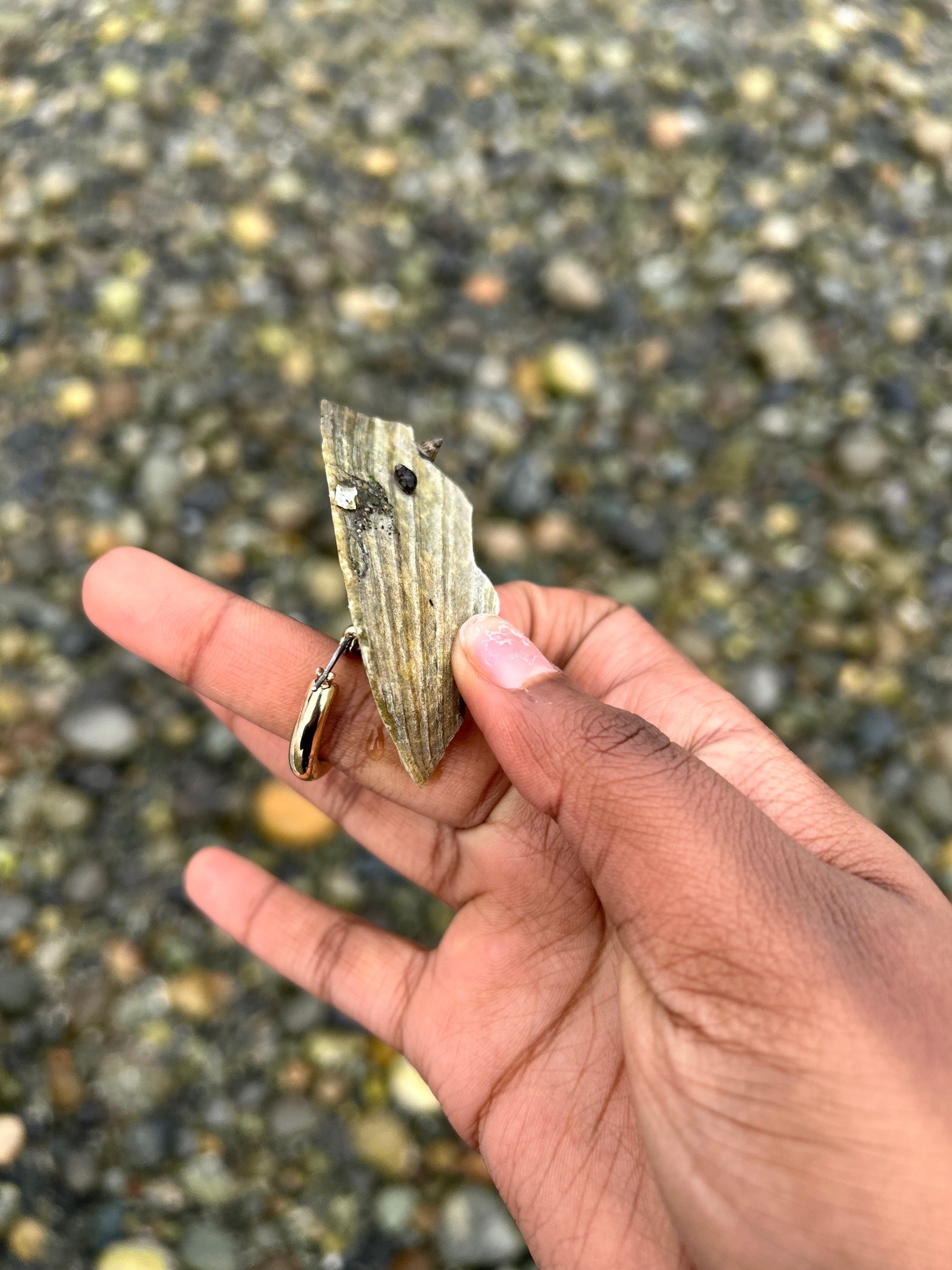
A broken piece of a marine bivalve shell, likely a mussel or clam, showing distinct growth lines.
Characteristics
A triangular, flattened fragment with prominent longitudinal ridges or growth lines. The exterior is grayish-beige with a slightly pearly luster, while small periwinkles or barnacles appear to be attached to its surface.
Habitat
Intertidal zones, sandy or rocky beaches, and coastal shorelines.
When to Find It
Found year-round washed up on beaches, especially after high tides or storms.
Conservation Status
N/A
Ecological Role
Shells provide calcium carbonate to the marine environment as they break down and serve as substrate for small organisms like barnacles and algae.
Easily Confused With
Oyster shells (usually thicker and more irregular) or Scallop shells (more fan-shaped with radiating ribs). It is distinguished by its specific tapering ridge pattern.
Observation Tips
Look for fragments in the wrack line (the line of debris left by high tide). Check for small hitchhikers like tiny snails or barnacles attached to the shards.
Interesting Facts
The lines on a shell fragment represent different stages of the animal's growth, similar to the rings in a tree trunk. Scientists can sometimes use these to determine the age of the mollusk and historical water temperatures.