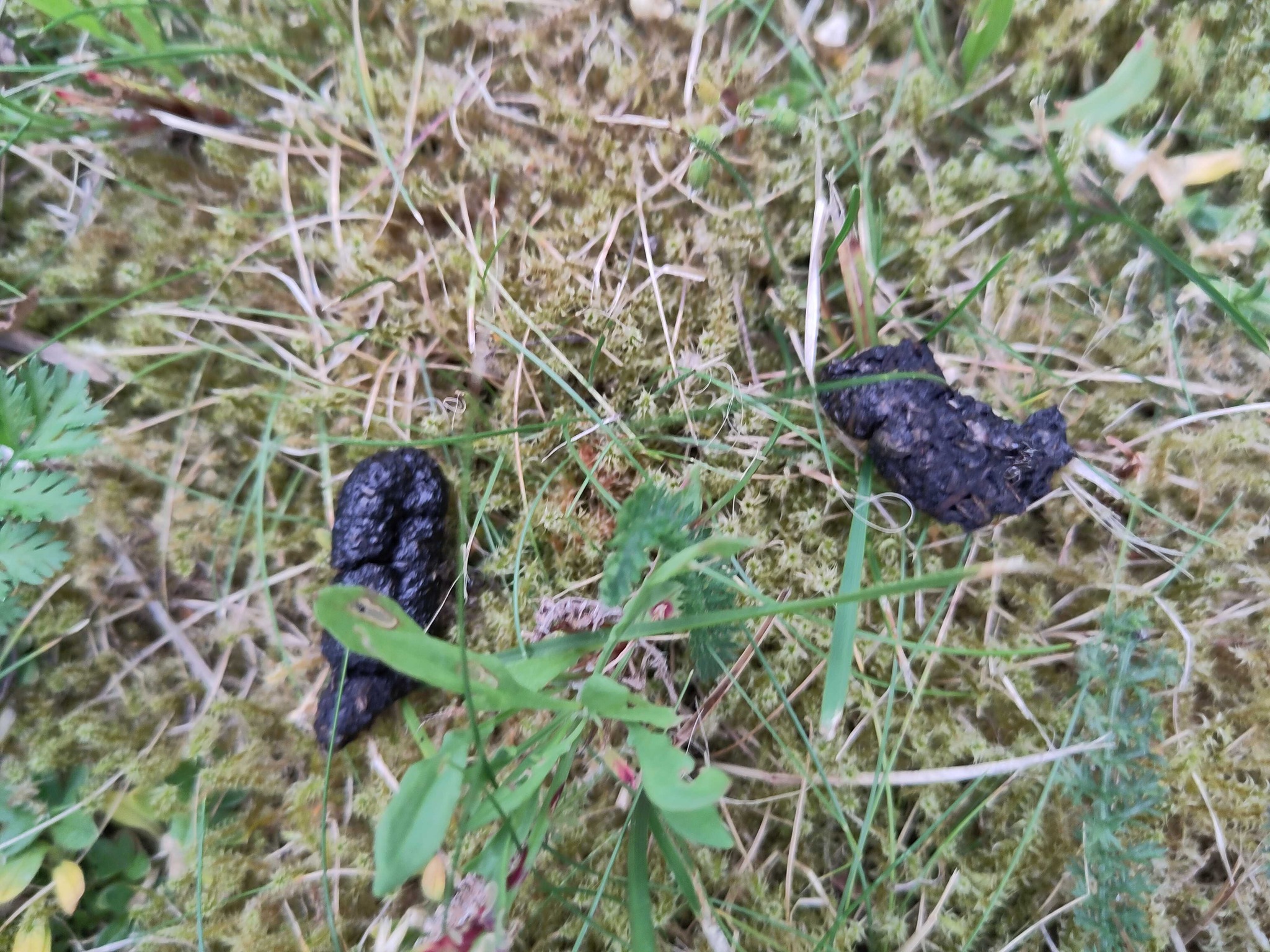
Hedgehog Scat
Scientific Name: Erinaceus europaeus
Category: tracks
Brief Description
Droppings from a European hedgehog, often found in gardens or grasslands.
Characteristics
Typically dark, cylindrical, and roughly 1.5 to 5 cm long. It often has a tapered end and frequently contains shiny fragments of insect exoskeletons.
Habitat
Found in gardens, parks, woodlands, and edges of farmland throughout Europe and parts of Asia.
When to Find It
Most commonly observed from spring to autumn when hedgehogs are active and not hibernating.
Conservation Status
Vulnerable in some regions (e.g., UK), otherwise Least Concern.
Ecological Role
Scat provides nutrients to the soil and indicates the presence of an insectivore that helps control pest populations like slugs and beetles.
Easily Confused With
Toad or rat droppings. Hedgehog scat is usually larger than toad droppings and lacks the smooth, uniform texture of rat droppings, often showing visible insect parts.
Observation Tips
Look for these on lawns or near garden edges in the early morning. Do not touch with bare hands to avoid parasites.
Interesting Facts
Hedgehog scat is often dark or black because their diet is comprised mainly of beetles, caterpillars, and other protein-rich invertebrates.