Common Rain Frog (Greenhouse Frog)
Scientific Name: Eleutherodactylus planirostris
Category: other
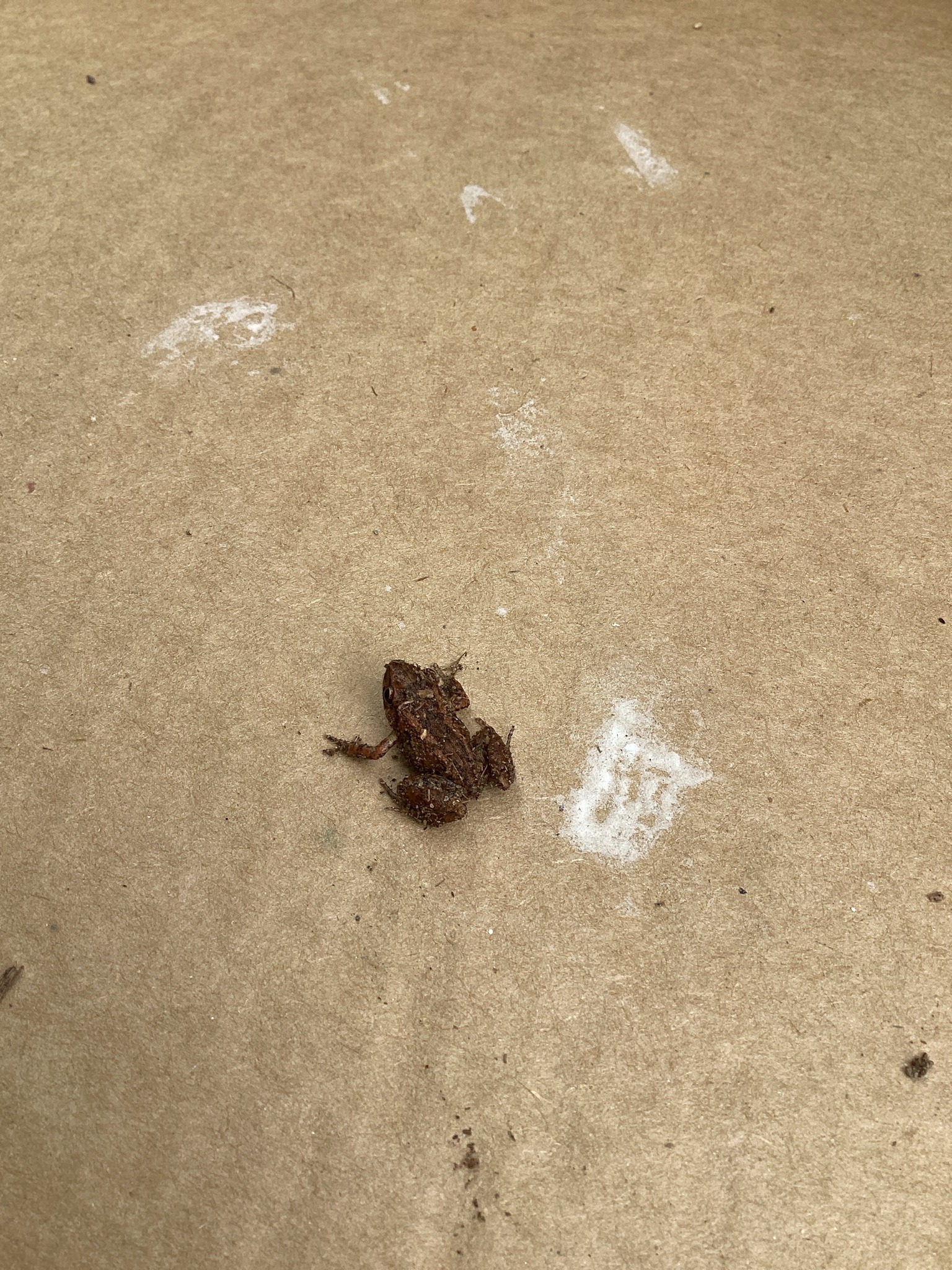
Brief Description
A very small, terrestrial land frog often found in damp gardens and leaf litter, known for its direct development from eggs to froglets without a tadpole stage.
Characteristics
Small size ranging from 15 to 30 mm. Warty, moist skin with a reddish-brown or tan color. Often features two broad, light-colored stripes on the back or a mottled pattern. It has non-expanded toe pads.
Habitat
Found in damp areas, leaf litter, mulch, and under pots or debris in gardens and suburban landscapes.
When to Find It
Most active at night and during or after rainfall in warm months.
Conservation Status
Least Concern (Invasive in many areas)
Ecological Role
An insectivore that helps control small invertebrate populations; however, it is considered an invasive species in many regions outside its native range.
Easily Confused With
Coqui frogs (Eleutherodactylus coqui) which are generally larger and have prominent toe pads, or Cricket Frogs which have more pointed snouts and different vocalizations.
Observation Tips
Listen for their high-pitched, insect-like chirping at night. They are best found by gently turning over moist flower pots or looking through leaf litter.
Interesting Facts
Unlike most amphibians, these frogs lay eggs on land that hatch directly into tiny, fully-formed froglets, skipping the aquatic tadpole stage entirely.
User Notes
Outside