Bluebeard
Scientific Name: Caryopteris
Category: plant
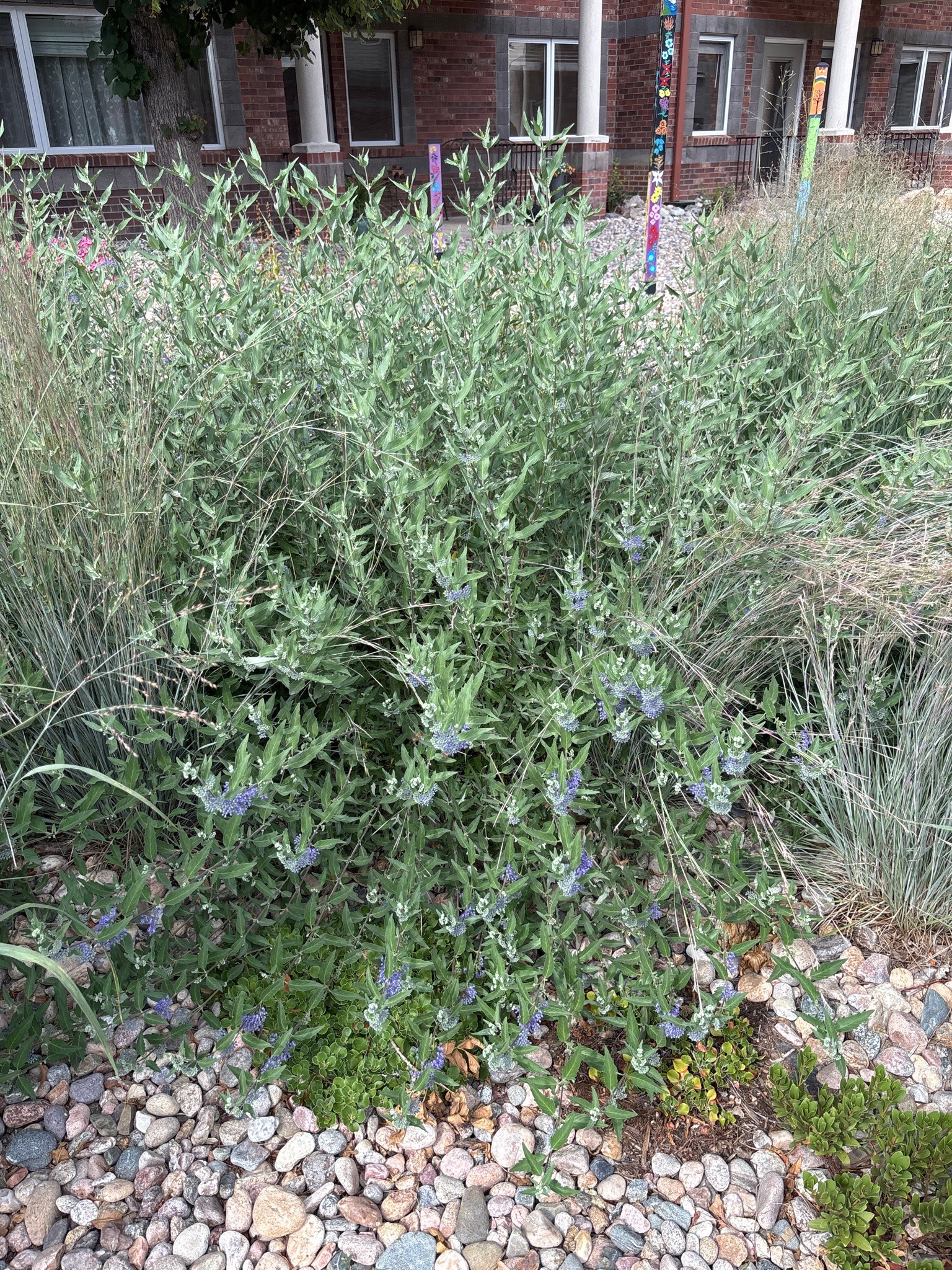
Brief Description
A compact, woody subshrub known for its aromatic grayish-green foliage and abundant clusters of vibrant blue or purple flowers that bloom late in the season.
Characteristics
Deciduous subshrub typically growing 2-4 feet tall with opposite, lance-shaped to ovate leaves that are often grayish-green and downy underneath. Produces dense cymes of small, tubular, vibrant blue or purple flowers.
Habitat
Often cultivated in gardens, rocky slopes, and well-drained sunny borders; native to East Asia.
When to Find It
Blooms from late summer through autumn, providing late-season nectar when many other plants have finished flowering.
Conservation Status
N/A
Ecological Role
Extremely attractive to pollinators such as bees, butterflies, and beneficial insects, serving as an important late-season food source.
Easily Confused With
Often confused with other small aromatic shrubs like lavender or sage, but distinguished by its distinct blue flower clusters and oppositely arranged, slightly serrated grayish leaves.
Observation Tips
Look for them in full sun settings with well-drained soil during late summer and autumn when they are covered in foraging pollinators.
Interesting Facts
Also commonly referred to as blue mist shrub, Caryopteris dies back to the ground in colder winter climates and reliably flushes new growth in spring.
User Notes
Colorado