California Mussel
Scientific Name: Mytilus californianus
Category: shell
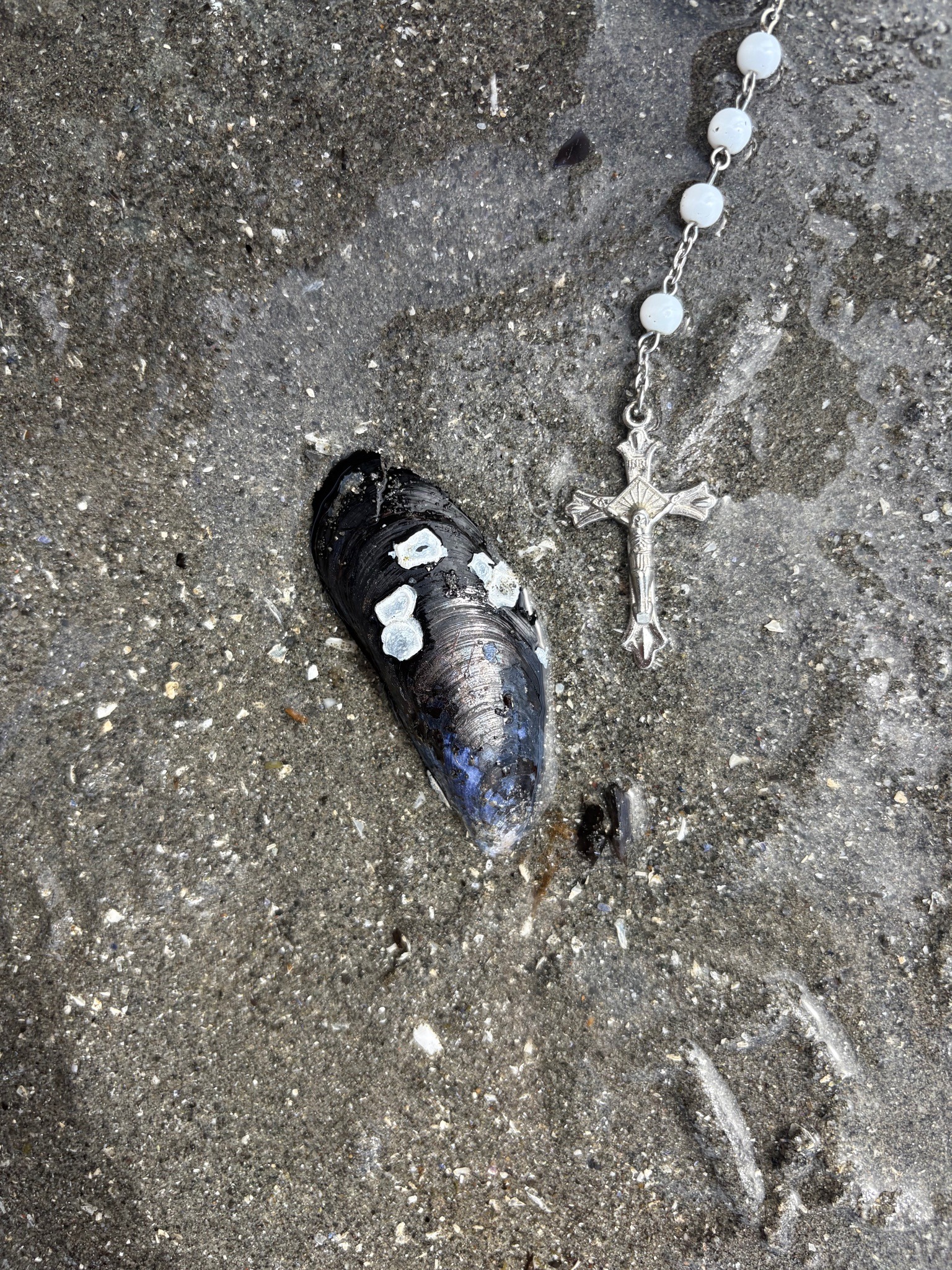
Brief Description
A large marine bivalve mollusk with a dark, thick shell, commonly found attached to rocks in the intertidal zone.
Characteristics
Thick, wedge-shaped shell often reaching 10-20 cm in length. Color is typically black to dark blue, frequently eroded to show white or bluish layers. It features prominent radial ribs and concentric growth lines.
Habitat
Exposed rocky shores in the mid-to-high intertidal zone, where they form dense beds or 'mussel mats.'
When to Find It
Visible year-round; best observed during low tide when they are exposed to the air.
Conservation Status
Common/Stable
Ecological Role
A foundation species that provides complex habitat for hundreds of other small marine organisms. They are a primary food source for sea stars, shorebirds, and sea otters.
Easily Confused With
Bay Mussel (Mytilus trossulus/edulis) which is smaller, smoother, and lacks the strong radial ribs of the California Mussel.
Observation Tips
Be careful when walking on mussel beds as shells are sharp and the surfaces are slippery. Check local tide charts to ensure safety and maximum visibility.
Interesting Facts
They use 'byssal threads,' which are incredibly strong silk-like fibers, to anchor themselves to rocks to withstand the powerful crashing waves of the Pacific coast.
User Notes
Found on a washington state beach