Giant Salmonfly
Scientific Name: Pteronarcys californica
Category: insect
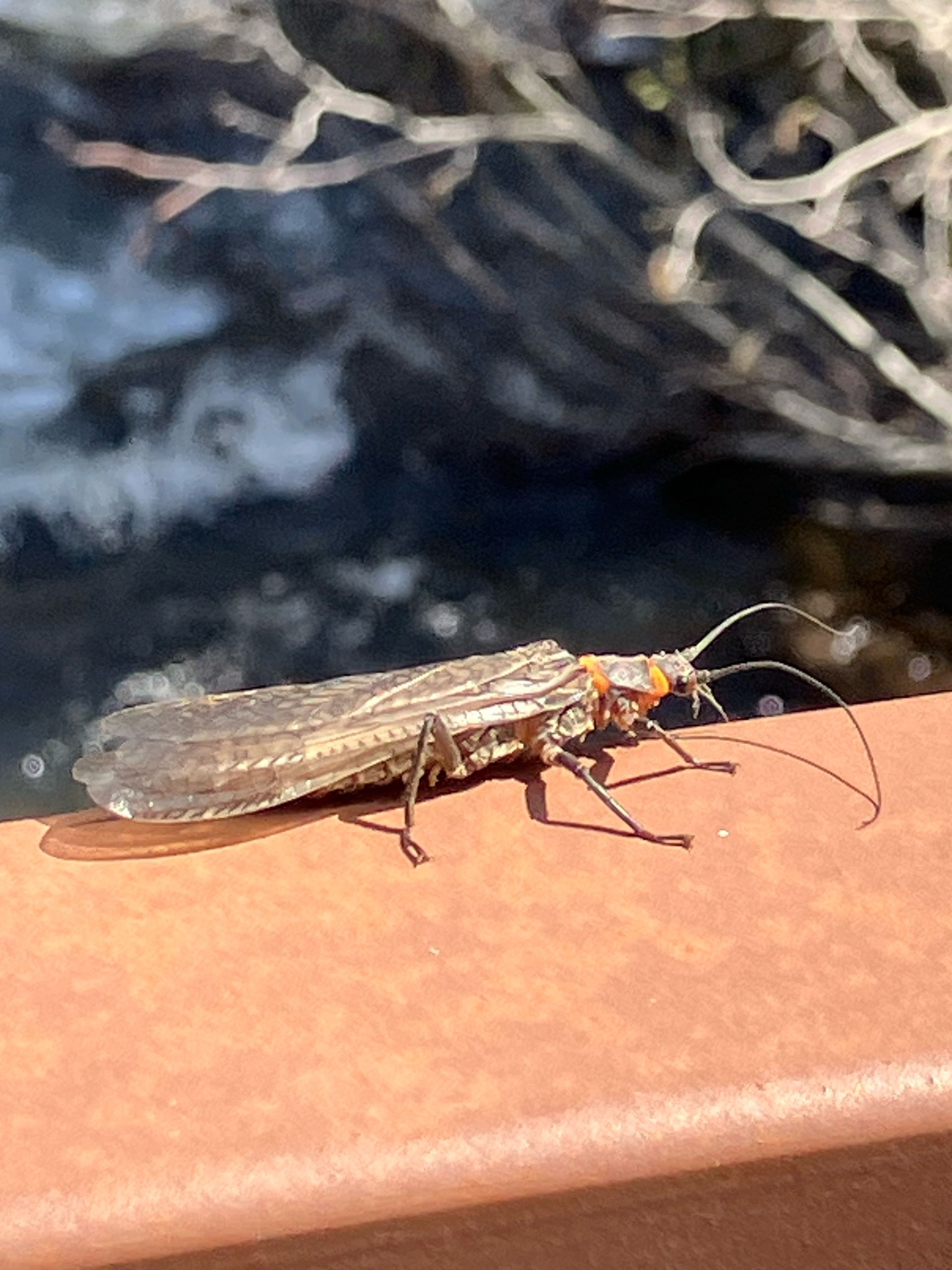
Brief Description
A large species of stonefly known for being a critical food source for trout and a bioindicator of water quality.
Characteristics
Large size (up to 2 inches), dark brown to black body with distinct orange or reddish coloration on the segments under the thorax. They have two long antennae, six legs, and two pairs of heavily veined wings folded flat over the back.
Habitat
Found near clean, fast-flowing cold-water rivers and streams with rocky substrates. Distrubuted across Western North America.
When to Find It
Adults typically emerge in late spring to early summer (May to July) depending on water temperature.
Conservation Status
N/A
Ecological Role
As nymphs, they process organic matter; as adults, they are a vital high-protein food source for fish, birds, and bats. Their presence indicates high dissolved oxygen and low pollution levels.
Easily Confused With
Golden Stoneflies, which are generally smaller and lighter in color (yellow/tan) without the deep orange highlights of the Salmonfly.
Observation Tips
Look for them on streamside vegetation or bridge railings near rushing water during 'the hatch.' They are clumsy fliers and easy to observe closely.
Interesting Facts
The nymphs live underwater for up to four years before crawling onto land to molt into winged adults, which live only for a few days to a week to mate.