Pomegranate
Scientific Name: Punica granatum
Category: tree
Brief Description
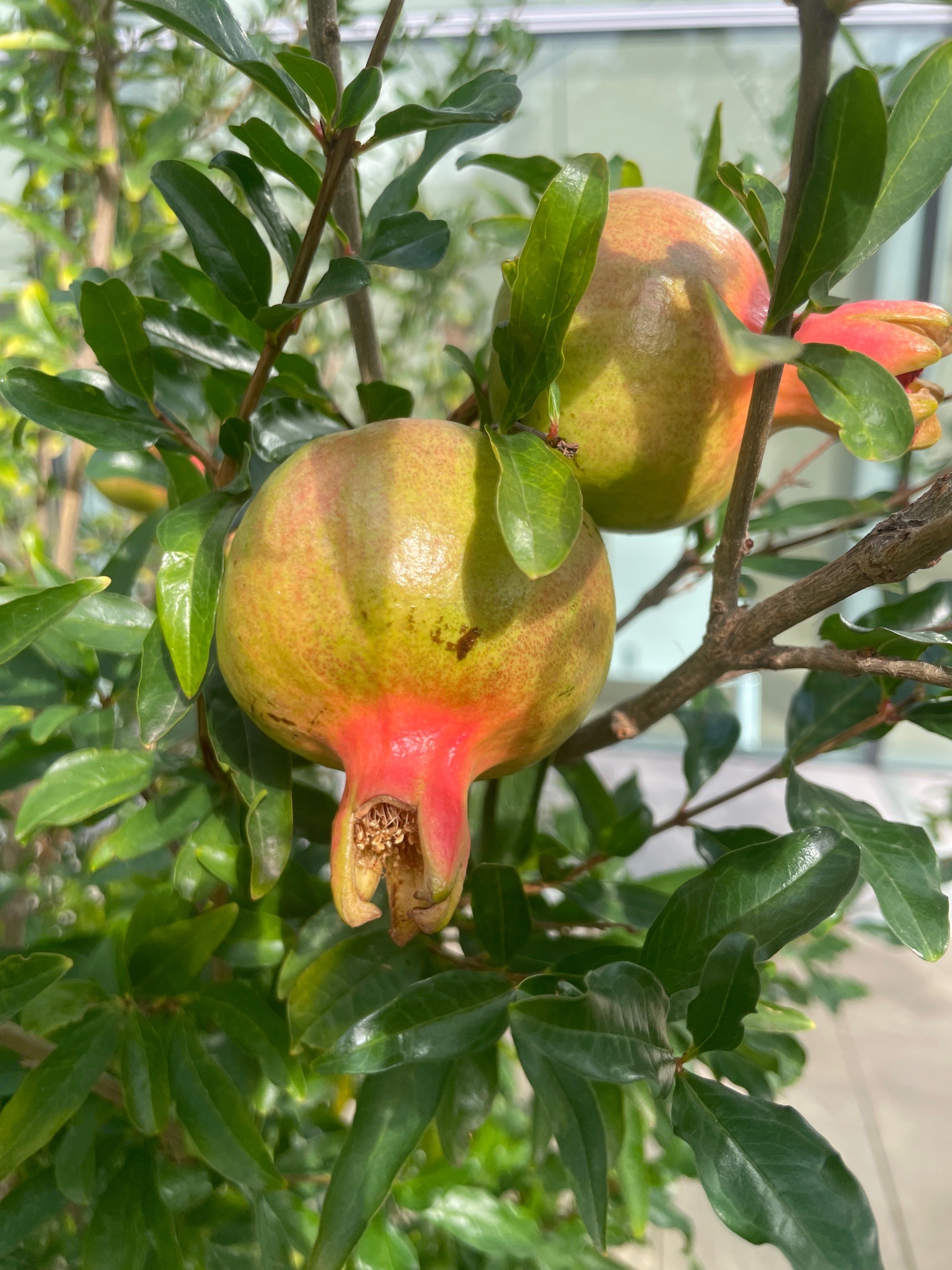
Pomegranates are round, red-to-yellowish fruits hanging from a dense, deciduous shrub or small tree, easily recognized by their distinct calyx shaped like a crown at the base.
Characteristics
Leathery skin ranging from yellow-pink to deep red; the interior contains hundreds of edible ruby-red seeds (arils) surrounded by a white spongy membrane. The leaves are glossy, narrow, and lance-shaped.
Habitat
Grows well in regions with cool winters and hot, dry summers, typically cultivated in Mediterranean climates, orchards, and arid or semi-arid subtropical regions.
When to Find It
Fruits typically ripen in autumn (September to November in the Northern Hemisphere).
Conservation Status
N/A
Ecological Role
Provides food for various birds and mammals that feed on the fleshy arils and help disperse seeds.
Easily Confused With
Some unripe fruits or other large round pomes, but the distinct crown-like calyx at the end of a pomegranate is unique.
Observation Tips
Look for them hanging on small, thorny deciduous trees or shrubs during late summer and autumn.
Interesting Facts
Pomegranates have been cultivated since ancient times and are deeply symbolic in many cultures, often representing fertility, abundance, and life.