Clematis
Scientific Name: Clematis spp.
Category: plant
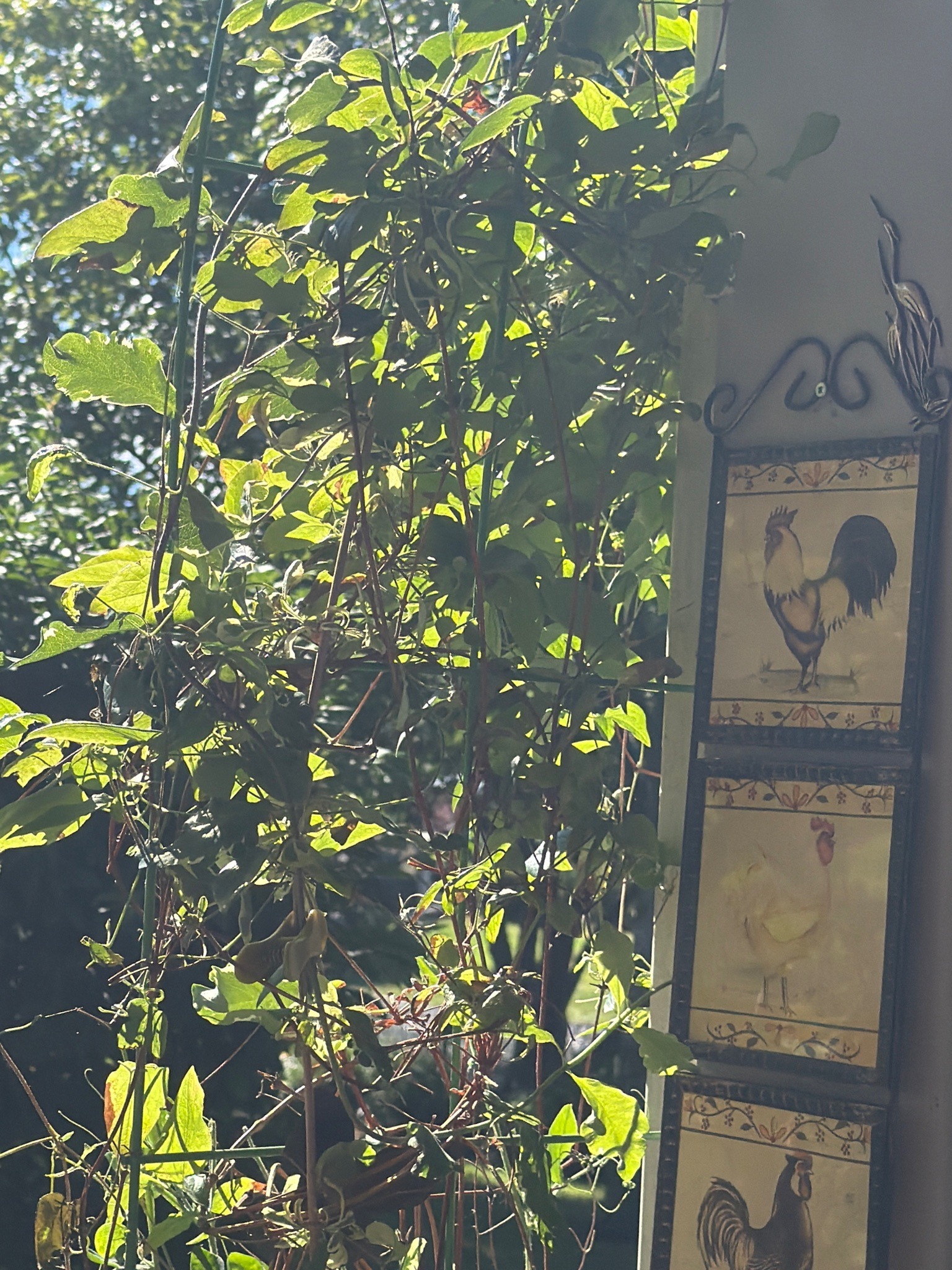
Brief Description
A popular genus of climbing vines known for their vibrant flowers and ability to scale trellises and walls.
Characteristics
Woody climbing vines with opposite leaves, often divided into leaflets. They climb by twisting their leaf stalks around supports. Seed heads are often feathery and decorative.
Habitat
Found in gardens, woodlands, and along forest edges; they prefer fertile, well-drained soil with their 'roots in the shade and heads in the sun.'
When to Find It
Blooming periods vary by species from early spring to late autumn, with some varieties producing ornamental seed heads in winter.
Conservation Status
N/A
Ecological Role
Provides nectar for pollinators like bees and butterflies; some birds may use the dense vines for nesting or the feathery seeds for nesting material.
Easily Confused With
Honeysuckle (Lonicera) has different leaf arrangements and tubular flowers; Passionflower (Passiflora) has more complex, exotic floral structures.
Observation Tips
Look for the stems wrapped around a support structure. Observe during the day when flowers are fully open to see visiting pollinators.
Interesting Facts
The name Clematis comes from the Ancient Greek word 'klema,' meaning vine branch. They are often called the 'Queen of Climbers' due to their diverse and beautiful floral displays.