Spotted Coralroot
Scientific Name: Corallorhiza maculata
Category: plant
Brief Description
A unique, leafless orchid that lacks chlorophyll and lives symbiotically with fungi in the soil.
Characteristics
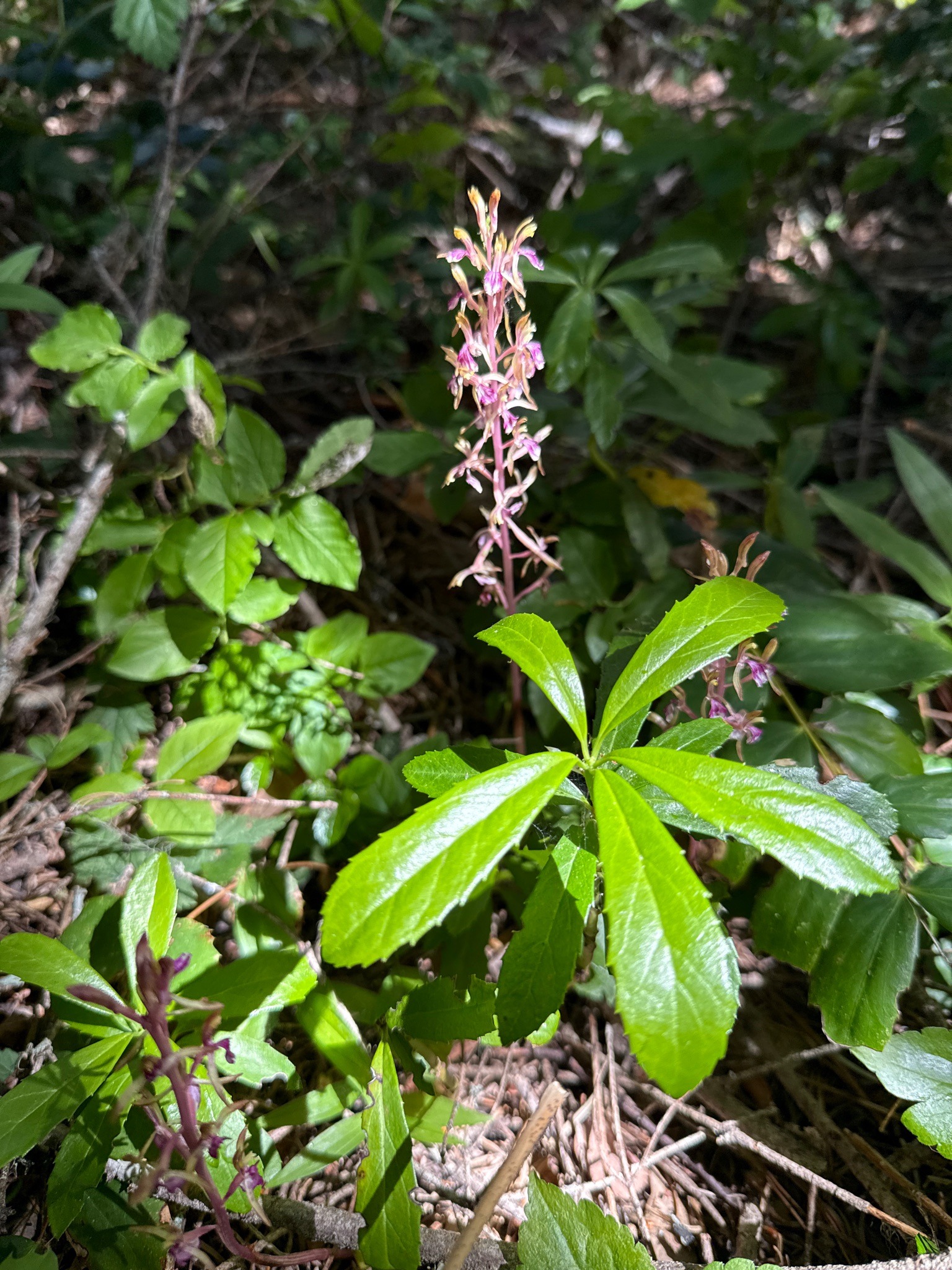
The plant consists of a reddish or brownish-purple stem, 15 to 50 cm tall, with small, scale-like leaves. The flowers are small, growing in a terminal raceme; they have white lips with characteristic purple-red spots, while the other petals and sepals are typically a reddish-brown or pinkish-tan.
Habitat
Typically found in the deep leaf mulch of moist to dry coniferous, deciduous, or mixed forests.
When to Find It
Flowers in late spring to late summer (May to August), depending on elevation and latitude.
Conservation Status
Vulnerable in some parts of its range, though generally common in the western United States and Canada.
Ecological Role
As a mycoheterotroph, it plays a fascinating role in the forest ecosystem by obtaining all its nutrients from mycorrhizal fungi in the soil, which in turn are connected to the roots of nearby trees.
Easily Confused With
Striped Coralroot (Corallorhiza striata) lacks the white spotted lip and has distinct purple stripes on all petals. Early Coralroot (C. trifida) is yellow-green and smaller.
Observation Tips
Look for these in shaded forest floors where there is thick leaf litter. Be careful not to step on them as they are fragile and lack large leaves to announce their presence. Avoid picking them as they will not survive transplanting.
Interesting Facts
Because they lack chlorophyll, they do not perform photosynthesis. Their namesake 'coral-like' roots are actually branched underground rhizomes that lack true root hairs.