Thorny Olive
Scientific Name: Elaeagnus pungens
Category: plant
Brief Description
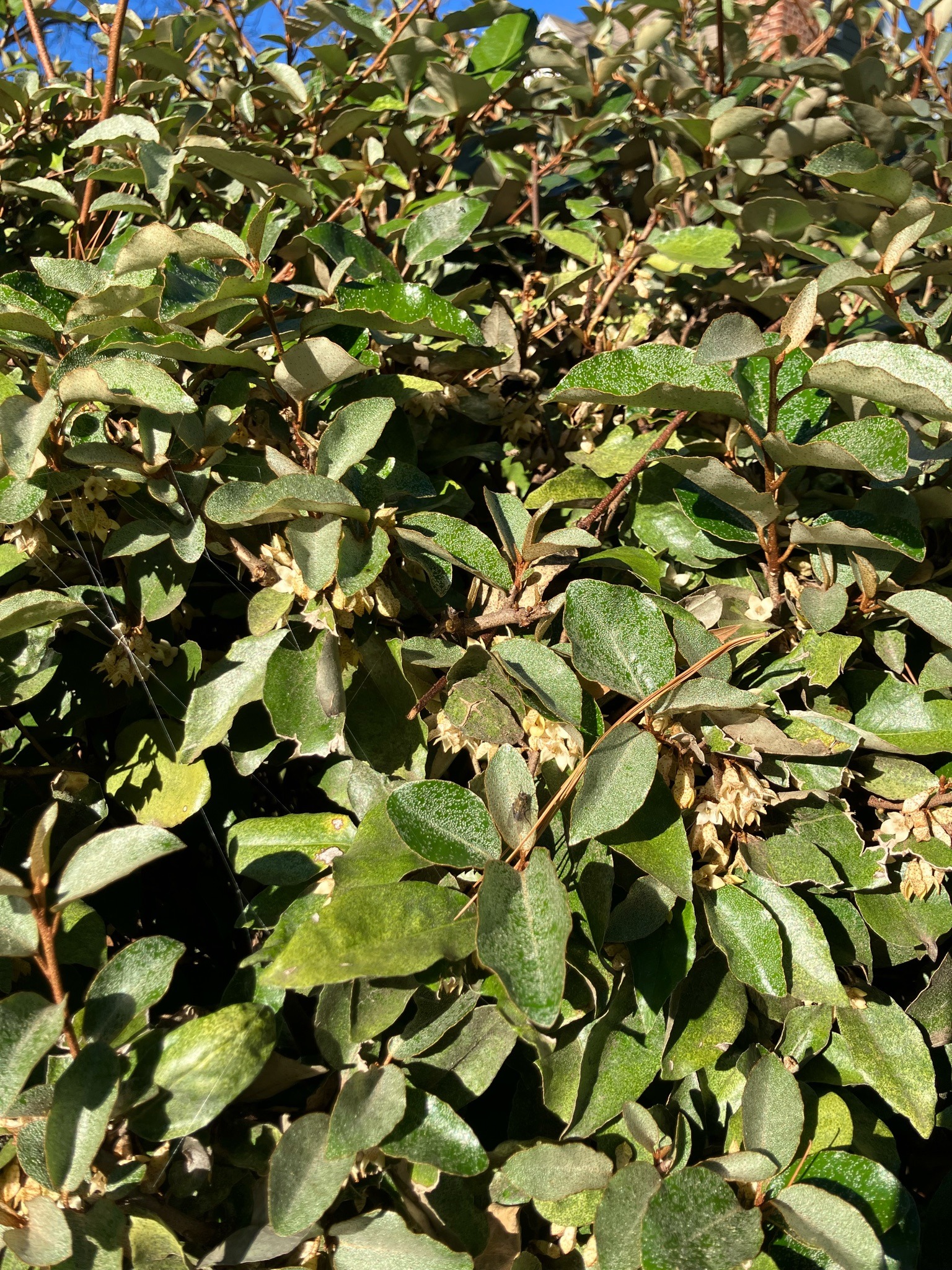
A dense, evergreen shrub known for its leathery, wavy-edged leaves with silvery-brown scales underneath and fragrant autumn flowers.
Characteristics
Leaves are alternate, simple, elliptic to oval, 2-4 inches long, glossy dark green above, and covered with silvery and brown scales underneath. Stems often have sharp, woody thorns. Small, bell-shaped, cream-colored flowers appear in fall and are intensely fragrant.
Habitat
Widely planted in gardens and landscapes, frequently escapes cultivation to invade woodlands, forest edges, roadsides, and open fields.
When to Find It
Flowers in autumn (October to December), followed by red to brownish fruit maturing in winter to spring.
Conservation Status
N/A
Ecological Role
Produces berries consumed by birds, which then spread the seeds, allowing this invasive species to outcompete native understory vegetation.
Easily Confused With
Distinguished from other shrubs by the silvery-brown, scaly undersides of its leaves and the presence of thorns.
Observation Tips
Look for dense, hedge-like growth and use your sense of smell in autumn to locate flowering branches.
Interesting Facts
Also known as silverthorn, this plant is native to Asia and was introduced to North America as an ornamental landscape shrub and hedge.