Yellowjacket
Scientific Name: Vespula spp.
Category: insect
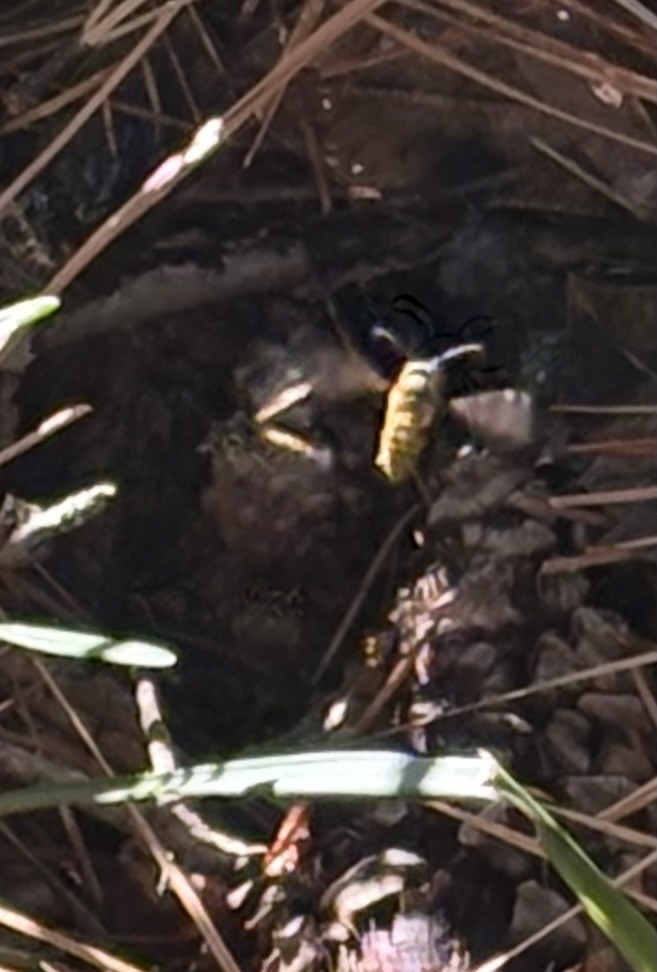
Brief Description
A predatory eusocial wasp characterized by black and yellow markings and a narrow waist, commonly nesting underground or in hollow cavities.
Characteristics
Distinctive yellow and black stripes on the abdomen, smoky-clear wings folded longitudinally when at rest, and a compact body length of about 10-16 mm.
Habitat
Found in various habitats including woodlands, fields, and urban areas. Nests are typically constructed underground in abandoned rodent burrows or within hollow logs and wall voids.
When to Find It
Most active during spring, summer, and early autumn, peaking in late summer when colony populations are largest and food sources shift.
Conservation Status
Not Evaluated
Ecological Role
Acts as an important predator of pest insects like caterpillars and flies, helping to control garden pests, while also serving as a minor pollinator.
Easily Confused With
Paper wasps and hornets; yellowjackets generally have shorter, stockier bodies with brighter yellow and black patterning and mostly nest underground rather than in open paper nests.
Observation Tips
Observe from a safe distance, especially near suspected nest sites. Avoid sudden movements or wearing heavily scented products.
Interesting Facts
A single yellowjacket colony can grow to thousands of workers by the end of summer, and unlike honeybees, yellowjackets possess smooth stingers that allow them to sting repeatedly.