Oregano
Scientific Name: Origanum vulgare
Category: plant
Brief Description
A perennial herb known for its aromatic leaves, commonly used in culinary dishes, especially Mediterranean cuisine.
Characteristics
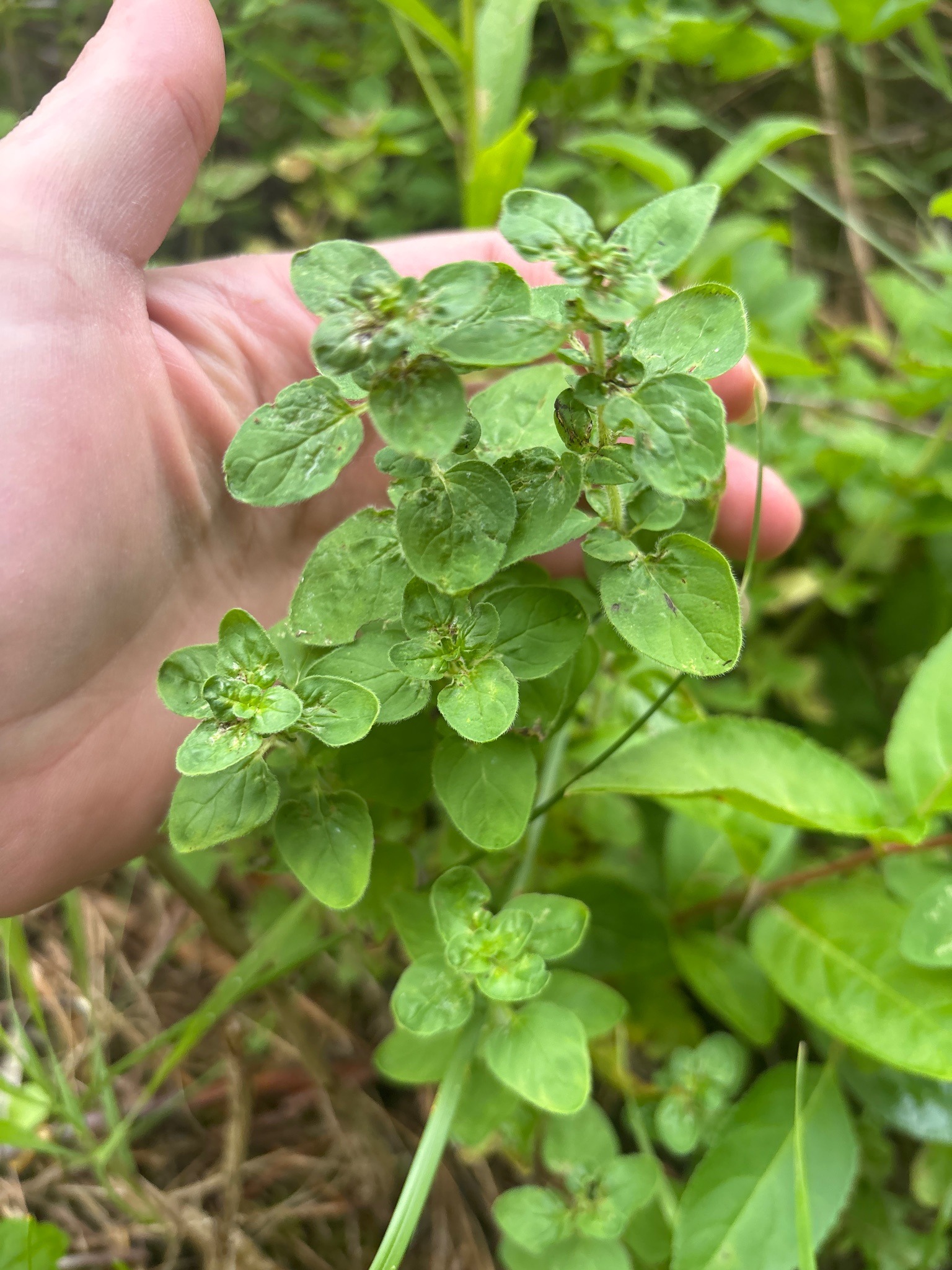
Opposite, oval to slightly rounded green leaves that are often slightly hairy, growing on square stems typical of the mint family. Small purple or white flowers appear in clusters during the blooming season.
Habitat
Dry, rocky soils, open fields, and sunny slopes in temperate regions, frequently cultivated in gardens.
When to Find It
Spring through autumn; leaves are most flavorful just before the plant flowers in mid-summer.
Conservation Status
N/A
Ecological Role
Attracts pollinators such as bees and butterflies with its nectar-rich flowers.
Easily Confused With
Marjoram (Origanum majorana), which has sweeter, milder leaves and a more downy, grey-green appearance.
Observation Tips
Look for plants in sunny, well-drained spots; crush a small leaf gently between your fingers to check for the distinctive pungent, spicy aroma.
Interesting Facts
The name oregano is derived from the Greek words 'oros' (mountain) and 'ganos' (joy), translating to 'joy of the mountain'.