Silvery-cheeked Hornbill
Scientific Name: Bycanistes brevis
Category: bird
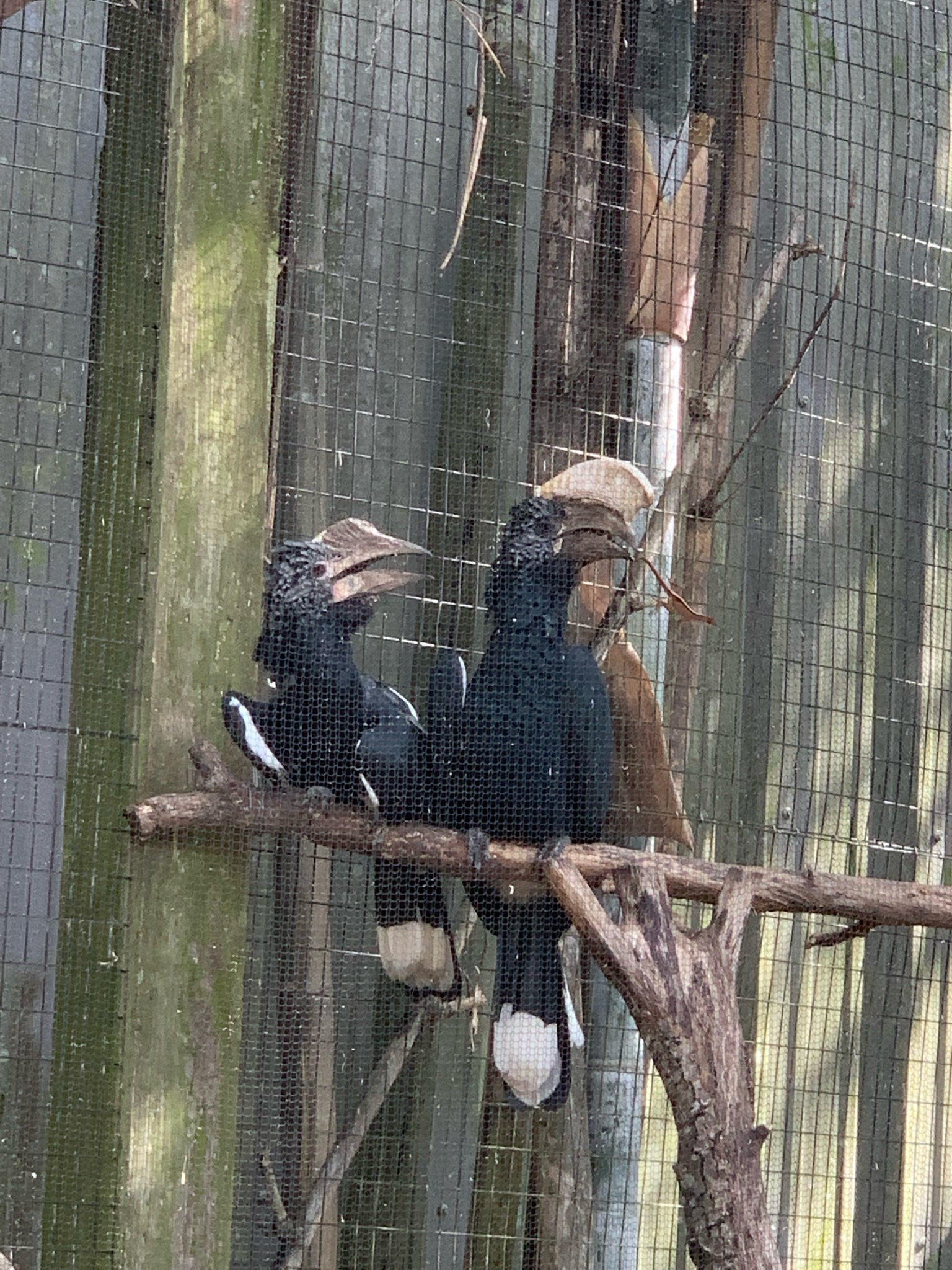
Brief Description
A large, blackish hornbill with a massive cream-colored casque on its beak and silvery feathers on its face.
Characteristics
Large size (up to 75cm long); primarily black plumage with white on the lower back and tail. It features a massive, creamy-white casque atop a large, curved beak. Feathers on the cheeks have silvery tips.
Habitat
Tall evergreen and riparian forests, as well as woodlands and plantations.
When to Find It
Diurnal; most active during the day. Breeding occurs during the wet season.
Conservation Status
Least Concern (IUCN)
Ecological Role
A critical seed disperser for many tropical forest trees, capable of carrying large seeds over long distances in its digestive tract.
Easily Confused With
Trumpeter Hornbill (Bycanistes bucinator), which is smaller and lacks the massive creamy-white casque of the adult Silvery-cheeked.
Observation Tips
Listen for their loud, raucous braying calls and the 'whooshing' sound of their wings in flight due to the lack of under-wing coverts.
Interesting Facts
During nesting, the female seals herself inside a tree cavity using mud and droppings, leaving only a narrow slit through which the male feeds her for several months.