Coral Fossil Rock
Scientific Name: Rugosa / Tabulata (Fossilized Coral)
Category: rock
Brief Description
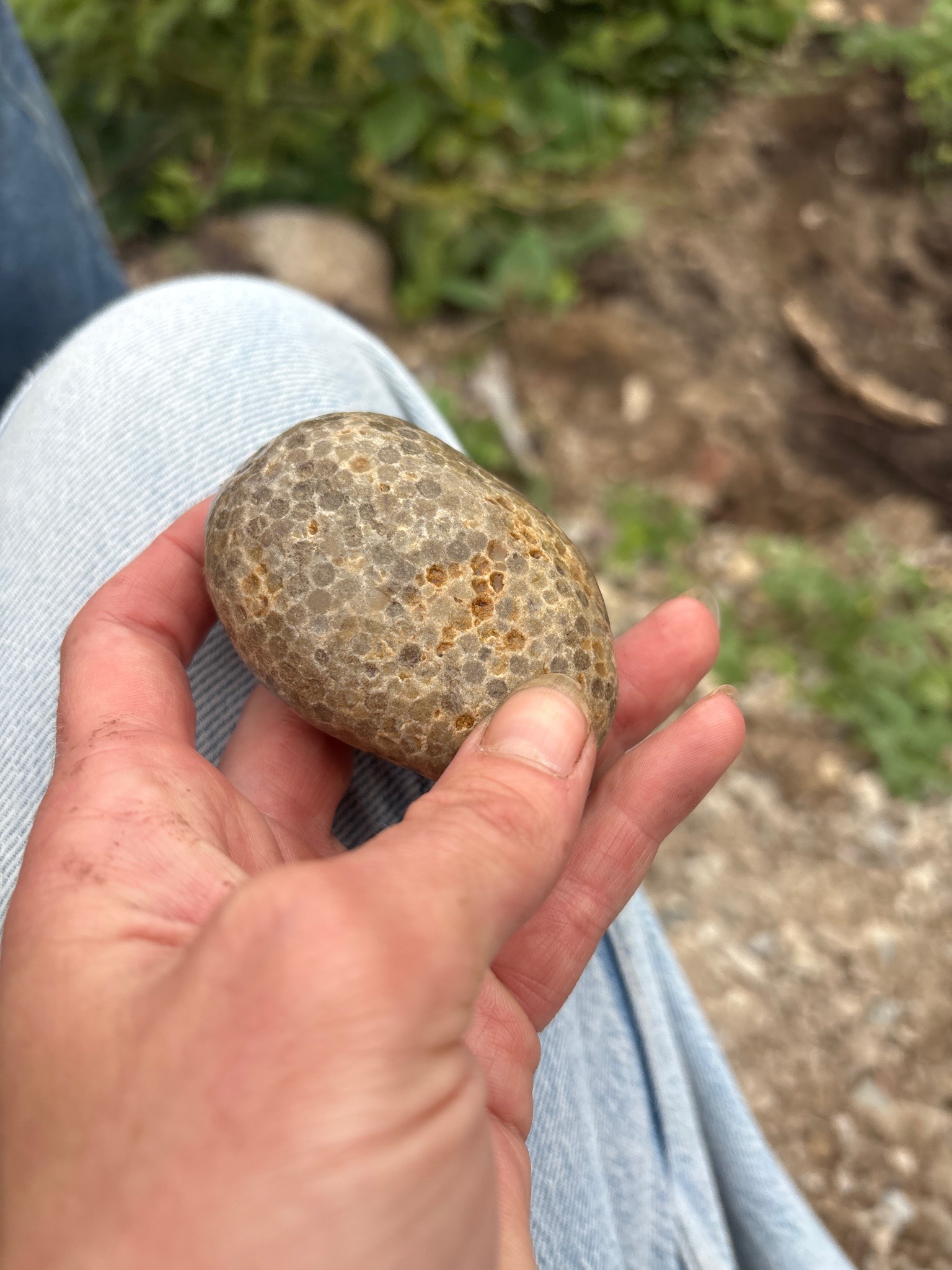
A smooth, water-worn pebble featuring a distinctive honeycomb pattern of fossilized coral calices.
Characteristics
Oval-shaped, water-tumbled pebble with a brownish-grey exterior and numerous small, tightly packed circular or polygonal hollows representing individual coral corallites, sometimes showing iron-stained weathering.
Habitat
Found in gravel bars, riverbeds, beaches, and glacial till where ancient limestone and fossil-bearing strata have been eroded and transported.
When to Find It
N/A
Conservation Status
N/A
Ecological Role
Provides tangible evidence of ancient tropical marine ecosystems and prehistoric biodiversity from millions of years ago.
Easily Confused With
Oolitic limestone or vesicular basalt can have pitted surfaces, but fossil corals show organized internal septa or honeycomb cellular structures.
Observation Tips
Look along gravel bars of rivers, streams, and lake shores, especially after heavy rains when water washes away fine sediment and reveals fossils.
Interesting Facts
Many of these fossilized corals date back to the Paleozoic Era (such as the Devonian or Ordovician periods), when much of North America and Europe was covered by shallow tropical seas.