Andean Condor
Scientific Name: Vultur gryphus
Category: bird
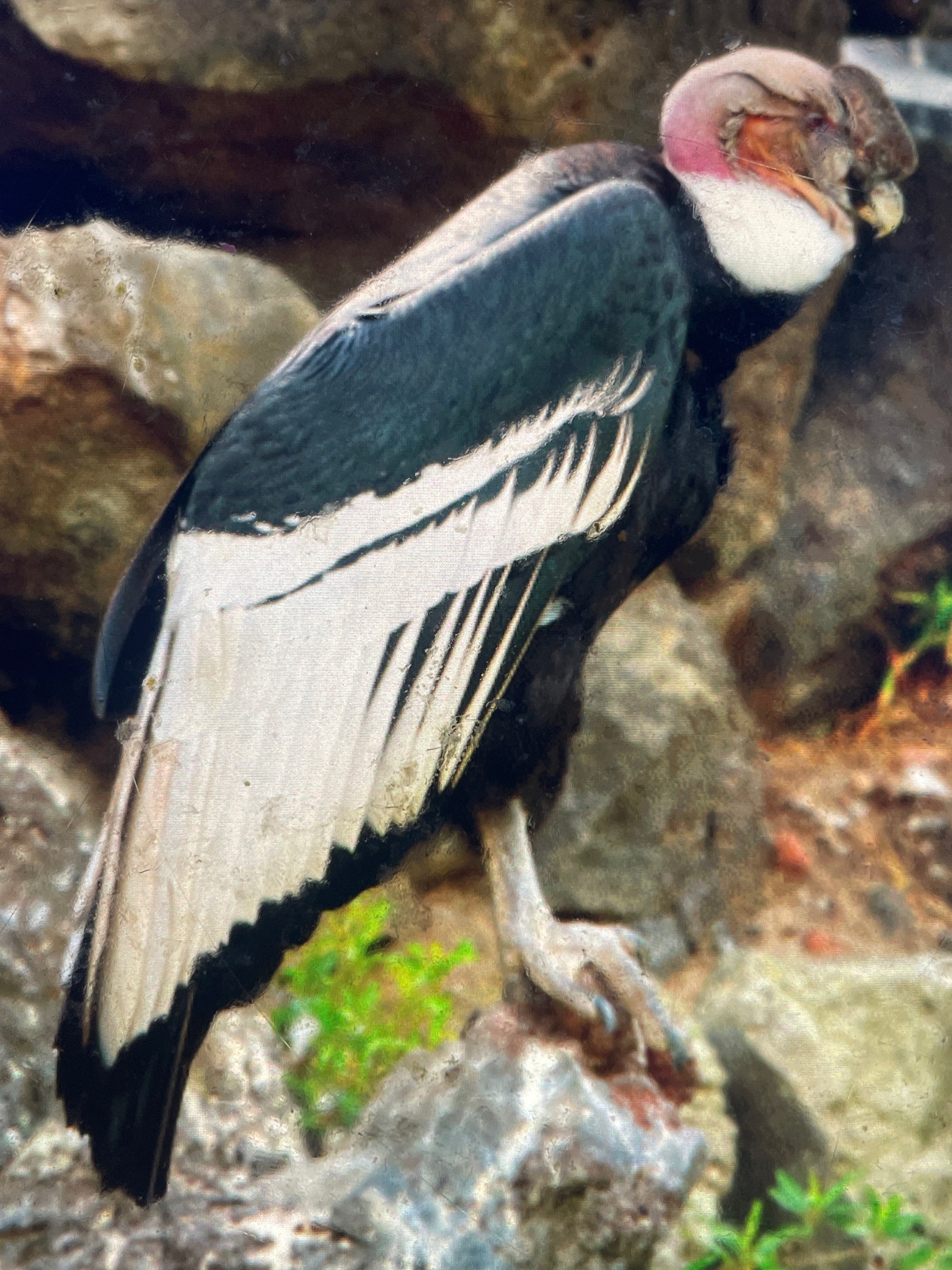
Brief Description
A massive New World vulture and the largest flying bird in the world by combined weight and wingspan.
Characteristics
Large black plumage with a distinctive white ruff of feathers around the base of the neck. Large white patches on the wings. Head and neck are mostly featherless and can change color in response to emotional state. Males have a large dark red comb on the crown.
Habitat
High mountains (Andes), canyons, and coastal areas with strong thermal updrafts. Ranges across the Andes mountains and adjacent Pacific coasts of western South America.
When to Find It
Diurnal; most active during the day when thermal air currents are strongest for soaring.
Conservation Status
Vulnerable (IUCN Red List)
Ecological Role
As a scavenger (obligate scavenger), it plays a vital role in the ecosystem by consuming carrion, which helps prevent the spread of diseases from decaying carcasses.
Easily Confused With
California Condor (Gymnogyps californianus), which lacks the white neck ruff and has a different head shape and range (North America). Black Vultures are much smaller with no white wing patches.
Observation Tips
Look for them soaring near mountain ridges or cliffs. Use binoculars to spot the white wing patches and ruff. They are often found near large mammal carcasses.
Interesting Facts
They can live for over 70 years and have a wingspan reaching up to 3.3 meters (10 ft 10 in). They are a national symbol of several South American countries including Colombia, Chile, and Ecuador.