Virginia Buttonweed
Scientific Name: Diodia virginiana
Category: plant
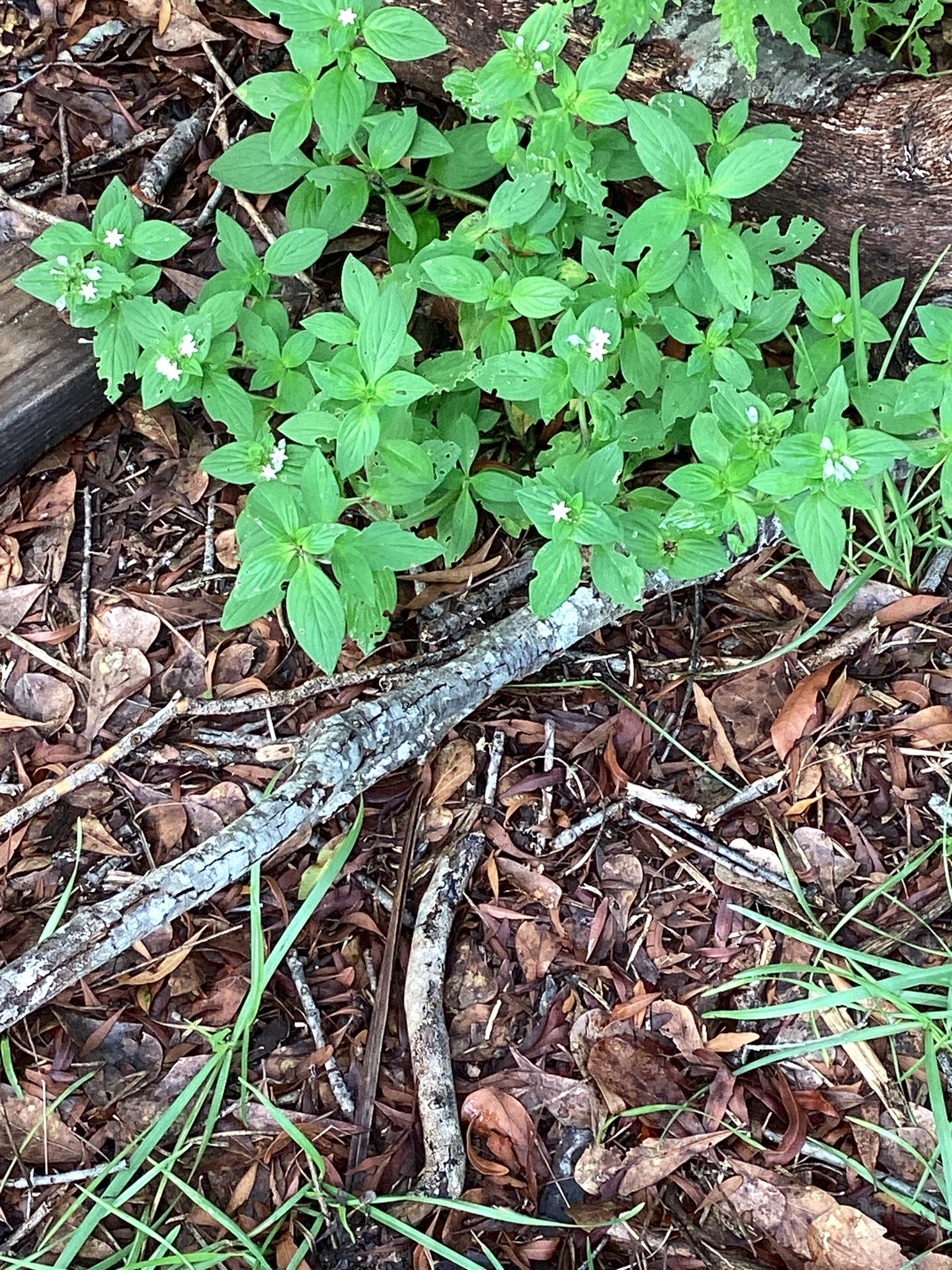
Brief Description
A low-growing, spreading perennial weed with small white star-shaped flowers that commonly infests lawns and wet areas.
Characteristics
Opposite, lance-shaped green leaves that are often mottled with yellow if affected by a common virus. Small white flowers have four petals and appear at the leaf axils. Stems are slightly hairy and can root at the nodes.
Habitat
Thrives in moist to wet soils, frequently found in lawns, gardens, pastures, and along the edges of marshes or ditches.
When to Find It
Flowering typically occurs from mid-summer through autumn.
Conservation Status
N/A
Ecological Role
Provides ground cover in moist areas and serves as a nectar source for small pollinators, though it is often considered an invasive nuisance in managed landscapes.
Easily Confused With
Often confused with Poorjoe (Diodia teres), which has narrower leaves, grows in drier soils, and has flowers with shorter tubes. Its leaves are also similar to some species of Mexican Clover (Richardia).
Observation Tips
Look for it in the dampest parts of a backyard or lawn; it is very resilient and can survive frequent mowing by growing horizontally.
Interesting Facts
Virginia Buttonweed is one of the most difficult weeds to control in turfgrass because it spreads through seeds, underground fleshy roots, and stem fragments that can take root.
User Notes
Backyard