Garden Cosmos Seedlings
Scientific Name: Cosmos bipinnatus
Category: plant
Brief Description
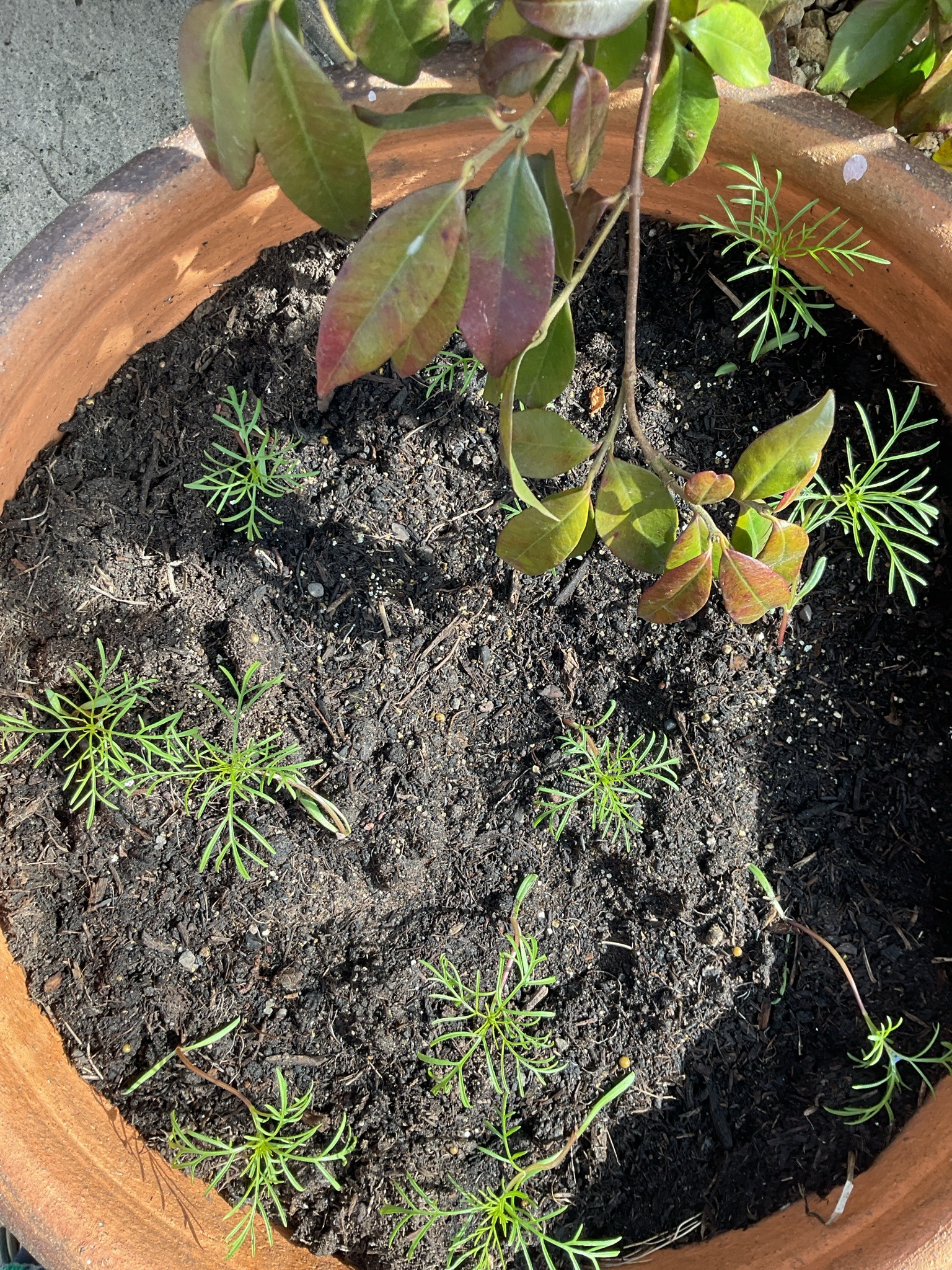
Young seedlings of the Cosmos plant, known for their thin, feathery, thread-like leaves emerging from dark soil in a container.
Characteristics
The seedlings feature highly pinnatisect leaves that are finely divided into thread-like segments. They are bright green and arranged in a radiating, star-like pattern as they emerge. The stems are typically slender and green or slightly reddish.
Habitat
Commonly found in gardens, meadows, and disturbed areas. They prefer well-drained soil and full sun.
When to Find It
Typically germinates in spring or early summer after the last frost. Best observed during daylight hours in the growing season.
Conservation Status
N/A - This is a common ornamental garden plant.
Ecological Role
As they mature, Cosmos flowers are significant nectar sources for pollinators, including bees, butterflies, and hoverflies.
Easily Confused With
Frequently confused with Marigold seedlings or certain species of Coreopsis. Cosmos can be distinguished by their more delicate, needle-fine leaf segments compared to the broader leaflets of many other garden plants.
Observation Tips
When identifying seedlings, look for the 'thread-like' texture of the foliage. In a garden pot, they often appear in clusters where seeds were scattered or dropped from previous blooms.
Interesting Facts
Cosmos are native to Mexico and are part of the sunflower family (Asteraceae). They are incredibly resilient and are known as 'pioneer plants' because they can thrive in relatively poor soil conditions.