Intertidal Shoreline with Green Algae and River Stones
Scientific Name: N/A
Category: habitat
Brief Description
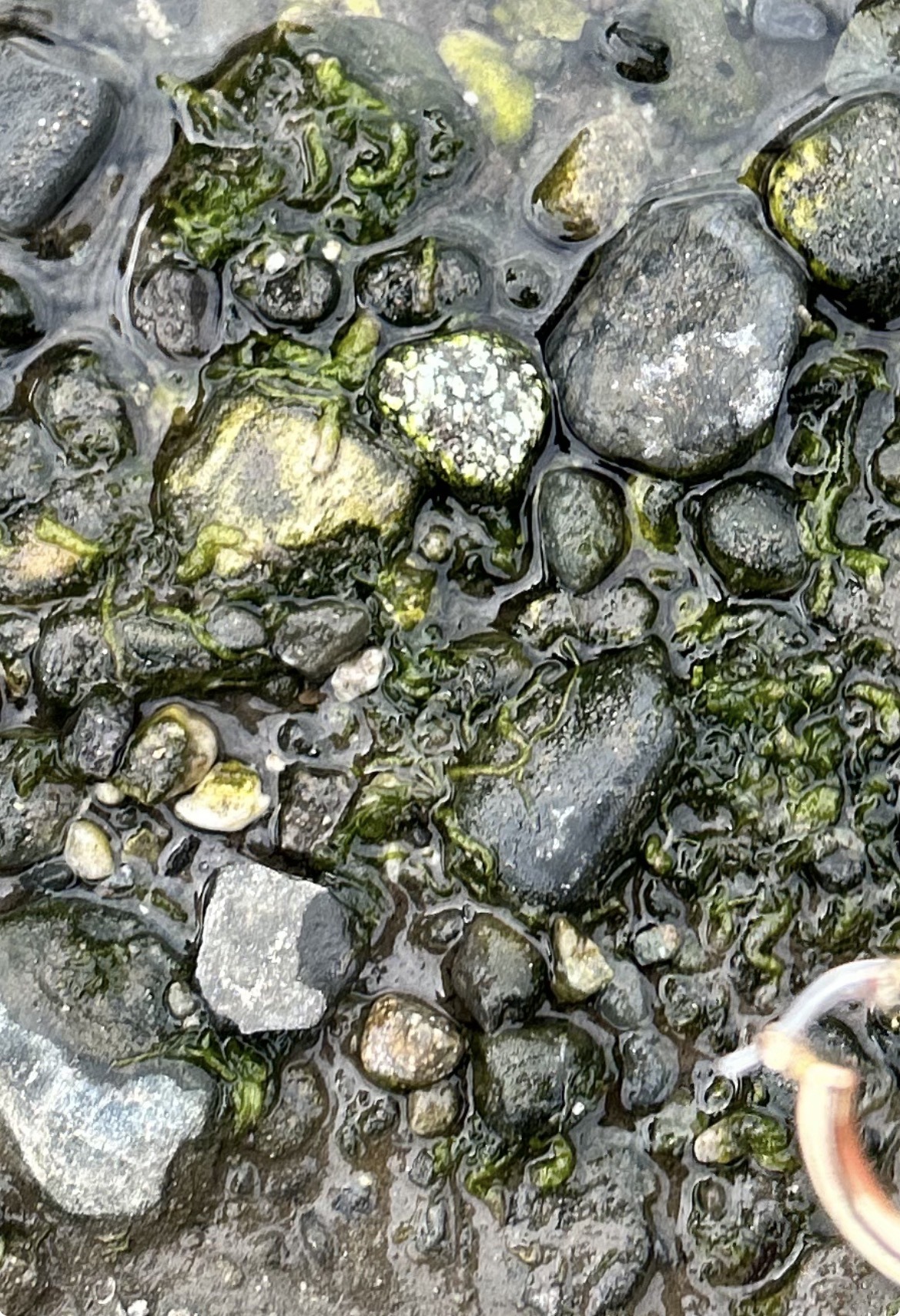
A close-up view of an intertidal or riverbed zone featuring water-worn stones and vibrant green algae growing among the pebbles.
Characteristics
Various sizes of rounded basaltic and granitic rocks covered in patches of slimy or filamentous green algae, submerged under a thin layer of clear water. Smaller fragments of shells and fine silt are visible between the larger stones.
Habitat
Low-energy intertidal zones, riverbanks, or lake shores where water levels fluctuate.
When to Find It
Varies by geography; algae growth is typically most prolific during warmer months with high sunlight.
Conservation Status
N/A
Ecological Role
Acts as a primary producer in aquatic food webs; provides shelter and food for small invertebrates, snails, and larval fish. Helps oxygenate the water through photosynthesis.
Easily Confused With
A tide pool or a rocky stream bed. Tide pools often contain salt-water specifically adapted organisms like barnacles or sea anemones, whereas stream beds lack tidal influence.
Observation Tips
Move carefully as algae-covered rocks are extremely slippery. Observe during low tide in coastal areas or during periods of low flow in freshwater systems.
Interesting Facts
Green algae in these habitats can survive periods of exposure to air during low water cycles by retaining moisture within their structure or underneath rocks.