Common Yarrow
Scientific Name: Achillea millefolium
Category: plant
Brief Description
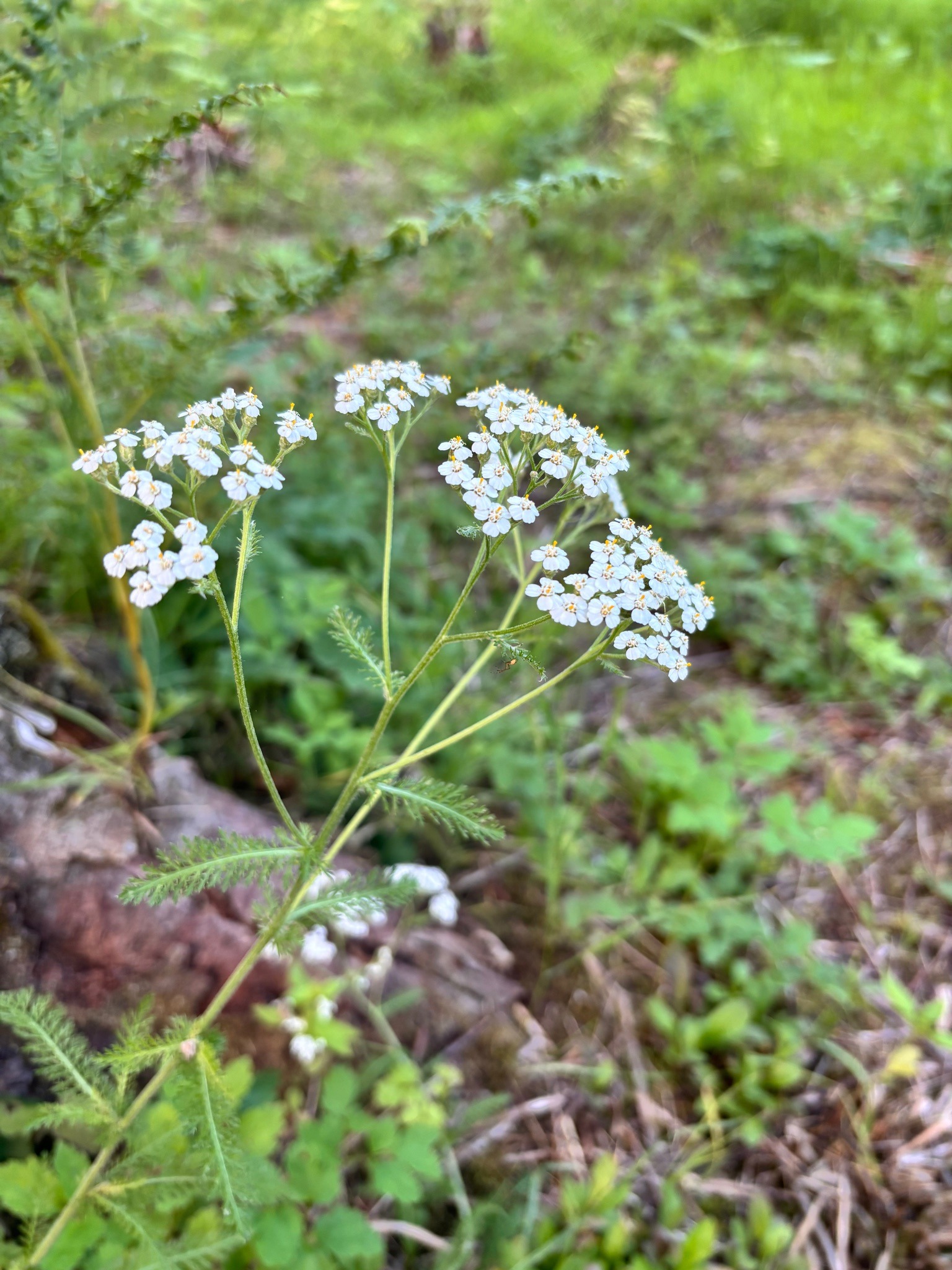
Common yarrow is a hardy perennial herb easily recognized by its flattened clusters of small white or pale pink flowers and fern-like, finely divided leaves.
Characteristics
Stems are erect, often hairy, growing up to one meter tall. Leaves are alternate, feathery, and finely dissected (millefolium means 'thousand leaves'). Flowers are arranged in dense, flat-topped clusters (corymbs) consisting of tiny white or pinkish ray and disk florets.
Habitat
Found in fields, meadows, grasslands, open forests, disturbed soils, and along roadsides across temperate regions.
When to Find It
Blooms from late spring through autumn, typically peaking in mid-summer.
Conservation Status
Least Concern
Ecological Role
Provides nectar and pollen for beneficial insects such as bees, butterflies, and predatory wasps, which help control pest populations in ecosystems and gardens.
Easily Confused With
Can be confused with other members of the Asteraceae family with white umbel-like flower clusters such as Queen Anne's lace (Wild Carrot) or Hemlock; yarrow is easily distinguished by its uniquely aromatic, fern-like, finely divided foliage.
Observation Tips
Look for yarrow in sunny meadows or field edges. Rubbing the leaves gently releases a strong, distinctly medicinal and sweet aroma.
Interesting Facts
Yarrow has a long history of traditional herbal use, primarily as a styptic to help stop bleeding from minor wounds, earning it old folk names like 'soldier's woundwort' and 'nosebleed plant'.