Pumpkin Bush
Scientific Name: Solanum aethiopicum
Category: plant
Brief Description
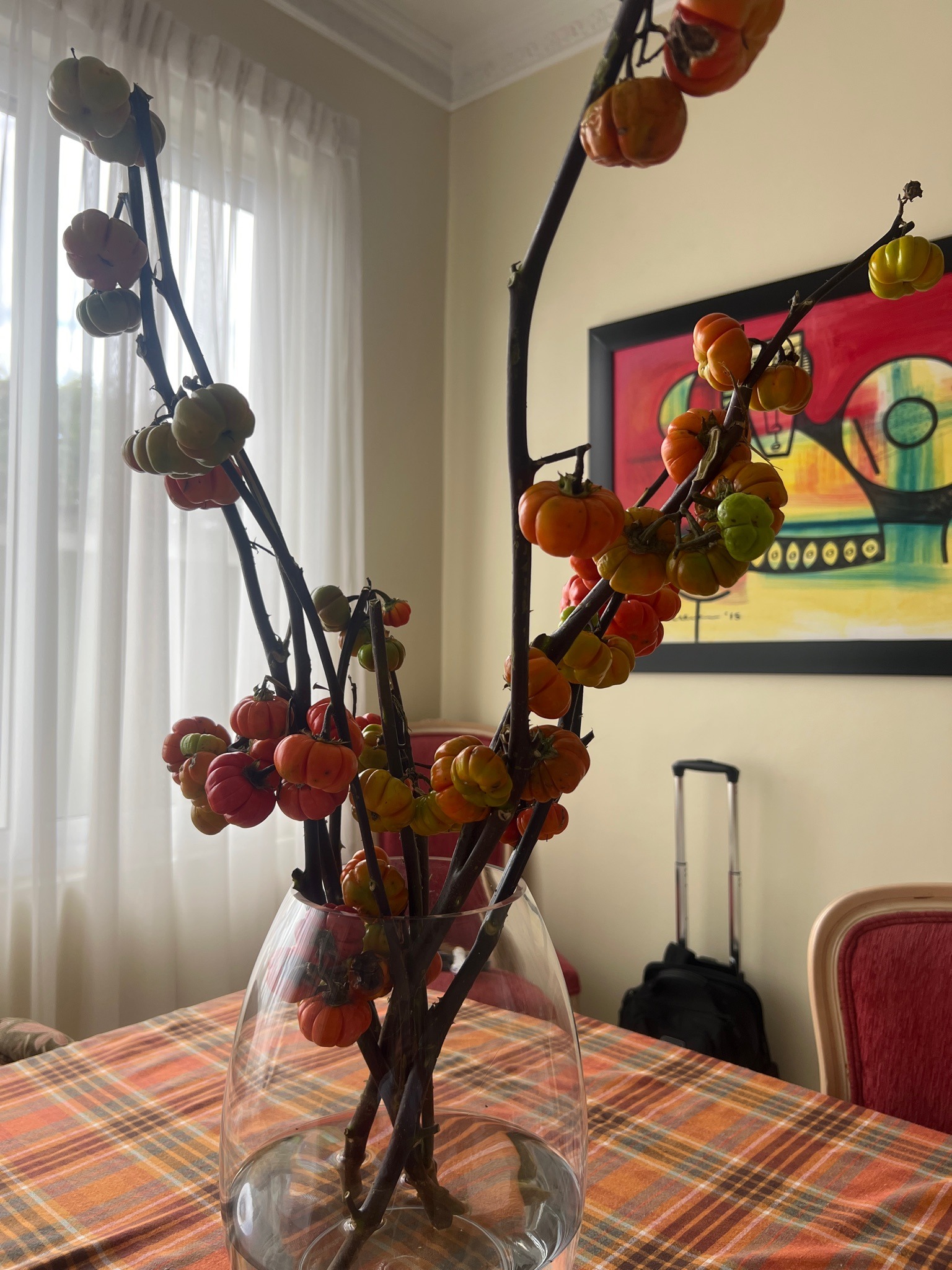
Branches laden with decorative, fluted miniature pumpkin-like fruits, commonly used in interior decoration and floral arrangements.
Characteristics
Features rigid, dark stems or branches heavily clustered with small, deeply ribbed, flattened fruits that transition in color from green to vibrant orange and red as they mature.
Habitat
Cultivated in gardens, agricultural fields, and greenhouses; frequently harvested for indoor ornamental displays.
When to Find It
Harvested primarily in late summer and autumn when the fruits reach mature size and coloration.
Conservation Status
N/A
Ecological Role
Provides food for various insects and small mammals in its native or cultivated environments, though commonly grown by humans for ornamental purposes.
Easily Confused With
Mock strawberries or ornamental gourds; can be distinguished by the specific deeply fluted, tomato- or pumpkin-like shape of the fruits on woody or semi-woody stems belonging to the nightshade family.
Observation Tips
Often observed indoors in vases as seasonal autumn decor, or growing on upright shrubs in warmer agricultural zones.
Interesting Facts
Also known as Ethiopian eggplant or Gboma, this species is cultivated widely across Africa and parts of Asia both for its edible fruits and leaves, as well as for striking ornamental varieties like the 'Pumpkin Bush'.