Eyebright
Scientific Name: Euphrasia stricta
Category: plant
Brief Description
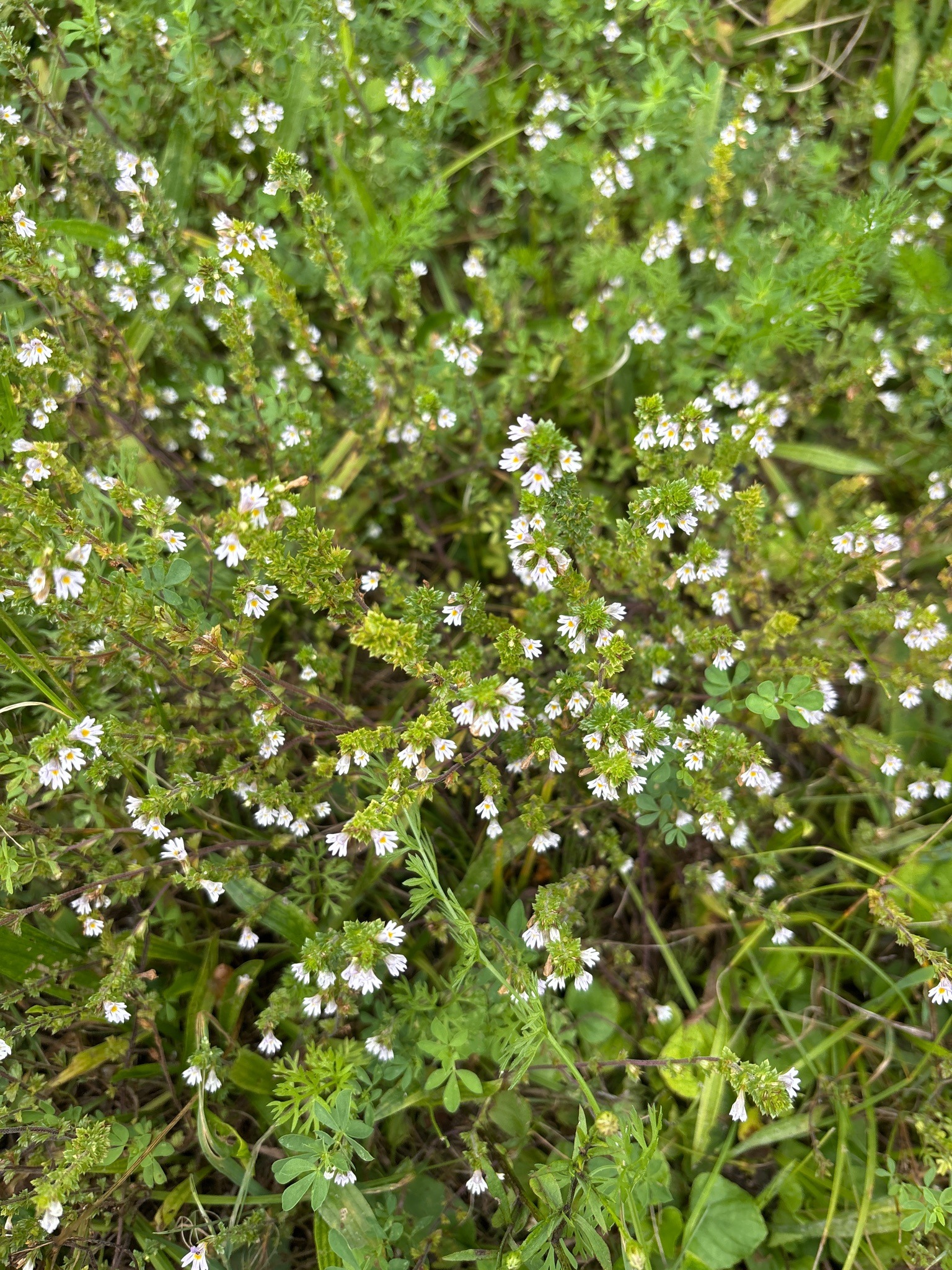
Eyebright is a small, delicate herbaceous plant known for its tiny white or pale purple flowers adorned with yellow throats and dark streaks, traditionally associated with eye health.
Characteristics
Low-growing, branching stems with deeply toothed, small green leaves. The flowers are zygomorphic (bilaterally symmetrical), typically white to lilac with a yellow spot on the lower lip and purple nectar guides.
Habitat
Found in nutrient-poor grasslands, pastures, moorlands, and meadows, often thriving in damp or grassy areas.
When to Find It
Flowers typically bloom from mid-summer through early autumn (July to September).
Conservation Status
Least Concern globally, though some local populations may face decline due to intensive agriculture and habitat loss.
Ecological Role
Eyebright is a semi-parasitic plant (hemiparasite), meaning it derives some of its water and nutrients from the roots of neighboring grasses and plants through specialized structures called haustoria, which helps regulate plant community diversity.
Easily Confused With
Can be confused with other small white-flowered scrophs or lamiids like Bartsia or Red Bartsia, but Eyebright is distinguished by its distinctively lobed leaves and bright yellow-throated flowers.
Observation Tips
Look closely among short grass in unfertilized pastures during summer. A macro lens or close-up photography is ideal for capturing the intricate details of the tiny blossoms.
Interesting Facts
The common name 'Eyebright' and its genus name 'Euphrasia' (derived from the Greek Euphrosyne, one of the three Graces meaning gladness or mirth) stem from its centuries-old use in herbal medicine as a wash or tea to treat eye irritations.