Flock of Starlings (Murmuration)
Scientific Name: Sturnus vulgaris
Category: bird
Brief Description
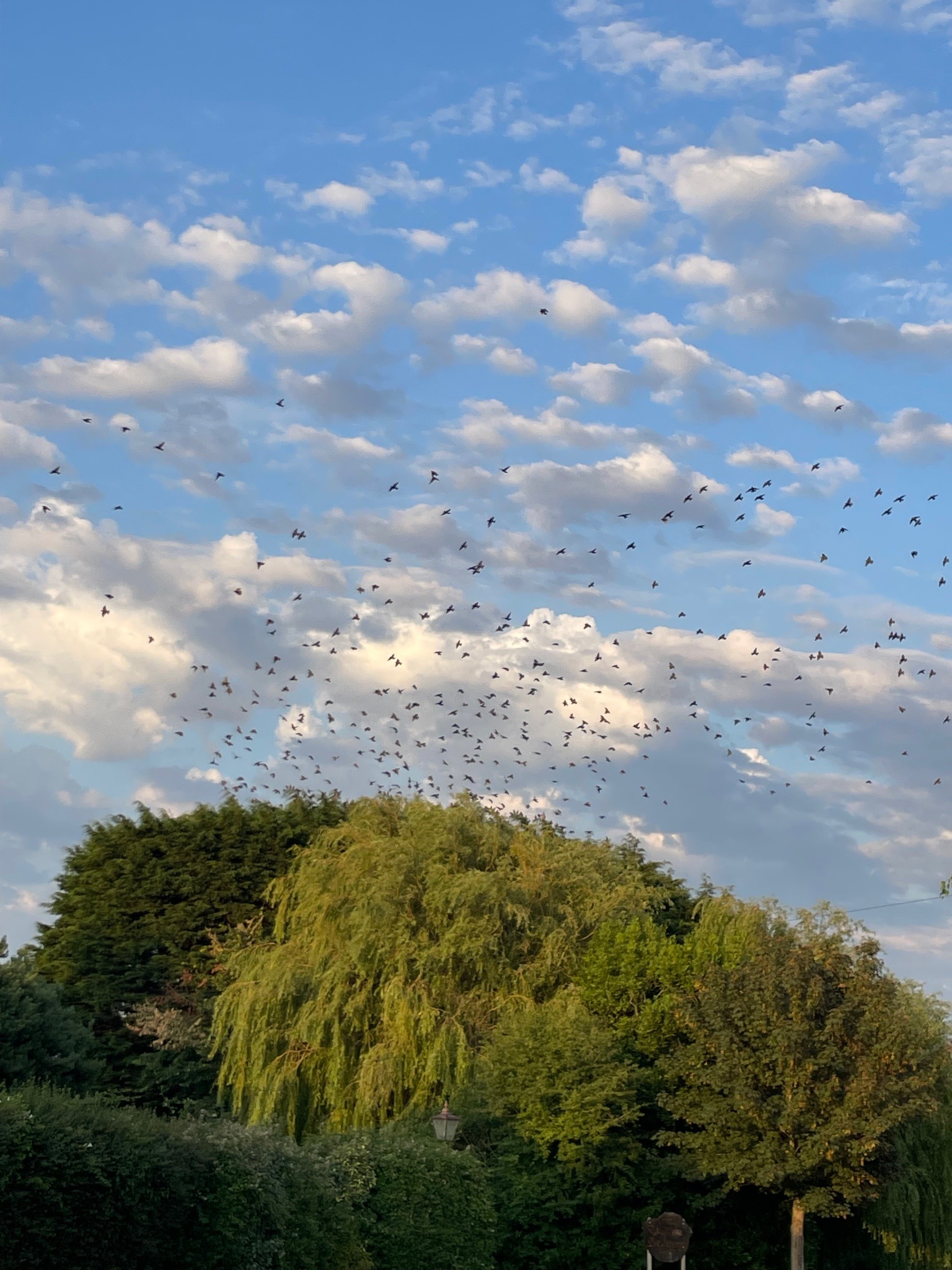
A large flock of starlings performing a mesmerizing synchronized aerial display, often referred to as a murmuration, against a cloudy blue sky above trees.
Characteristics
Starlings are medium-sized passerine birds with glossy black plumage speckled with white during winter, metallic green and purple sheens, and distinct triangular wings in flight.
Habitat
Open countryside, agricultural lands, urban areas, and woodland edges where they forage and roost.
When to Find It
Most commonly observed in autumn and winter around dusk when they gather in massive roosts before settling down for the night.
Conservation Status
Least Concern, though populations in certain regions have experienced declines.
Ecological Role
Starlings act as important seed dispersers and insect predators, though large flocks can have local impacts on agriculture.
Easily Confused With
Large flocks of blackbirds, grackles, or cowbirds, though these typically do not form the hyper-coordinated, fluid three-dimensional shapes characteristic of starling murmurations.
Observation Tips
Look toward the sky near traditional roosting sites like reed beds, urban buildings, or dense woodlands just before sunset during the autumn and winter months.
Interesting Facts
A murmuration can consist of thousands or even millions of starlings, moving with incredible speed and changing direction in fractions of a second without colliding, using neighboring birds as visual cues.