Bivalve Shell and Beach Cobbles
Scientific Name: Bivalvia (Class)
Category: shell
Brief Description
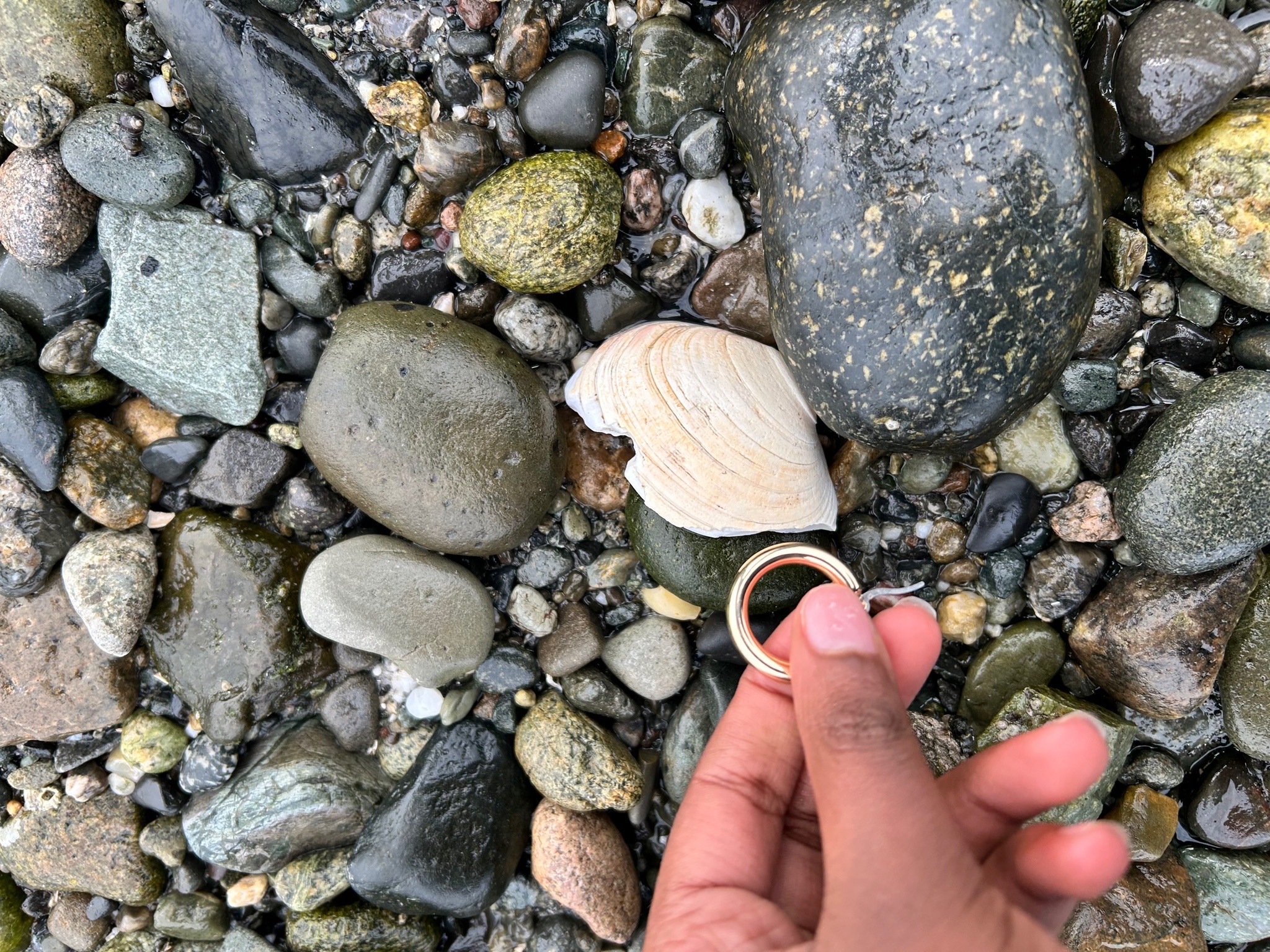
A white, chalky bivalve shell fragment rests among water-worn igneous and metamorphic beach stones.
Characteristics
The shell is white to off-white with concentric growth rings, showing a fractured edge. The surrounding rocks are smooth, rounded, and exhibit various colors ranging from dark basaltic grey to greenish and tan hues.
Habitat
Coastal intertidal zones, typically found on pebbly or rocky beaches where wave action sorts sediments.
When to Find It
Year-round; best observed during low tide on coastal shores.
Conservation Status
N/A
Ecological Role
Shells provide calcium carbonate to the ecosystem as they break down and offer substrate or shelter for small marine organisms. Beach rocks provide stable environments for intertidal life.
Easily Confused With
Often confused with other bivalves like quahogs or butter clams; distinguishable by specific ridge patterns and thickness.
Observation Tips
Look in the wrack line or tide pools after a storm to find a variety of shell fragments and polished stones. Be mindful of tide levels for safety.
Interesting Facts
Beach stones get their rounded shape from 'abrasion,' where they are constantly tumbled against each other by the energy of waves.