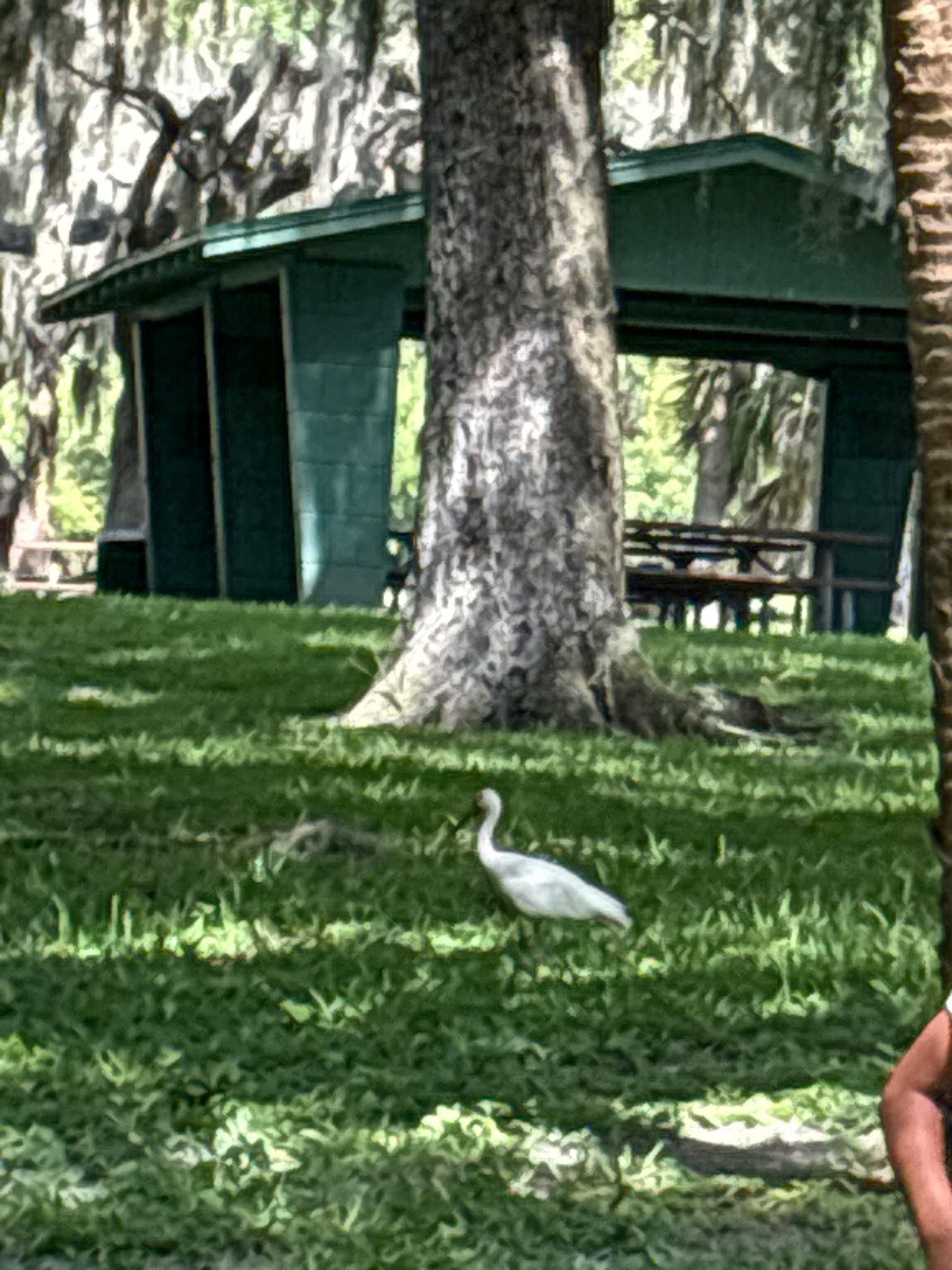
White Ibis (Juvenile)
Scientific Name: Eudocimus albus
Category: bird
Brief Description
A medium-sized wading bird with a long, slender, downward-curved bill. This individual is a juvenile, transitioning from brown plumage to the stark white of an adult.
Characteristics
Distinguished by its long, decurved reddish-pink bill. Juveniles have brown upperparts and a white belly; as they mature, they become entirely white with black wingtips. They have long, thin legs for wading.
Habitat
Marshes, swamps, flooded pastures, lake edges, and coastal wetlands. They are also common in suburban parks and lawns in the Southeastern US.
When to Find It
Diurnal; most active during the day. Found year-round in Florida and coastal regions of the South.
Conservation Status
Least Concern; protected under the Migratory Bird Treaty Act.
Ecological Role
As a predator of crayfish, crabs, and insects, they help control invertebrate populations. Their foraging behavior stirs up nutrients in wetland ecosystems.
Easily Confused With
Wood Storks are much larger with dark, bald heads. Great Egrets have straight yellow bills. Snowy Egrets have straight black bills. Juvenile White Ibises are the only ones with the distinct downward-curving bill.
Observation Tips
They are highly social and often seen in large flocks. Look for them probing the ground or mud with their bills in a 'sewing machine' motion. Maintain a respectful distance to avoid flushing the flock.
Interesting Facts
The White Ibis uses its curved bill to feel for prey by touch rather than sight. They are known for being 'nomadic,' often moving between different wetlands based on water levels and food availability.
User Notes
What is this