Small Mammal Burrow
Scientific Name: N/A
Category: tracks
Brief Description
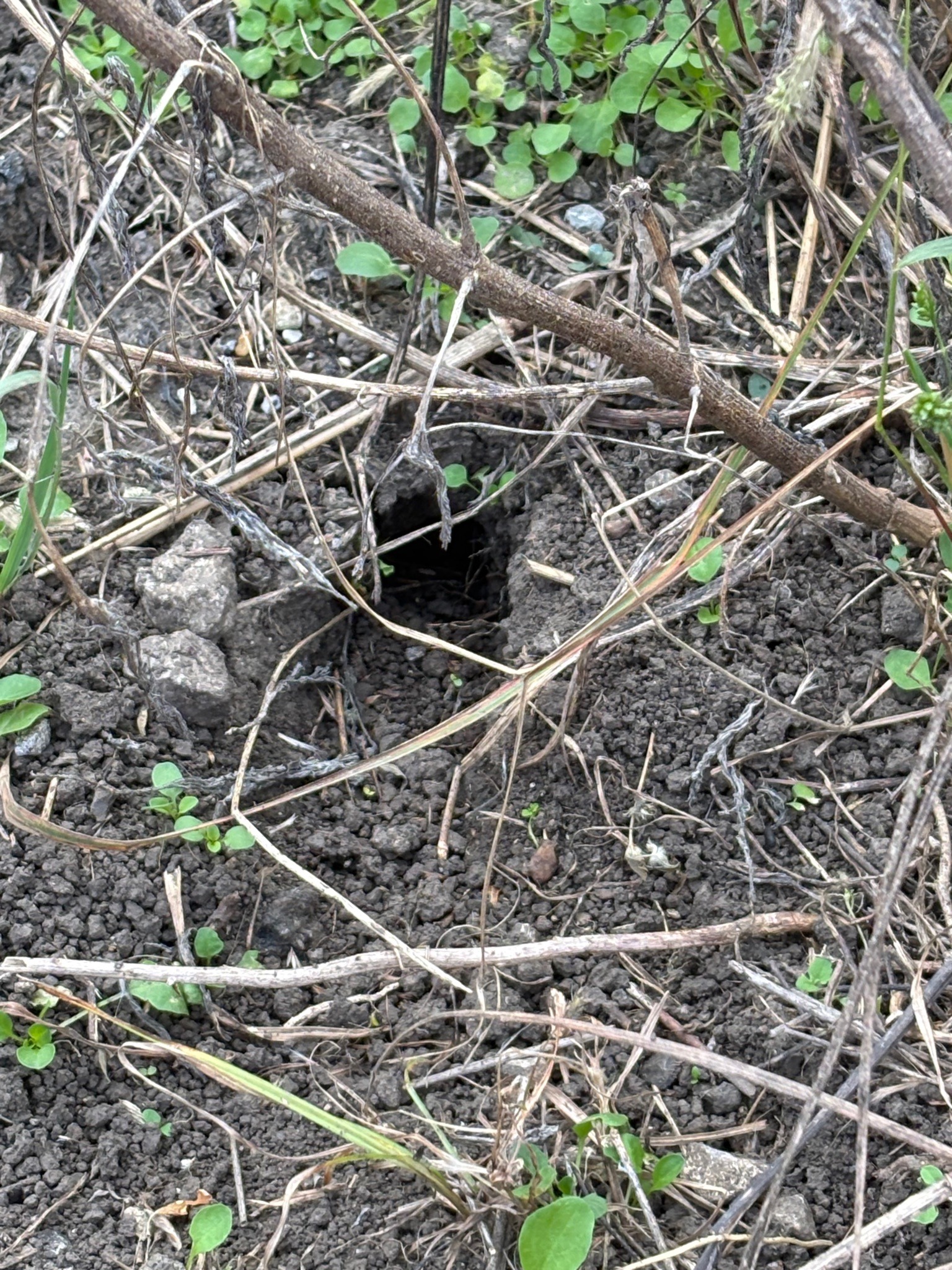
A small, circular underground entrance hole in soil, likely excavated by a rodent, small rabbit, or large insect.
Characteristics
Roughly circular opening approximately 3-5 cm in diameter, neatly cleared edges with minimal loose soil immediately around the immediate rim, situated in loose soil among leaf litter and sparse weeds.
Habitat
Fields, agricultural edges, gardens, and grassy clearings with well-drained soil.
When to Find It
Active year-round, with peak digging and maintenance observed in spring and autumn.
Conservation Status
N/A
Ecological Role
Burrows provide critical shelter, nesting sites, and predator avoidance for small wildlife, while also aerating soil and aiding in nutrient cycling.
Easily Confused With
Invertebrate burrows (such as large spiders, cicada nymphs, or ground-nesting bees) which may lack mammal disturbance signs like tracks or chewed roots.
Observation Tips
Observe quietly from a distance using binoculars or a camera with a macro lens. Avoid reaching into or blocking the hole, as an occupant may be inside.
Interesting Facts
Many small mammals construct complex subterranean tunnel systems featuring separate chambers for nesting, food storage, and waste elimination.