Spider Web
Scientific Name: N/A
Category: other
Brief Description
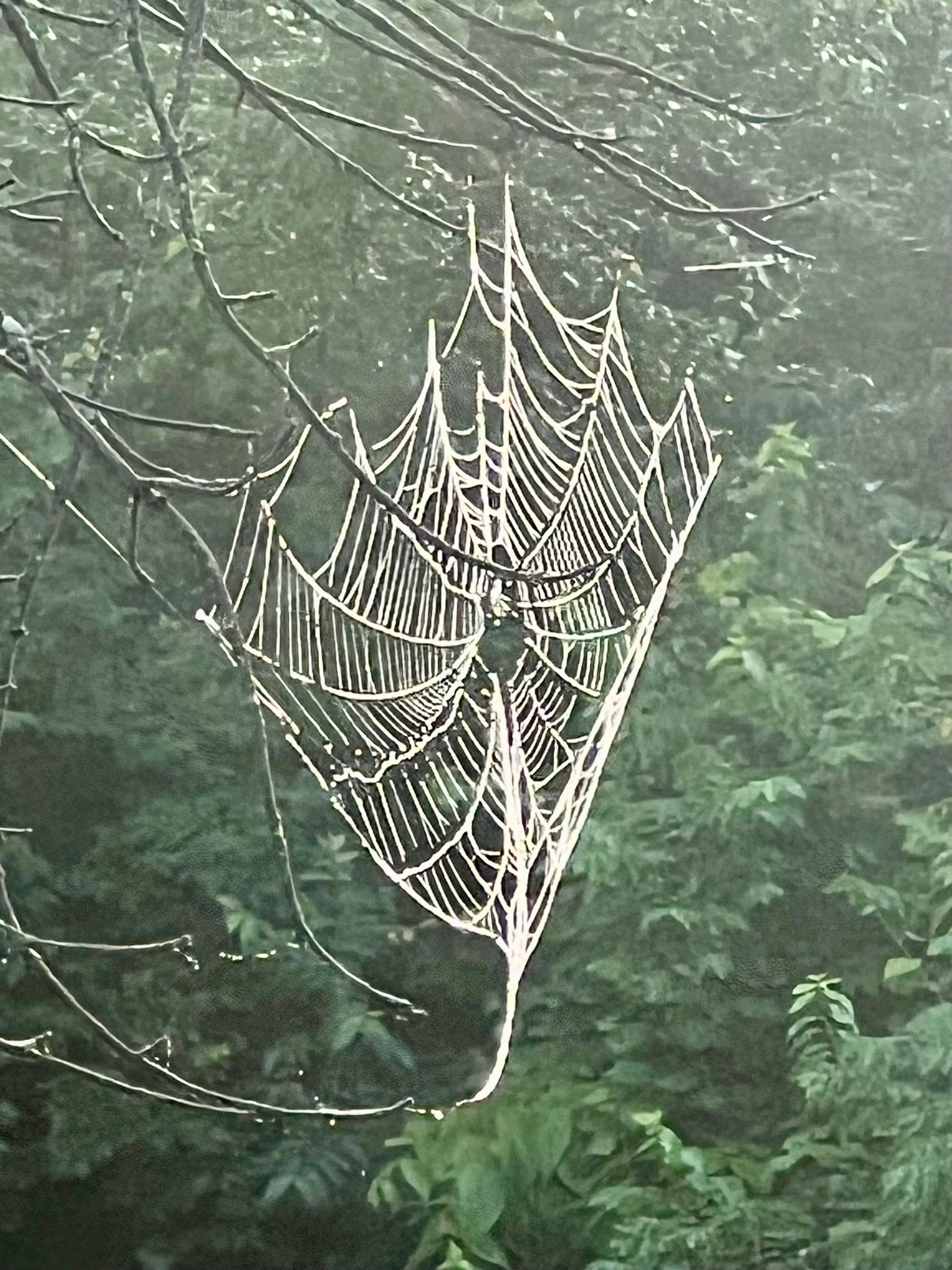
A silk structure created by a spider primarily for catching prey. This particular web appears to be a triangular or sector-shaped orb web, often associated with spiders like the Triangle Weaver.
Characteristics
Intricate, geometric pattern of silk threads. This specific web has a distinct triangular or fan-like shape with a central anchoring line, coated in dew or moisture which makes it highly visible against the green foliage.
Habitat
Found in forests, gardens, and shrublands where vegetation provides support for anchoring silk lines.
When to Find It
Most visible during early morning when dew clings to the silk, or during damp/foggy weather. Active throughout spring, summer, and autumn.
Conservation Status
N/A
Ecological Role
Spider webs are critical for controlling insect populations by trapping flying and crawling insects. They also reflect the health of the micro-ecosystem.
Easily Confused With
Traditional circular orb webs (Araneidae) which form a full circle, and cobwebs (Theridiidae) which are irregular and messy compared to this geometric design.
Observation Tips
Look for webs early in the morning or just after rain when water droplets highlight the structure. Move slowly to avoid vibration that might cause the spider to hide.
Interesting Facts
Spider silk is one of the strongest natural materials; on a weight-for-weight basis, it is stronger than steel. Many spiders recycle their webs by eating the silk to recover the proteins used to create it.