Human Eye
Scientific Name: Homo sapiens
Category: mammal
Brief Description
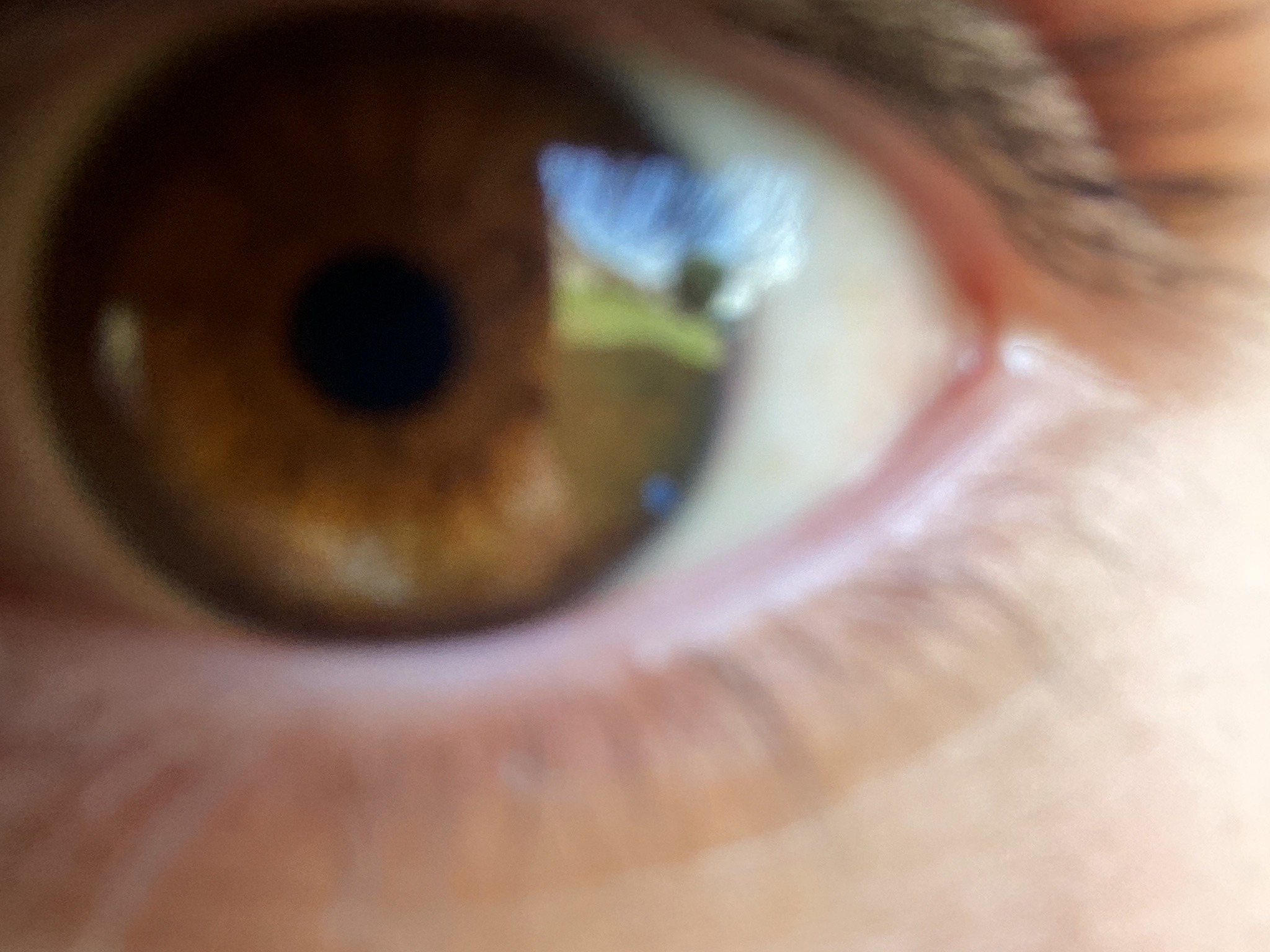
A extreme macro photograph of a human eye, showing the brown iris, dark pupil, surrounding sclera, and eye lid with eyelashes.
Characteristics
Brown iris with complex fibrous patterns, central dark circular pupil, reflective cornea showing outdoor sky and green foliage, surrounding white sclera, and eyelid skin with fine eyelashes.
Habitat
Global, found wherever humans reside across all terrestrial environments.
When to Find It
N/A
Conservation Status
Least Concern
Ecological Role
The primary sensory organ for vision in humans, enabling perception of light, color, depth, and fine details critical for survival, interaction, and tool use.
Easily Confused With
Eyes of other primates or mammals, which share basic anatomical structures (iris, pupil, sclera) but differ in iris pigmentation, pupil shape, or retinal features.
Observation Tips
Macro photography of eyes requires bright, safe lighting, steady focus, and comfortable distance to capture details in the iris without causing discomfort from glare.
Interesting Facts
Brown is the most common eye color worldwide, resulting from a high concentration of melanin in the iris stroma. The human eye can distinguish approximately 10 million distinct colors.